AI News
21 Nov 2025
Read 15 min
How AI tools for HIV vaccine development speed discovery
AI tools for HIV vaccine development speed antibody discovery and shorten time to viable vaccines.
AI tools for HIV vaccine development now scan millions of vaccine designs, spot rare antibody signals, and cut analysis time by a wide margin. Backed by new funding for high‑performance computing at Scripps Research, these systems surface promising candidates and guide lab teams toward safer, faster vaccine testing.
HIV still affects more than 40 million people worldwide. The virus changes fast and often. It keeps slipping past the immune system. It also produces huge amounts of trial data that scientists must read and compare. That work is slow and costly. New computing power and machine learning now help close this gap. The latest push at Scripps Research shows how careful use of data and code can speed smarter vaccine design.
AI tools for HIV vaccine development: why speed matters
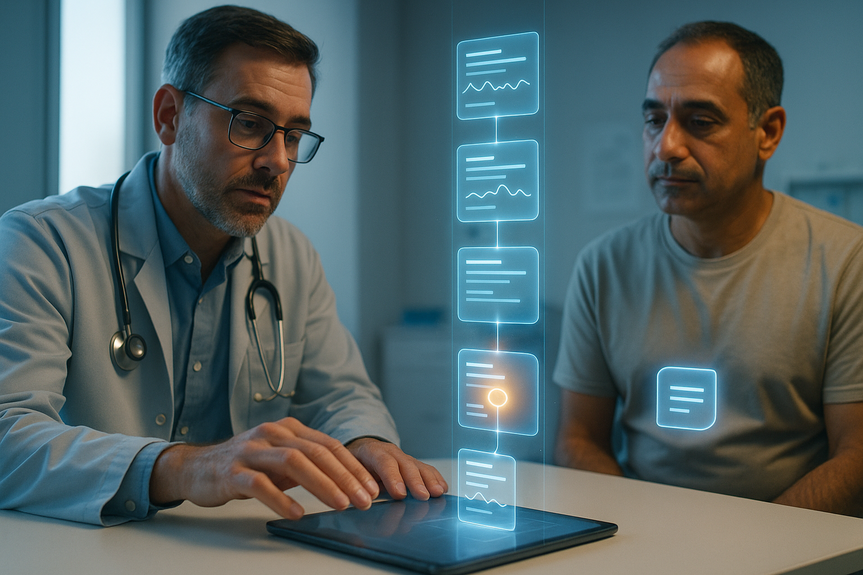
The race to a safe, effective HIV vaccine is a data race. Each vaccine idea is a design that hopes to teach the immune system a specific lesson. The design must push B cells to grow the right antibodies. Those antibodies must block many strains of HIV, not just one. HIV mutates. A good vaccine must stay strong as the virus changes. Scientists test many designs to find one that works. They read sequences, model shapes, and study immune responses. This creates a flood of data from lab experiments, animal models, and early human studies. Without automation, much of this data sits unused for weeks. Decisions slow down. Promising leads get lost. Now, with funding for high‑performance computing and new AI pipelines, teams can handle more ideas in less time. They can simulate, rank, and prune designs before they enter a lab. This does not replace experiments. It makes each experiment count more. It cuts waste and points experts to the best options sooner.What the new investment enables
Scripps Research received $1.1 million from the Center for HIV/AIDS Vaccine Development (CHAVD). The grant funds high‑performance computing and AI infrastructure. The goal is simple: analyze millions of vaccine candidates faster, identify key antibodies earlier, and refine experimental vaccines with better feedback. The hardware handles large datasets and heavy models. The software links design, analysis, and decision steps. This kind of setup helps researchers compare many immunogen designs, score their likely impact on B cell lineages, and predict which pathways might lead to protective antibodies. It also helps flag dead ends before they cost time and money.Inside the StepwiseDesign approach
StepwiseDesign is the AI‑driven method that guides this work. It fits the vaccine task well because it breaks a hard problem into smaller, testable steps. Each step produces a clear signal that feeds the next step.Step 1: Ingest and clean the data
The system takes in antibody sequences, vaccine designs, virus variants, and lab readouts. It checks for quality and format. Clean, consistent input is the base for sound predictions.Step 2: Map vaccine designs to immune responses
The model links each design to the antibodies it tends to induce. It looks for patterns across many samples. It learns which features in a design lead to growth of desired B cell families and which features trigger off‑target responses.Step 3: Rank what looks promising
The system scores vaccine candidates on multiple goals, such as:- Can the design guide B cells toward neutralizing HIV?
- Does it target rare precursors that can mature into strong antibodies?
- Is the response broad across different HIV strains?
- Are there early signals of safety and stability?
Step 4: Close the loop with experiments
Predictions are only useful if lab results confirm them. StepwiseDesign sends ranked candidates to the lab. New data returns to the model. The loop repeats. Each pass makes predictions sharper and the next experiment smarter.Finding needles in the haystack: rare precursors
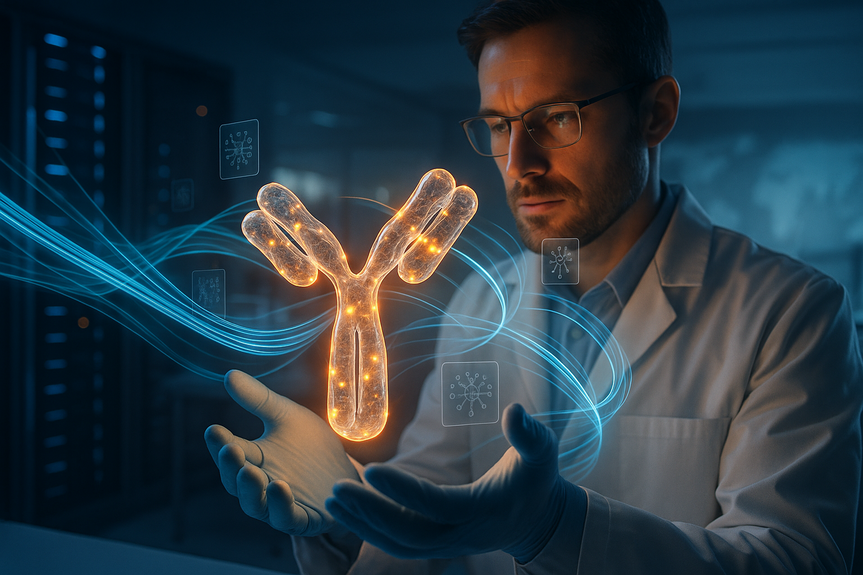
One of the hardest tasks in HIV vaccine science is to find and trigger rare antibody precursors in people who have never had HIV. These precursors can grow into antibodies that neutralize the virus. But they are scarce, and they can be easy to miss in a sea of noisy data. The AI system at Scripps has already reported rare antibodies that neutralize HIV in uninfected individuals. That is important. It shows the approach can detect extremely rare precursors and link them to specific design choices. It boosts confidence that smart design, not luck, can drive the immune system in the right direction.What AI changes for vaccine science
AI does not replace the craft of immunology. It lifts the ceiling on what experts can attempt. Here is what changes:- Scale: Teams can screen millions of design variants without running millions of lab assays.
- Speed: Models triage options fast, so labs run the most informative experiments sooner.
- Sensitivity: Algorithms can detect weak but meaningful signals, like rare B cell precursors.
- Breadth: Tools can test designs against many HIV strains and mutations, not just a few.
- Feedback: Continuous loops between models and experiments cut dead ends and sharpen focus.
From HIV to influenza and malaria
The same framework can help with other pathogens that change shape or hide from the immune system. Influenza drifts each season. Malaria has a complex life cycle and a history of partial vaccine success. The modeling approach—map antigen features, predict B cell responses, rank designs, and close the loop—fits these targets too. Shared platforms also promote shared standards. When research groups use similar data formats, scoring metrics, and validation steps, they can compare results and improve models. This reduces duplication and speeds community learning.Key challenges AI helps address
HIV vaccine development faces many hurdles. AI can reduce several of them:Mutation and diversity
HIV evolves fast. A vaccine must push antibodies to recognize many variants. Models can test how a design holds up against a large panel of strains and flag designs that fail early.Data overload
Trials and lab studies produce huge datasets: sequences, binding curves, neutralization panels, and more. AI turns this flood into scores and ranks that humans can act on.Pathway guidance
It is not enough to trigger any antibody. The vaccine must guide B cells along a pathway that ends in strong, neutralizing antibodies. AI can spot pathway markers and predict which boosts should come next in a multi‑shot schedule.Resource use
Animal studies and human trials are expensive and slow. Better pre‑selection means fewer shots in the dark. It also means faster iteration between trials with higher odds of success.Guardrails: safety, bias, and trust
Any AI system in health must earn trust. Good practice sets guardrails:- Transparency: Teams should publish methods, metrics, and error bars so others can test claims.
- Validation: No model prediction moves forward without lab and clinical evidence.
- Bias checks: Training data must cover diverse populations and viral strains to avoid blind spots.
- Data protection: Patient and participant data need strong privacy and security controls.
- Human oversight: Immunologists and clinicians make final calls, not algorithms.
How research workflows evolve
AI changes not just what teams can do, but how they work day to day:Design sprints
Instead of planning one large, fixed study, teams run short sprints. Each sprint designs, models, tests, and learns. Results guide the next sprint.Shared datasets
Groups agree on common panels of HIV strains and neutralization assays. They share negative results as well as positive ones. This prevents others from repeating dead ends.Modular pipelines
Pipelines split into clear modules: data intake, model training, candidate ranking, lab validation, and safety review. Each module improves on its own schedule without breaking the whole system.Decision dashboards
Leaders use dashboards that show model confidence, assay results, and safety flags. Decisions move from long reports to simple, timely views with traceable evidence behind each choice.What success could look like
Success will not be a single, one‑shot vaccine that solves HIV overnight. It will likely be a smart schedule of priming and boosting shots that guide B cells step by step. It will have strong lab signals and protection across many strains. It will also have a clear safety record. AI can help reach this point by:- Cutting the number of weak designs that enter trials.
- Focusing trial resources on candidates with the best early evidence.
- Revealing which boosts add value and which do not.
- Adapting faster when new variants emerge.
Signals to watch in the next year
If you follow this space, look for:- More reports of rare antibody precursors found in uninfected individuals after specific vaccine steps.
- Cross‑lab studies that reproduce AI‑guided findings with different cohorts and strain panels.
- Clearer metrics that connect model scores to clinical outcomes, not just lab proxies.
- Investments that expand high‑performance computing capacity and secure data sharing.
- Early‑stage trials that test AI‑ranked candidates and publish both wins and misses.
Why this effort matters for global health
An effective HIV vaccine would be a landmark for public health. It would protect people before exposure. It would reduce new infections and take pressure off treatment systems. It would also show a reusable playbook for other fast‑changing pathogens. The same data pipelines, modeling tools, and lab feedback loops can speed vaccines for influenza, malaria, and beyond. Once the infrastructure is in place, each new target starts ahead of where HIV began. That is how progress compounds. The path remains hard. But with focused funding, careful engineering, and open science, teams can move faster and waste less. The work at Scripps Research is one strong step in that direction. In short, AI tools for HIV vaccine development are turning scattered data into guided action. They help find rare antibody precursors, rank better vaccine designs, and close the loop between predictions and proof. If these systems continue to mature, they can deliver safer, faster trials and bring a viable HIV vaccine closer to the people who need it.(Source: https://dig.watch/updates/new-ai-tools-aim-to-speed-discovery-of-effective-hiv-vaccines)
For more news: Click Here
FAQ
Q: What are AI tools for HIV vaccine development and how are they improving the discovery process?
A: AI tools for HIV vaccine development now scan millions of vaccine designs, identify rare antibody signals, and greatly speed analysis so researchers can prioritise promising candidates for lab testing. These systems, supported by high-performance computing, guide experiments rather than replace them.
Q: What is StepwiseDesign and what steps does it follow?
A: StepwiseDesign is the AI-driven method used at Scripps Research that breaks the vaccine-design problem into smaller, testable steps and feeds signals from each step into the next. It ingests and cleans data, maps designs to immune responses, ranks candidates, and closes the loop by sending top predictions back for lab validation.
Q: How did CHAVD funding and high-performance computing boost research capacity?
A: Scripps Research received $1.1 million from CHAVD to acquire high-performance computing and AI infrastructure, enabling teams to analyse millions of vaccine candidates faster. The hardware and software let researchers simulate, score, and prune designs before they enter the lab, improving experiment selection.
Q: Can AI replace laboratory and clinical testing in vaccine development?
A: No — the article emphasises that AI does not replace immunology, and model predictions require confirmation by lab and clinical evidence before moving forward. Models accelerate triage and sharpen experiments, but human experts and experimental validation make final decisions.
Q: Which specific research challenges do these AI approaches address?
A: The tools help address HIV’s rapid mutation and diversity, the flood of trial and lab data, the need to guide B cell maturation along effective pathways, and inefficient use of resources by reducing dead ends. By testing designs against many strains and detecting weak signals like rare precursors, models focus resources on the most informative studies.
Q: What is the significance of finding rare antibody precursors in uninfected individuals?
A: Detecting rare antibody precursors shows the AI system can spot scarce signals that may mature into antibodies that neutralize HIV and links those signals to specific design choices. That increases confidence that guided design, rather than chance, can steer B cells toward protective responses.
Q: Could the same AI framework be used for other diseases?
A: Yes, researchers hope the computational framework can be applied to other complex pathogens such as influenza and malaria by mapping antigen features, predicting B cell responses, ranking designs, and closing the loop with experiments. Shared platforms and common data standards also support cross‑lab comparisons and faster community learning.
Q: What guardrails are recommended when using AI tools in vaccine research?
A: The article recommends transparency about methods and metrics, rigorous validation with lab and clinical evidence, bias checks across diverse populations and strains, strong data protection, and human oversight before advancing candidates. These practices aim to protect safety, equity, and trust while accelerating discovery.
Contents