Crypto
08 Dec 2025
Read 12 min
Casascius coins moved 2025 What the 2K BTC shift means *
Casascius coins moved 2025 warn owners about custody risks and concrete steps to preserve their BTC.
Two physical bitcoin wallets funded in 2011–2012 sprang to life, sending 2,000 BTC after 13 years. The Casascius coins moved 2025 event highlights rare “loaded” collectibles, aging security materials, and shifting custody habits. It could signal preservation moves, not panic selling, but it still nudges market sentiment and supply narratives.
Bitcoin’s past just tapped the present. Two long-silent addresses linked to physical Casascius coins transferred roughly $180 million in BTC at prices near $90,000 per coin. These coins were funded when bitcoin traded under $15. The shift, confirmed by on-chain explorers, raised questions about motive, market impact, and the health of aging physical cold storage. As the Casascius coins moved 2025 story spread, it also reminded holders that even “offline forever” plans need upkeep.
Casascius coins moved 2025: the story so far
What moved and when
The transfers came from wallets tied to two physical Casascius pieces, together holding 2,000 BTC. These funds had not budged since the early 2010s. While the blockchain shows the coins moved, it does not reveal why. They could have been sold, consolidated into new custody, or placed into a safer setup. There is no official statement from the owner.How Casascius coins worked
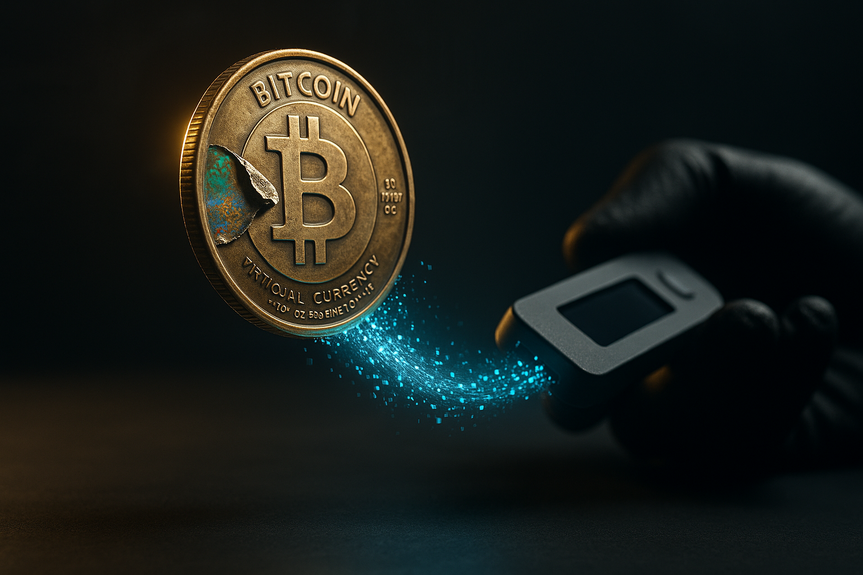
Casascius coins were physical collectibles with private keys sealed under a hologram. Mike Caldwell launched them in 2011 in denominations from 1 BTC up to very rare 1,000 BTC coins and bars. They served as offline cold storage in a simple, tangible form. Peel the hologram to access the key. Keep it intact to preserve the collectible value. In 2013, U.S. regulators at FinCEN pressured Caldwell to stop minting prefunded pieces. The public minting ended, but thousands of coins remained in circulation. Most held small amounts of BTC, while only a handful of high-value units existed: six 1,000 BTC coins and 16 1,000 BTC bars. As time passes, the number of “loaded” collectibles declines, either from redemptions or damage.Possible reasons behind the move
Protecting access as parts age
Physical storage ages. Adhesives can weaken. Holograms can degrade. Paper inserts can fade. Owners may worry that a failure could lock funds forever. In one recent case, a user reported trouble importing a private key from a 100 BTC Casascius bar into modern wallet software after peeling the seal. He still recovered the funds, but it was stressful and slow. This risk alone can push owners to migrate keys into hardware wallets or multisig setups before anything breaks.Portfolio housekeeping and security upgrades
Old holdings often sit in outdated formats. Owners may want to:- Consolidate addresses into one secure hardware wallet or multisig.
- Split large holdings into smaller chunks for better risk control.
- Update backups from paper to steel or encrypted digital formats.
- Bring keys into modern standards (BIP39) and check test restores.
- Prepare inheritance plans so heirs can access funds.
Sale or OTC transfer
A sale remains possible. Big holders often prefer off-exchange (OTC) deals to avoid price slippage and public attention. However, blockchain data alone does not prove a sale. If coins move to known exchange wallets, that’s a clearer sign of intent to sell. Absent that signal, the safer assumption is a custody change.Market impact: signal versus noise
For traders, 2,000 BTC sounds huge. In context, it is small compared to daily global trading volumes. Still, “vintage” coins moving can stir emotion. Long-term dormant coins are seen as strong hands. When they move, people wonder if sentiment is turning. What matters more is how and where the funds move next:- If they hit exchange deposit addresses, near-term sell pressure can rise.
- If they flow into custody or multisig, the move is neutral to bullish.
- If they split into many UTXOs, it can be preparation for structured selling or better security hygiene.
- If the holder engages in coin control and privacy steps, it may reduce on-chain clarity and calm the crowd.
Security lessons from a time capsule
Cold storage best practices in 2025
Security is not “set and forget.” Good hygiene today can prevent panic tomorrow:- Use hardware wallets from reputable brands, kept offline except when needed.
- Consider multisig to remove single points of failure.
- Create strong, redundant backups (steel plates or well-protected encrypted copies).
- Test your recovery process with a small amount before relying on it for everything.
- Document your process for heirs and store instructions safely.
If you still hold a physical bitcoin
If you own a loaded collectible:- Research the specific piece and matching address before peeling.
- Do not peel unless you plan to sweep the funds right away.
- Prepare a modern wallet and confirm the receive address in-advance.
- Record the peeling and sweep in one session to reduce mistakes.
- Use a modest test first when possible, then move the rest.
- After sweeping, verify balances and back up immediately.
Collectible value versus spendable value
Casascius pieces sit at a crossroads: art, history, and money. Unpeeled coins with intact holograms often sell for a premium to collectors, even beyond the BTC face value. Once peeled and redeemed, the numismatic premium can drop sharply. Owners face a trade-off:- Keep the coin unpeeled to preserve collector premium but accept aging risks.
- Peel and sweep to secure the BTC but sacrifice some collectible value.
Why Casascius coins moved 2025 matters
This event blends history, security, and market psychology. It shows that early bitcoin holders are still paying attention. It shows that plans from 2011 sometimes need upgrades. And it reminds traders that on-chain headlines can sound dramatic without changing supply-demand balance much. What changes is confidence and narrative, and those matter too. For long-term holders, the message is simple: review your setup before time reviews it for you. Materials degrade. Software evolves. People forget passwords and procedures. Bitcoin rewards the careful and punishes the careless. That was true in 2011, and it is even truer today. For collectors, the trade-off remains personal. Some will keep unpeeled pieces as art and history. Others will sweep and sleep better at night. Both choices have logic. Just make the choice on your own terms, not because a hologram suddenly fails. No one knows if these coins were sold, reorganized, or simply rescued from old storage. But the move underscores a broader point. As the Casascius coins moved 2025 story fades from the news cycle, the lessons will stay: protect access, plan ahead, and do not let nostalgia stand between you and secure custody. In a market where seconds count, good preparation turns a headline into a non-event.For more news: Click Here
FAQ
Q: What happened in the Casascius coins moved 2025 event?
A: Two long-dormant bitcoin wallets tied to physical Casascius coins moved a total of 2,000 BTC after more than a decade of inactivity, an event commonly referred to as Casascius coins moved 2025. The transfers were confirmed by blockchain explorers and were worth roughly $180 million at prices near $90,000 per BTC.
Q: Who created Casascius coins and why did production stop?
A: Mike Caldwell began producing Casascius coins in 2011 as physical collectibles embedding private keys under tamper-evident holograms. He stopped minting pre-funded pieces in late 2013 after the U.S. Financial Crimes Enforcement Network labeled him an unregistered money transmitter, which effectively ended public production.
Q: How were Casascius coins designed to secure private keys?
A: Each Casascius coin contained an embedded private key protected by a tamper-evident holographic seal that owners could peel to access the key. Keeping the hologram intact preserved collectible value, while peeling allowed owners to sweep the BTC into modern wallets.
Q: Why might owners have moved coins after 13 years of inactivity?
A: Owners may have moved funds to protect access as adhesives, holograms and paper inserts can degrade over time and risk locking keys permanently. The transfers could also reflect portfolio housekeeping or security upgrades like consolidating into hardware wallets or multisig arrangements.
Q: Does the Casascius coins moved 2025 transfer mean immediate selling or market panic?
A: Not necessarily; blockchain data shows movement but not motive, and the absence of clear exchange deposits suggests the shift may have been a custody change rather than a sale. While 2,000 BTC is notable, the article notes it is small relative to daily global trading and may be treated as a maintenance story unless funds hit exchange addresses.
Q: If I own a loaded Casascius coin, what precautions should I take before peeling the hologram?
A: Research the specific piece and matching address before peeling and do not peel unless you plan to sweep the funds right away. Prepare a modern wallet, test the recovery with a small amount first, record the peeling and sweep in one session, and back up immediately to reduce the risk of mistakes.
Q: How many high-value Casascius pieces were minted and how common are loaded coins?
A: A handful of high-value units were produced, with six 1,000 BTC coins and 16 1,000 BTC bars among the rarest pieces. Most of the roughly 90,000 coins in circulation hold small amounts of BTC, which is why unpeeled, fully loaded pieces can carry a numismatic premium.
Q: How can observers tell whether moved Casascius funds are headed to exchanges or new custody?
A: Observers can track on-chain flows with blockchain explorers and watch for transfers to known exchange deposit addresses as a clearer sign of intent to sell, but the chain itself cannot reveal the owner’s motive. If funds flow into multisig setups, hardware-wallet custody, or are consolidated without exchange inflows, the movement likely reflects security or custody changes.
* The information provided on this website is based solely on my personal experience, research and technical knowledge. This content should not be construed as investment advice or a recommendation. Any investment decision must be made on the basis of your own independent judgement.
Contents