AI News
10 Dec 2025
Read 9 min
How AI diagnostic tools in healthcare 2025 speed diagnosis
AI diagnostic tools in healthcare 2025 cut diagnosis time, enabling faster treatment, better outcomes.
AI diagnostic tools in healthcare 2025 cut time to diagnosis from hours to minutes. They scan images, analyze labs, and draft notes while doctors talk. This faster triage gets stroke and bleed alerts to teams in seconds, keeps emergency rooms moving, and helps clinicians act sooner with clearer evidence and less paperwork.
Doctors and nurses got real help in 2025. AI reads scans, flags danger, and fills charts so clinicians can focus on patients. It turns big data into quick answers. That speed leads to earlier treatment, fewer errors, and better outcomes. It is not a robot doctor. It is software that learns patterns and supports human judgment.
Emergency teams get instant stroke alerts, shaving precious minutes off care.
Radiologists get heatmaps and ranked findings to check, reducing misses.
Night and weekend coverage improves because AI never gets tired.
Results come back sooner, so treatment can start earlier.
Consistency improves across labs because the algorithm scores slides the same way every time.
Pathologists focus on tough cases while routine work moves faster.
High-risk patients can be monitored more often with simple tests.
Doctors can confirm with imaging and plan earlier surgery or therapy.
Screening shifts from late detection to true prevention.
Together, AI diagnostic tools in healthcare 2025 speed the path from symptom to answer. They bring the right case to the top of the queue and give clinicians clearer evidence in less time.
Oncologists match therapies faster and avoid drugs that will not help.
Rare disease teams get leads that used to take months.
Families get clearer answers and options sooner.
Clinicians spend more time looking at patients, not screens.
Documentation errors drop because details are captured live.
Referrals and follow-ups go out on time.
Sepsis alerts fire earlier with fewer false alarms.
Medication warnings focus on what truly matters for that patient.
Care teams see next-best actions, not long lists to ignore.
Hospitals open extra areas before the rush.
Ambulances route to the right facility faster.
Wait times and boarding hours drop.
Call centers clear faster, and lines stay short.
Missed doses and missed visits go down.
Patients get 24/7 support for simple needs.
These changes support the same goal: move patients to the right care faster. That is the daily value of AI diagnostic tools in healthcare 2025 across clinics and wards.
Hospitals should validate tools on their own populations.
Vendors should report performance by subgroup.
Show the image region, the lab trend, or the note snippet that drove the score.
Keep a human in the loop for final decisions.
Use encryption, audit logs, and strict access rules.
De-identify training data and follow consent laws.
Plan for incident response and routine security tests.
AI diagnostic tools in healthcare 2025: Faster answers, safer care
Imaging as a digital second opinion
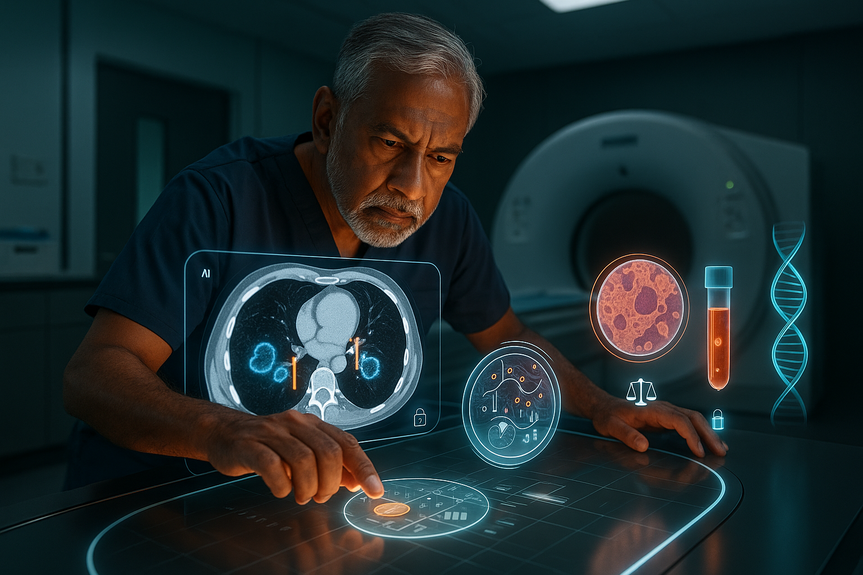
AI now reviews X-rays, CT scans, and MRIs in seconds. It highlights tiny signs a busy eye can miss, like a fresh brain bleed or a hidden lung nodule.Pathology at pixel speed
When a biopsy is taken, software scans the slide and counts abnormal cells. It helps grade tumors and spot rare patterns.Early cancer signals from a blood draw
New “liquid biopsy” tests use AI to read faint molecular patterns in blood. These patterns may point to cancer before a tumor is visible on imaging.From data to decisions at the bedside
Genomics that guides the next step
AI scans a patient’s DNA and medical record to find the mutation that drives disease. It links that change to targeted drugs or trials.Notes that write themselves
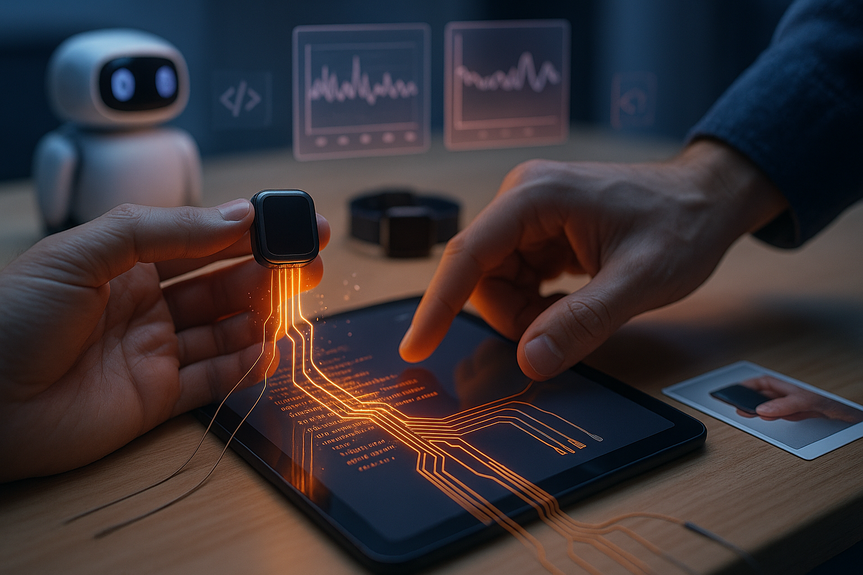
AI medical scribes listen during the visit and draft the chart, orders, and summary.Decision support that fits the workflow
Smart checklists and risk scores appear inside the electronic record.Running hospitals on time
Predictive operations
AI predicts ER surges, bed needs, and staff gaps days ahead.Virtual help for patients
Chatbots answer routine questions, book visits, and send medication reminders.Guardrails that keep speed safe
Fight bias with better data
Algorithms must work for everyone. Tools need training data that reflects age, sex, skin tone, and local disease patterns.Explain the “why” behind the “what”
Doctors need to see why an alert fired.Protect privacy and security
Health data is sensitive.What to watch in 2026
Smarter imaging models will link scans with labs and notes. Portable tools will bring expert reads to small clinics. Regulators will push real-world monitoring so tools stay safe after launch. Teams will measure time-to-diagnosis as a core quality metric, not just accuracy. Above all, doctors will remain in charge, using AI as a fast, reliable assistant. When minutes matter, speed saves lives. The big story is simple: AI diagnostic tools in healthcare 2025 shorten the road from first signal to first treatment. They cut noise, surface risk, and give clinicians more time with patients. With fairness, transparency, and strong privacy, these tools make care faster and safer—without replacing the human touch.For more news: Click Here
FAQ
Q: What are AI diagnostic tools in healthcare 2025?
A: They are software systems that learn from large amounts of clinical data to recognise patterns, analyse images and labs, and assist clinicians in making faster decisions. In 2025 these tools helped shorten the time to diagnosis from hours to minutes and supported but did not replace human judgement.
Q: How do AI diagnostic tools speed up stroke and emergency care?
A: AI systems review scans in seconds and can flag critical findings like a fresh brain bleed or stroke, sending instant alerts to clinical teams so treatment can begin sooner. This faster triage reduces delays, helping emergency rooms move and improving chances of better outcomes.
Q: Can AI diagnostic tools replace radiologists or pathologists?
A: No, AI acts as a fast, tireless “second set of eyes” that highlights findings and counts abnormal cells, but final diagnosis and treatment decisions remain the responsibility of qualified human clinicians. The tools speed routine work and let specialists focus on complex cases.
Q: What is a liquid biopsy and how do AI tools help with early cancer detection?
A: A liquid biopsy is a blood test that AI analyses for faint molecular patterns that may indicate cancer before a tumor is visible on imaging. Using AI to read those signals enables earlier monitoring and can prompt confirmatory imaging or earlier treatment planning.
Q: How do AI medical scribes change clinical workflow?
A: AI medical scribes listen during consultations, draft clinical notes, summarise the visit, and enter information into the patient’s digital chart, reducing time spent on documentation. This lets clinicians spend more time with patients and lowers administrative burnout.
Q: What ethical and safety guardrails are important for AI diagnostic tools in healthcare 2025?
A: Tools must be trained and validated on diverse datasets to reduce bias, provide explainable outputs so clinicians understand why an alert fired, and protect sensitive health data with encryption, access controls, and de-identification. Regulators and hospitals should monitor real-world performance to keep tools safe after deployment.
Q: In what ways do AI tools help hospitals operate more efficiently?
A: Predictive models forecast ER surges, bed needs, and staffing gaps so hospitals can open extra capacity and route ambulances appropriately, which reduces wait times and boarding. Virtual assistants and chatbots handle routine questions and scheduling, lightening call center loads and lowering missed appointments.
Q: What should clinicians watch for in the near future as AI diagnostic tools evolve?
A: Expect imaging models that link scans with labs and notes, more portable expert reads for small clinics, and regulators requiring post-launch monitoring and time-to-diagnosis metrics to ensure safety and impact. Throughout these changes, clinicians will remain in charge and use AI as an assistant rather than a replacement.
Contents