Crypto
30 Dec 2025
Read 11 min
Bitcoin dollar-cost averaging strategy 2026: How to DCA *
Bitcoin dollar-cost averaging strategy 2026 helps build your portfolio while cutting downside risk.
Looking for steadier Bitcoin exposure next year? The Bitcoin dollar-cost averaging strategy 2026 spreads your buys across the year to reduce volatility and regret. With ETFs cooling wild swings and 2025 ending near where it began, a fixed schedule helps you add on dips, avoid bad timing, and stay focused on long-term goals.
Bitcoin had a choppy 2025. It was down around 4% near year-end and traded in a tighter range than many expected. Spot Bitcoin ETFs and more institutional money helped lower volatility. The April 2024 halving also did not spark a fast breakout. In this kind of market, a steady plan beats guesswork. With a Bitcoin dollar-cost averaging strategy 2026, you invest the same amount on a set schedule, no matter the headlines.
Bitcoin is still Bitcoin. Over the past decade, it was often the best-performing asset in the world. It also had brutal down years like 2014, 2018, and 2022. That mix of big wins and deep drops makes timing hard. DCA solves a piece of that puzzle by spreading your entries and lowering risk from a single bad buy.
Reduces timing risk by spreading buys
Turns dips into opportunities to lower average cost
Keeps emotions in check during fear or hype
Works with ETFs, brokerages, or self-custody
Pick your cadence: weekly or monthly works best. Weekly adds more smoothing; monthly is simpler.
Set your amount: choose a number you can hold through drawdowns. Many investors cap crypto at a small slice of their total portfolio.
Choose your vehicle: spot Bitcoin ETFs for simplicity; direct Bitcoin for self-custody and sovereignty.
Automate it: set recurring buys so you do not rely on willpower.
Define your stop rules: pause only for clear reasons like job loss or a change in goals, not for headlines.
Add rebalancing: if Bitcoin grows beyond your target share of the portfolio, trim back to keep risk in check.
This Bitcoin dollar-cost averaging strategy 2026 plan works best when you commit for the full year. Consistency matters more than perfect timing.
Weeks when price dips from $95,000 to $85,000: your $200 buys more satoshis.
Weeks when price climbs from $90,000 to $110,000: your $200 buys fewer satoshis, but your earlier, cheaper buys now help your average.
By year-end, your average cost sits somewhere between the highs and lows, not at the worst tick.
You can do the same math with $50 weekly or $500 weekly. The idea stays the same: small, steady steps beat big, risky leaps.
Pros: easy to buy in a brokerage, simple tax forms, no wallet setup
Cons: management fees, no on-chain withdrawal, relies on a custodian
Pros: you can self-custody, send on-chain, and hold a bearer asset
Cons: learning curve, wallet security is your job, exchange and network fees
If you value simplicity, ETFs can fit your DCA plan in a retirement or taxable account. If you want full control, learn basic wallet security and start small while you practice.
Over-sizing: keep position size in line with your risk tolerance. Start small, then learn and adjust.
Stopping at the worst time: many quit after a drop. Stick to your schedule unless your life situation changes.
Chasing pumps: do not add extra buys only when price is up. Let your schedule do the work.
Ignoring fees: compare ETF expense ratios, broker spreads, and exchange withdrawal costs.
Weak security: use hardware wallets for self-custody; enable 2FA and unique passwords for all accounts.
Taxes: track your cost basis. Each buy sets a new tax lot in many regions. Ask a tax pro if unsure.
Leverage: do not DCA with borrowed money. Volatility can turn a good plan into a margin call.
ETF flows: steady inflows support demand; outflows can weigh on price.
Liquidity and funding rates: extreme leverage often signals short-term risk.
Macro backdrop: interest rates, inflation trends, and dollar strength can influence risk assets.
On-chain health: hash rate and long-term holder supply can hint at network strength.
Regulatory news: clear rules and positive court rulings tend to help adoption.
Use these signals to adjust pace only if they change your long-term view. Avoid knee-jerk reactions.
Time-based: DCA for 12 months, then hold for another 12 months before reviewing.
Rebalance bands: if Bitcoin rises above a set share of your portfolio (for example, from 5% to 10%), trim back to target.
Goal-based: if you reach a savings goal or down payment fund, lock in part of the gains.
Taking profits is not “betraying the thesis.” It is risk management. Define it in advance to avoid emotional choices.
Fixed supply with a known issuance schedule
Growing acceptance as “digital gold” and a hedge against monetary debasement
More ways to own it, from ETFs to self-custody tools
Regulatory shocks that limit access or custody
Security failures at exchanges or poor personal security
Long bear markets that test patience and budgets
A plan that you can follow in hard times is more valuable than a perfect plan you abandon.
Bitcoin dollar-cost averaging strategy 2026: Why it fits the moment
Volatility is lower than in past cycles, yet uncertainty is still high. More institutions own Bitcoin, and many investors now see it as “digital gold.” In 2025, price action was range-bound. When markets drift, people tend to chase moves or freeze. DCA gives you a simple path so you can act calmly and consistently.What dollar-cost averaging is, in plain words
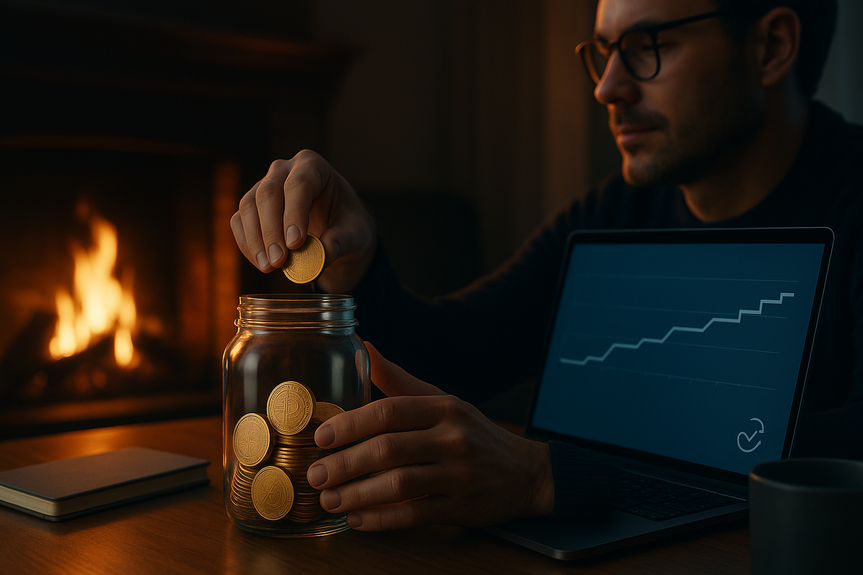
Dollar-cost averaging means you invest a fixed amount on a fixed rhythm, like every week or month. If price falls, you buy more units. If price rises, you buy fewer units. Over time, your average cost smooths out. You avoid guessing the bottom or the top.Key benefits for Bitcoin
Build your 2026 DCA plan step by step
A simple 12‑month example
Say you invest $200 every week for 52 weeks. You will buy whether price is high or low.Where to buy: ETF vs direct Bitcoin
Spot Bitcoin ETFs
Buying and holding Bitcoin directly
Risk controls and common mistakes
Signals to watch in 2026 while you DCA
You do not need to time the market, but a short monthly check-in can help you stay informed.When to slow, stop, or take profits
Your plan should include exit and maintenance rules before you start.The long-term case and the key risks
Why many hold for years
What could go wrong
Putting it all together
DCA is not magic. It is discipline. In a year when price may stay range-bound, and when institutions help mute the wildest swings, steady accumulation stands out. A clear budget, an automated schedule, and firm rules can help you build exposure and sleep at night. In short, if you want a practical path to own Bitcoin without guessing the next big move, the Bitcoin dollar-cost averaging strategy 2026 offers a simple, tested approach. Define your amount, set your rhythm, choose your vehicle, and let time and consistency work for you.(Source: https://www.nasdaq.com/articles/bitcoin-buy-sell-or-hold-2026-0)
For more news: Click Here
FAQ
Q: What is dollar-cost averaging and how does it apply to Bitcoin?
A: The Bitcoin dollar-cost averaging strategy 2026 spreads your buys across the year, investing a fixed amount on a set schedule to reduce volatility and regret. It means you buy the same dollar amount regularly, so you purchase more when price falls and fewer units when price rises, smoothing your average cost over time.
Q: Why is a DCA approach recommended for Bitcoin in 2026?
A: A DCA approach fits 2026 because 2025 ended near where it began and volatility has been muted by spot ETFs and institutional flows, making timing difficult. Using a steady plan helps you add on dips and avoid bad timing while staying focused on long-term goals.
Q: How do I build a practical Bitcoin DCA plan for 2026?
A: Start by choosing a cadence (weekly for more smoothing or monthly for simplicity) and a dollar amount you can hold through drawdowns. Then pick your vehicle (spot ETF or direct Bitcoin), automate recurring buys, define clear stop rules, and use rebalancing if Bitcoin grows beyond your target share.
Q: What are the main benefits of dollar-cost averaging for Bitcoin?
A: DCA reduces timing risk by spreading buys and turns dips into opportunities to lower your average cost. It also helps keep emotions in check during fear or hype and can be used with ETFs, brokerages, or self-custody.
Q: Should I use a spot Bitcoin ETF or buy Bitcoin directly when DCAing?
A: Spot Bitcoin ETFs are easy to buy in a brokerage, have simple tax forms, and require no wallet setup, but they charge management fees and don’t allow on-chain withdrawals. Buying Bitcoin directly lets you self-custody and send on-chain but adds a learning curve, wallet security needs, and exchange or network fees.
Q: What common mistakes should I avoid and what risk controls should I use while DCAing?
A: Common mistakes include over-sizing your position, quitting after a drawdown, chasing pumps, ignoring fees, weak security, and using leverage. Risk controls include starting small, keeping position size aligned with your risk tolerance, comparing fees, practicing strong custody security like hardware wallets and 2FA, and avoiding DCA with borrowed money.
Q: When should I slow, stop, or take profits during a DCA plan?
A: Include time-based rules such as DCA for 12 months then holding another 12 months before review, use rebalance bands to trim if Bitcoin rises above your target share, and set goal-based take-profit points when you reach a savings objective. Define these exit rules in advance so taking profits functions as risk management rather than an emotional choice.
Q: What market signals should I monitor in 2026 while following a DCA plan?
A: Watch ETF flows, liquidity and funding rates, the macro backdrop like interest rates and dollar strength, on-chain health indicators such as hash rate and long-term holder supply, and regulatory news. Use these signals for a monthly check-in to adjust pace only if they change your long-term view and avoid knee-jerk reactions.
* The information provided on this website is based solely on my personal experience, research and technical knowledge. This content should not be construed as investment advice or a recommendation. Any investment decision must be made on the basis of your own independent judgement.
Contents