AI News
09 Jan 2026
Read 10 min
Discover best robots at CES 2026 shaping the future
best robots at CES 2026 deliver practical AI like laundry-folding butlers and stair-climbing vacuums.
At CES 2026, the best robots at CES 2026 showed real-world skills: folding laundry, climbing stairs, safer cleaning, and even caring for pets. LG’s CLOiD, Boston Dynamics’ Atlas, Roborock’s Saros Rover, Narwal’s Flow 2, AI Tails, and Razer’s Motoko highlighted smoother movement, smarter sensing, and cloud AI that makes home help feel natural.
Robots and AI tools dominated the show floor this year. The theme was clear: machines that move like us and understand our spaces. We picked the best robots at CES 2026 that show where home and work machines are going, from humanoids and pet care to vacuums that handle stairs.
What stands out: mobility plus appliance control
Why it matters: real household routines, not just demos
What stands out: lifelike movement for real jobs
Why it matters: safer collaboration with people
What stands out: stair-climbing legs
Why it matters: whole-home coverage without manual moves
What stands out: cloud-trained object detection
Why it matters: safer, quieter cleaning in family homes
What stands out: behavior insights during feeding
Why it matters: early warning for pet health
What stands out: audio-first assistive AI
Why it matters: hands-free context for commuters and gamers
These picks aren’t the only standouts, but they capture what the best robots at CES 2026 all share: natural movement, better sensing, and AI that turns raw pixels into helpful actions.
Privacy: Does it record video or audio? Can I keep data local?
Updates: How often do security and feature updates arrive?
Support: Is repair easy? Are parts and batteries replaceable?
Mapping: Can I set no-go zones and quiet hours?
Family safety: Pet and child modes? Volume limits? Fall and pinch protection?
Total cost: Docking, filters, bags, and subscription fees?
The best robots at CES 2026
LG CLOiD: a home helper that connects the dots
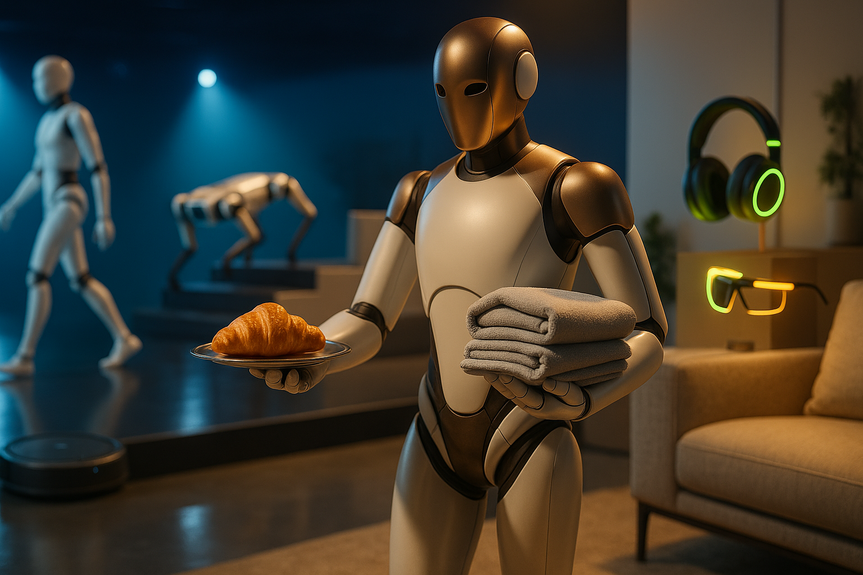
LG’s first AI home robot, CLOiD, can fold laundry, put croissants in the oven, and grab a drink from the fridge. It also talks to other smart devices to start tasks like a wash cycle. The folding is slow, but the value is in the teamwork. CLOiD acts as a hub that moves, sees, and coordinates. That is where home robots are headed.Boston Dynamics Atlas: a smoother, human-like stride
The new Atlas prototype walks with a more human gait. That smoother motion should help in tight workspaces. Boston Dynamics says Atlas is aimed at manufacturing. The company is also working with Google DeepMind to build stronger AI for robot control and planning. Expect better balance, safer handling, and faster training on factory tasks.Roborock Saros Rover: a floor bot that climbs stairs
Most vacuums roll. This one walks. The Saros Rover uses legs to stand and move up stairs, then hums along to vacuum like a standard robot. That means fewer stuck spots and less babysitting. If the price and reliability land right, legged home robots could be the next big shift.Narwal Flow 2: smarter avoidance with cloud AI
Flow 2 sends video to the cloud to learn and avoid more than the usual 20–30 objects. It can spot and steer around far more items, and it adds a Baby Care mode that lowers noise near cribs. It can also identify lost toys. The pitch: fewer crashes, fewer wake-ups, and less worry.AI Tails: a feeding station that watches for trouble
AI Tails built a cat feeder with a camera that studies your pet’s movements and expressions. It can flag unusual behavior that might signal a problem. For busy owners, this is simple, helpful monitoring at the bowl, where health changes often show first.Razer Project Motoko: headphones that “see” for you
AI glasses get headlines, but Razer tried a twist. Project Motoko puts cameras on the sides of headphones. The system looks at the world, then speaks useful info into your ears. That could mean directions, object cues, or context without a screen. It keeps your eyes free and your head up.What this year’s breakthroughs mean
Movement is getting human-friendly
Robots are walking, climbing, and grasping with more control. That lets them enter real spaces like kitchens, stairs, and busy lines on factory floors.Perception is the new power
Cameras and sensors feed AI that recognizes objects, people, pets, and hazards. Better perception means smarter choices and fewer mistakes.Cloud AI adds range, but raises questions
Offloading learning to the cloud helps robots see more things and improve faster. But it also means video leaves your home. Buyers should check what is stored, how long, and whether local-only modes exist.Early adopter checklist
Before you buy or back a prototype, ask:How to fit these robots into daily life
Start with one job, then expand
Pick a task that matters most: laundry help, stairs cleaning, or pet care. Measure success over a week. Add more tasks only after it proves reliable.Train the space, not just the robot
Clear common hazards, label rooms, and set routines. Good layout and schedules boost success more than you think.Balance cloud benefits and privacy
If cloud vision is a must, tighten settings: disable off-hour uploads, mask private rooms, and review logs monthly.What’s next for home and work robots
The line between appliances and robots is fading. CLOiD shows how a mobile hub can run ovens and washers. Atlas hints at safer human-robot teamwork on lines. Legged vacuums point to full-home coverage. Cloud learning raises the bar for recognition. Expect more modular parts, better battery life, and simple voice or gesture control. The momentum is real, even if many demos are early. Focus on clear tasks, strong privacy, and good support. Do that, and the best robots at CES 2026 will feel less like gadgets and more like helpers you can trust.(Source: https://www.cnet.com/pictures/ces-2026-these-robots-and-ai-tools-dominated-the-show-floor/)
For more news: Click Here
FAQ
Q: Which machines were highlighted as the best robots at CES 2026?
A: The best robots at CES 2026 included LG’s CLOiD, Boston Dynamics’ Atlas, Roborock’s Saros Rover, Narwal’s Flow 2, AI Tails, and Razer’s Project Motoko. They showcased smoother movement, smarter sensing, and cloud-powered learning aimed at making home and work machines more helpful.
Q: What capabilities does LG’s CLOiD offer in a home setting?
A: CLOiD can slowly fold laundry, put croissants in the oven, and grab beverages from the fridge, and it can connect to other smart devices to start tasks like a wash cycle. Its folding is slow, but CLOiD acts as a mobile hub that moves, sees, and coordinates appliances.
Q: Why was Boston Dynamics’ Atlas notable at the show?
A: The Atlas prototype showed a more human-like stride intended for tighter workspaces and manufacturing tasks. Boston Dynamics is also partnering with Google DeepMind to develop new AI models for robot control and planning.
Q: How does Roborock’s Saros Rover differ from typical robot vacuums?
A: The Saros Rover uses legs to stand and move up stairs, allowing it to cover multiple floors without manual relocation. It otherwise vacuums like a standard robot, which could reduce common stuck spots and babysitting.
Q: What makes Narwal’s Flow 2 smarter at avoiding objects?
A: Flow 2 sends footage to the cloud so its object-detection can learn to recognize far more items than the usual 20–30 objects. It also includes a Baby Care mode that lowers noise near cribs and can identify lost toys to avoid wake-ups.
Q: How does AI Tails help monitor pet health?
A: AI Tails’ feeding station uses a camera to analyze a pet’s movements and expressions at the bowl and can flag unusual behavior that might indicate a problem. For busy owners, that provides simple monitoring where health changes often show first.
Q: What is Razer Project Motoko and how does it assist users?
A: Project Motoko puts cameras on the sides of headphones to analyze the world and speak useful information into the user’s ears, keeping eyes free from screens. It’s presented as an audio-first assistive AI for commuters and gamers who need hands-free context and direction.
Q: What privacy and practical questions should buyers ask before adopting these robots?
A: Ask whether the robot records video or audio, whether data can be kept local, how long footage is stored, and whether local-only modes exist. Also check update cadence, repairability and parts, mapping features like no-go zones, family and pet safety modes, and total cost including docks, filters, and subscriptions.
Contents