Crypto
17 Jan 2026
Read 11 min
Ethereum price prediction 2026: How to profit *
Ethereum price prediction 2026 outlines realistic price paths and staking tactics to capture gains
Ethereum price prediction 2026 points to steady gains if usage, staking, and Layer 2 growth stay strong. ETH may benefit from fee burns, rising demand for stablecoin settlement, and shrinking liquid supply. Expect a wide but defined range with clear catalysts, plus simple ways to position without chasing short-term pumps.
Ethereum looks less like a bet on hype and more like a bet on productive infrastructure. The network now settles most stablecoin volume, runs billions in DeFi, and pushes more traffic onto Layer 2s each month. Staking pays a modest yield and locks supply. EIP-1559 burns fees when activity rises. These forces tie real usage to value.
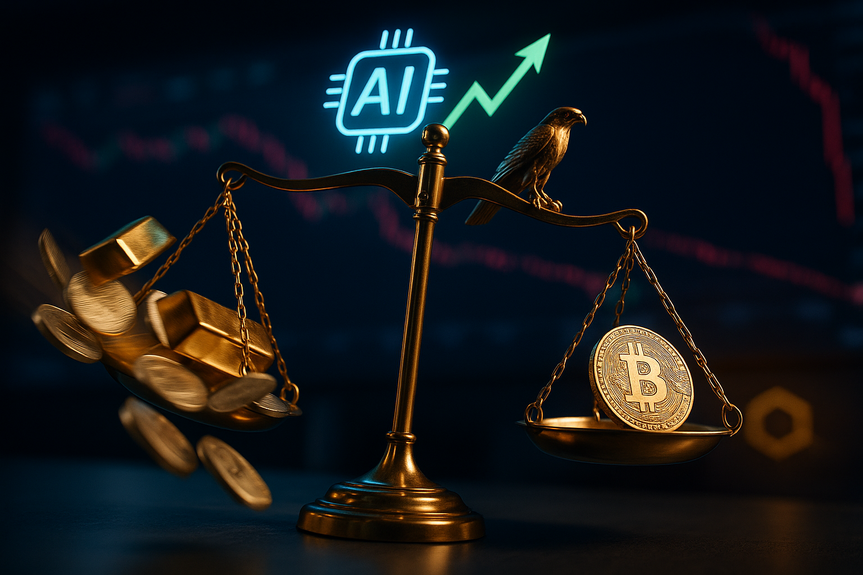
Bitcoin still leads as a store of value. But many investors now ask where the work gets done. Ethereum does the work. Apps use ETH as gas, protocols use it as collateral, and validators secure the chain. As adoption grows, recurring demand grows with it. That is the simple setup for ETH in 2026.
Ethereum price prediction 2026: Drivers that matter
Productive demand beats passive holding
ETH demand comes from use. People pay fees in ETH. Builders need ETH to deploy and run apps. Stakers lock ETH to secure the network and earn a yield. Each force pulls liquid coins off exchanges and into work. – Fee burn reduces net issuance when activity is high. – Staking removes a large share of coins from circulation. – Layer 2 activity feeds mainnet demand without inflating supply.Settlement leadership is sticky
Stablecoins, tokenized assets, and DeFi still choose Ethereum’s stack. That brings consistent gas use and settlement fees. As more finance moves on-chain, this base grows. It is hard to dislodge because tools, security, and liquidity keep builders and users in place.Layer 2 is a throughput flywheel
Layer 2 networks increase transactions while pushing some value back to mainnet. Lower fees attract users, which increases volume, which supports more apps. The cycle lifts total activity and can enhance fee burn during busy periods.ETH versus BTC: utility and scarcity working together
Different roles, different re-pricing paths
Bitcoin acts like digital gold. It is simple and scarce. Institutions already understand it and own it. Ethereum is infrastructure plus money. It settles trades, runs apps, and supports yield. Many institutions use it through apps, but some still do not own it in size. That gap can close in 2026.What could close the gap
– Wider access to regulated ETH products could unlock demand. – Clearer rules can reduce headline risk. – More staking and fewer exchange balances can tighten supply. – Continued Layer 2 growth can drive stable fee burn.Technical picture: calm range, coiled energy
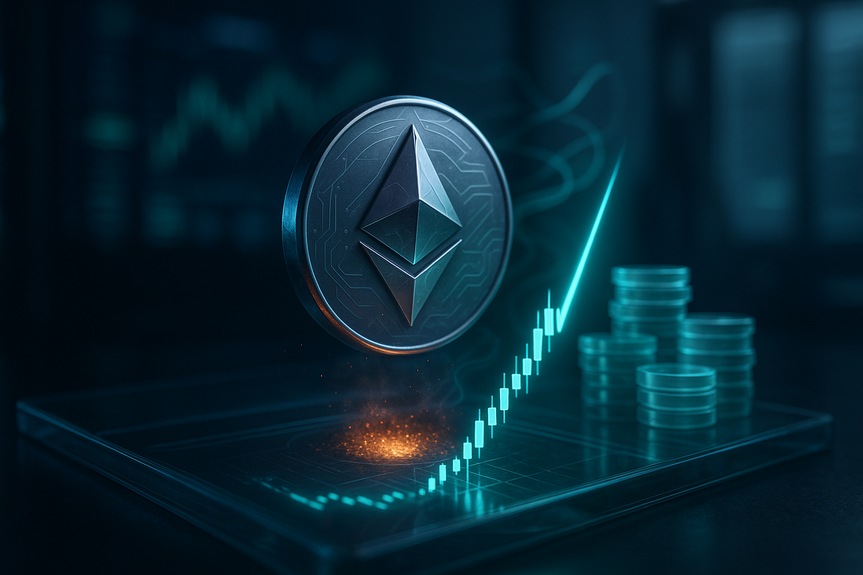
ETH has traded near $3,100 in a tight, symmetrical triangle. Higher lows show buyers are active. Lower highs show sellers defend the range. Volatility dipped as liquidity thinned. Options imply bigger moves ahead. A break from the range could travel fast when a clear catalyst hits. Under the surface, supply keeps tightening. More ETH sits in staking contracts. Exchange balances trend lower. Layer 2 usage climbs. If price stays flat while these inputs rise, pressure builds for a later repricing.Scenario map and positioning
Bull case: $7,000–$9,000
This path needs stronger institutional flows, healthy on-chain activity, and clear rules. Staking keeps removing supply. Fee burn offsets issuance when demand is high. If these trends align, spot markets can feel scarcity and price can expand late in the year.Base case: $4,000–$5,000
This is steady adoption without euphoria. ETH holds its lead in settlement and apps. Allocations grow, but with caution. Staking remains high and fee burn is consistent. Price builds a durable floor and grinds higher as usage compounds.Bear case: $2,000–$3,000
Macro tightening or policy shocks can slow flows. Builders keep building. ETH keeps working in DeFi and on Layer 2. But risk appetite is weak, so the market stays range-bound. Structure remains strong, while time, not price, does the heavy lifting.Positioning ideas that do not require perfect timing
- Use dollar-cost averaging to reduce entry risk.
- Stake a portion to earn yield and lower opportunity cost.
- Prefer blue-chip apps and proven Layer 2s for any on-chain activity.
- Keep a cash buffer to buy dips after volatility spikes.
- Set clear invalidation levels and use small position sizes for leverage, if any.
- Rebalance when allocations drift far from targets.
How to profit without chasing tops
You can lean into usage, yield, and patience. Instead of trying to pick exact highs, build a system that benefits from higher activity and lower liquid supply.- Accumulate on schedule: Set weekly or monthly buys. Pause only if thesis breaks.
- Stake with care: Use reputable validators or liquid staking tokens with a track record.
- Lower costs: Use Layer 2 for most transactions to save fees.
- Compound safely: Reinvest staking rewards, but avoid risky yield farms.
- Track supply signals: Watch staked percentage, exchange balances, and net issuance.
- Protect the downside: Keep stop-loss rules for trading positions and avoid overexposure.
- Mind taxes and security: Use hardware wallets, and plan for taxable events.
Key metrics to watch in 2026
- Percent of ETH staked and the validator queue length.
- Net ETH issuance versus fee burn (is ETH deflationary during peak activity?).
- Stablecoin settlement share and total transfer volume on Ethereum.
- Layer 2 throughput, active addresses, and bridges volume.
- Exchange reserves and on-chain liquidity depth.
- Institutional inflows into regulated ETH products.
- Gas used and average fees across mainnet and major Layer 2s.
Risks that could derail the setup
- Regulatory shocks that limit access to ETH or staking services.
- Smart contract failures or major security events in core infrastructure.
- Competitor chains winning key segments and drawing developers away.
- Delays or issues in planned scaling upgrades.
- Macro stress that drains liquidity from risk assets.
- Centralization concerns on Layer 2 or validator sets that hurt trust.
FAQ
Q: What are the main factors driving the Ethereum price prediction 2026?
A: The key drivers cited in the Ethereum price prediction 2026 are staking yields around 2.8%–3%, EIP-1559 fee burns that reduce net issuance, Layer 2 scaling that increases throughput, and Ethereum’s dominance as the settlement layer for stablecoins and tokenized assets. These forces collectively pull liquid supply off exchanges and tie real usage to value.
Q: How does Ethereum’s role as productive infrastructure differ from Bitcoin’s store-of-value narrative?
A: Ethereum underpins issuance, settlement, and execution for apps, serving as gas, collateral, and a staking asset, whereas Bitcoin functions mainly as a scarce monetary asset institutions hold for long-term exposure. That structural gap helps explain why capital today often targets networks that generate recurring activity rather than assets held in cold storage.
Q: What are the bull, base, and bear scenarios for ETH by the end of 2026?
A: The Ethereum price prediction 2026 outlines a bull case of $7,000–$9,000 if institutional demand accelerates and staking meaningfully reduces liquid supply, a base case of $4,000–$5,000 under steady adoption, and a bear case of $2,000–$3,000 if macro tightening or regulatory uncertainty suppresses flows. Each scenario links price ranges to combinations of staking levels, fee burn dynamics, Layer 2 adoption, and institutional positioning.
Q: What does the current technical setup around $3,100 suggest about future price moves?
A: ETH has been forming a tight symmetrical triangle near $3,100 with higher lows and lower highs, indicating compression rather than exhaustion and a market awaiting a catalyst. With declining volatility and options pricing wider moves, any decisive break from the range could travel quickly.
Q: How can investors position in Ethereum without trying to time the market?
A: Positioning ideas that do not require perfect timing include dollar-cost averaging, staking a portion to earn yield and reduce opportunity cost, using Layer 2s to lower transaction costs, and favoring proven apps and rollups for on-chain activity. Maintain a cash buffer to buy dips, set clear invalidation levels, and rebalance when allocations drift from targets.
Q: Which metrics should I watch to monitor Ethereum’s outlook in 2026?
A: Important metrics to follow include percent of ETH staked and validator queue length, net issuance versus fee burn, stablecoin settlement share and total transfer volume, Layer 2 throughput and active addresses, exchange reserves and on-chain liquidity depth, and institutional inflows into regulated ETH products. Tracking gas used and average fees across mainnet and major Layer 2s also helps gauge real usage and fee burn pressure.
Q: What risks could derail the Ethereum thesis for 2026?
A: Key risks include regulatory shocks that limit access to ETH or staking services, major smart contract failures or security events, competitor chains winning developer and user share, delays or problems in scaling upgrades, macro stress that drains liquidity, and centralization concerns on Layer 2s or validator sets. Any of these could slow institutional flows and keep price range-bound despite ongoing network usage.
Q: Will staking and fee burn make ETH deflationary and create lasting scarcity?
A: Staking removes a large share of supply from circulation and EIP-1559 fee burn reduces net issuance during periods of high activity, which tightens supply and can make ETH deflationary in busy periods. Whether that scarcity translates into lasting higher prices depends on demand, institutional flows, and broader macro conditions rather than supply mechanics alone.
* The information provided on this website is based solely on my personal experience, research and technical knowledge. This content should not be construed as investment advice or a recommendation. Any investment decision must be made on the basis of your own independent judgement.
Contents