Crypto
19 Jan 2026
Read 12 min
Shiba Inu futures open interest Could Flip How to Spot *
Shiba Inu futures open interest remains elevated at 13.07T, helping traders spot a sentiment flip.
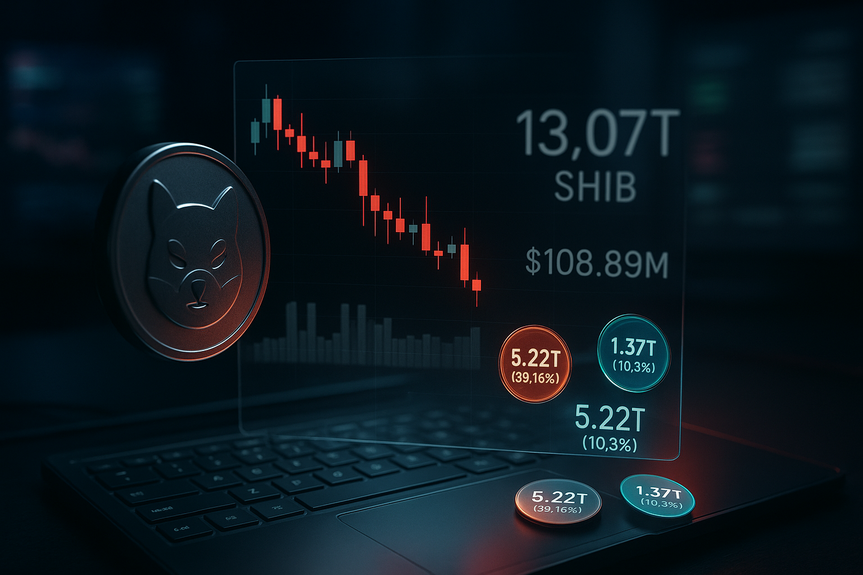
Shiba Inu futures open interest slipped less than 1% in the past day, yet it still sits near 13.07 trillion SHIB (about $108.9 million). Price and spot volume are softer, but derivatives activity stays high. Here is how to read the signs, track momentum, and spot a potential flip before it shows up in price.
Shiba Inu’s derivatives market cooled slightly over the last 24 hours. Open interest fell just 0.93% as of Jan. 16, even as price dropped 3.08% to around $0.000008182. Spot volume fell more than 40% to about $93.49 million. When futures participation stays strong while price weakens, it can set up quick swings. Traders appear split, and that can change fast.
Price down, OI up: New shorts may be pressing. If price later rebounds while OI stays high, short covering can boost a rally.
Price up, OI up: New longs may be entering. If price stalls and OI stays high, a squeeze the other way becomes possible.
Price down, OI down: Positions are closing. The move may be near a pause if sellers lose interest.
Price up, OI down: Shorts are closing. A relief move may fade if no fresh longs step in.
Right now we see soft price and only a mild OI dip. That hints at a market that still has fuel. If price stops falling and funding flips, a quick move can follow.
Funding rate: Positive funding means longs pay shorts. It often shows bullish bias. Negative funding means shorts pay longs and often shows bearish bias.
Watch for turns: A funding flip after a big move can show exhaustion. For example, price down with funding turning less negative can spot fading bearish pressure.
Long/short ratio: If it spikes one way, risk of a squeeze grows in the opposite direction.
Liquidation clusters: If many stops sit above a nearby level, a small push can trigger a cascade higher. The same logic applies to the downside.
Use heatmaps and recent wick zones: Wicks often tag stop pools. A second test with higher OI can trigger a larger release.
Watch 15–60 minute windows. If price stabilizes while OI rises, pressure is building. Combine with volume to gauge strength.
A strong bounce with rising OI often means fresh longs. A strong bounce with falling OI often means shorts are closing (short squeeze).
Funding easing toward neutral after a drop can show sellers losing grip.
Volume should expand on the attempt to flip. A low-volume bounce often fades.
Identify the last lower high on the drop. A clean break and hold above it shows momentum turning.
Use a simple moving average (like 20 EMA on the 1-hour) as a guide. Price reclaim plus supportive OI is a stronger sign.
Mark levels with stacked stops. If price reaches them and OI does not fall, the move may still have legs.
If price taps a cluster and OI collapses, the move might be driven by closing orders and can cool off.
Different funding and fee models can pull traders to one venue, swinging bias.
If one exchange dominates and its metrics turn, the whole market can follow.
Outliers in long/short ratios on a single platform can foreshadow squeezes there first.
Keep an eye on changes in exchange-level Shiba Inu futures open interest. A fast jump on one venue can be the first hint of a broader move.
Price base forms above a recent low. Funding moves toward neutral.
OI holds or rises modestly. Break above a local lower high confirms the turn.
Short covering adds fuel. Watch for stronger volume on green candles.
Spot volume stays weak. Funding drifts more negative.
OI drops as traders exit. Moves remain choppy, with shallow bounces.
Look for a final flush into a liquidity pocket, then reassess.
Price oscillates in a tight band. Funding flips back and forth near zero.
OI rotates between exchanges. No clear leader in long/short ratio.
Wait for a range break with volume and OI confirmation.
Recent low and the last lower high on the 1-hour chart.
Daily open, yesterday’s high/low, and a 20/50 EMA pair on the 1-hour for trend bias.
Key liquidation clusters visible on public heatmaps.
Then apply two confirmations before acting:
Price structure break in your direction.
Aligned OI and funding behavior (for example, rising OI and neutral/positive funding on a break higher).
Size small. Risk a fixed, small percent of your account per trade.
Use hard stops. Do not rely on manual exits in fast markets.
Avoid revenge trades after a loss. Wait for your setup to return.
Respect funding cycles around the 8-hour marks, as liquidity can shift.
If OI or funding flips against your idea, reassess quickly.
What the numbers say right now
Shiba Inu is still seeing heavy futures participation. The latest reading shows about 13.07 trillion SHIB in open contracts, worth roughly $108.89 million. This large base suggests traders did not exit in force. Instead, they held positions and waited for a clear signal. At the same time, price is in the red, and spot volume slid. A drop in volume often means fewer aggressive buyers or sellers. It also means thinner liquidity, which can magnify moves when a spark hits. On-chain and sentiment data point to a split market. Longs and shorts both show activity, but neither side has won. This “standstill” often ends with a break. The key is to watch how Shiba Inu futures open interest behaves into that break.Shiba Inu futures open interest: why it matters and how flips form
Open interest is the number of outstanding futures contracts that are not closed yet. It tells you how engaged the market is. A flip happens when market bias turns quickly, often pushing price out of a range. Here is how different OI and price mixes can signal a change:Price–OI divergences to watch
Funding, long/short ratio, and what they mean
Liquidation heat and where stops sit
How to spot a turn early: a simple checklist
Use this quick routine to see if a flip is forming:Step 1: Track price and OI together
Step 2: Confirm with funding and volume
Step 3: Look for market structure shifts
Step 4: Note where liquidations may trigger
Where the activity sits: exchange breakdown
Exchange flow matters because funding, leverage caps, and trader mix vary. Today, Gate.io leads the futures market with about 39.13% of total open interest. That equals roughly 5.22 trillion SHIB, worth around $42.61 million. OKX follows with about 1.37 trillion SHIB, or 10.3% of the total. Why care about this split?Scenarios to watch next
No one knows the next tick, but you can plan for the likely paths.1) Bullish flip after a slow bleed
2) Grind lower with contained OI
3) Range chop before decision
Levels and signals you can track
Mark your chart with a few simple references:Risk basics for trading SHIB futures
SHIB is volatile, and leverage magnifies that. Keep it simple:Putting it all together
We have a soft price, lower spot volume, and strong but slightly lower participation across futures. That mix often precedes a fast move once one side gains control. Watch the pair of price and OI, the next funding turns, and exchange-level flows. If you see price reclaim a key level while Shiba Inu futures open interest holds or climbs and volume expands, a flip may be underway. In short, the market is active and close to a decision. Stay patient, track a few clean signals, and let the data confirm the move. When the break comes, the behavior of Shiba Inu futures open interest will likely show it first—and help you decide if the turn has real strength. (Source: https://u.today/13070000000000-shib-in-24-hours-shiba-inu-oi-may-flip-soon) For more news: Click HereFAQ
Q: What is the current level of Shiba Inu futures open interest and how has it changed recently?
A: As of Jan. 16, Shiba Inu futures open interest stood at about 13.07 trillion SHIB, roughly $108.89 million. It slipped 0.93% over the prior 24 hours while price fell about 3.08% to roughly $0.000008182.
Q: Why does Shiba Inu futures open interest matter to traders?
A: Shiba Inu futures open interest measures outstanding futures contracts and indicates how engaged the market is; a large base suggests traders did not exit in force. Divergences between price and OI can presage quick swings or flips, so watching OI helps anticipate potential trend changes.
Q: How can price and open interest divergences signal a potential flip?
A: Shiba Inu futures open interest divergences offer clear clues: price down with OI up often signals new shorts and, if price later rebounds while OI stays high, short covering can boost a rally. Price up with OI up suggests fresh longs and squeeze risk, while price down with OI down usually means positions are closing and the move may pause.
Q: Which exchanges currently hold the largest share of Shiba Inu futures open interest and why does that matter?
A: Shiba Inu futures open interest is concentrated on Gate.io, which accounts for about 39.13% of total open interest, roughly 5.22 trillion SHIB worth around $42.61 million, while OKX holds about 1.37 trillion SHIB or 10.3% of the total. Exchange-level flows matter because funding, leverage caps, and trader mix vary, and a dominant venue turning quickly can foreshadow a broader market move.
Q: What checklist should traders use to spot a flip before it shows up in price?
A: To spot a potential flip in Shiba Inu futures open interest, track price and OI on 15–60 minute windows, confirm attempts with funding rate and expanding volume, and look for market-structure shifts like a clean break above the last lower high or reclaiming the 20 EMA on the one-hour. Also note liquidation clusters and exchange-level OI changes to see where stops might cascade.
Q: How should traders use funding rate and long/short ratios to confirm a market turn?
A: The funding rate shows who pays whom: positive funding means longs pay shorts and often indicates bullish bias, while negative funding means shorts pay longs and often points to bearish pressure. A funding flip toward neutral after a drop can show sellers losing grip and supports a possible reversal, particularly if Shiba Inu futures open interest holds or rises.
Q: What risk-management steps are recommended when trading SHIB futures?
A: Keep positions small, risk a fixed small percent of your account, use hard stops, and avoid revenge trades while respecting funding cycles around the 8‑hour marks. Monitor Shiba Inu futures open interest and funding closely and reassess quickly if they flip against your position.
Q: Given current conditions, what scenarios should traders prepare for with Shiba Inu futures open interest in mind?
A: Given the soft price and lower spot volume, prepare for a bullish flip if price forms a base, funding moves toward neutral, and Shiba Inu futures open interest holds or climbs, which could invite short covering and stronger volume. Alternatively, expect a grind lower with contained OI or a range chop if funding drifts negative and OI drops as traders exit.
* The information provided on this website is based solely on my personal experience, research and technical knowledge. This content should not be construed as investment advice or a recommendation. Any investment decision must be made on the basis of your own independent judgement.
Contents