Crypto
08 Feb 2026
Read 13 min
Trump UAE crypto deal explained: 5 things to know *
Trump UAE crypto deal explained: uncover the $500m link to UAE power and why it threatens US policy.
Trump UAE crypto deal explained in five clear points: A firm tied to UAE royal Sheikh Tahnoon agreed to pay $500 million for a 49% stake in a Trump family crypto startup just before the 2025 inauguration. A linked $2 billion stablecoin plan and a later U.S. AI-chip approval raised conflict-of-interest and national security concerns.
A secret $500 million investment landed in a Trump family crypto venture days before Donald Trump returned to the White House in 2025. The buyer was a firm controlled by Sheikh Tahnoon bin Zayed Al Nahyan, the UAE’s powerful national security adviser. The deal, plus a follow-on $2 billion stablecoin plan and a later U.S. policy shift on AI chips, sparked sharp ethics questions. Supporters say nothing improper happened. Critics see influence-buying and new risks as crypto, geopolitics, and U.S. technology policy collide.
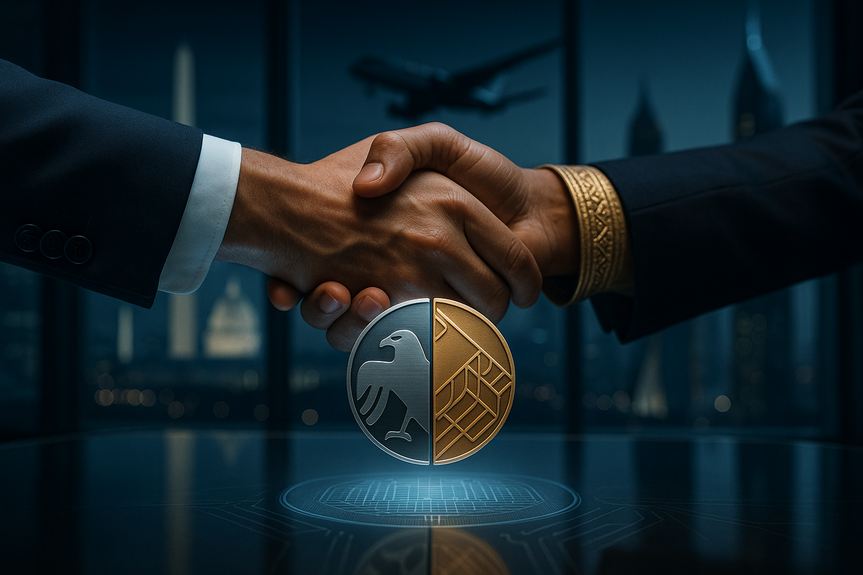
A $500 million stake: A UAE royal’s firm agreed to buy 49% of a Trump family crypto startup just before the 2025 inauguration.
Powerful buyer: Sheikh Tahnoon is the UAE’s national security adviser and a leading voice in AI and sovereign investment.
Linked $2 billion plan: An entity he chairs pledged a $2 billion stablecoin investment through the same Trump-linked platform.
AI chips approved later: Soon after, the U.S. allowed major AI-chip sales to the UAE, despite internal security concerns; the White House denies any link.
Oversight gap: Crypto rules eased, a DOJ crypto-fraud unit shut down, and Congress showed little appetite for inquiry.
New board appointments or governance changes at World Liberty Financial and MGX
Stablecoin reserves, attestation quality, and interest allocation disclosures
Any fresh U.S.-UAE agreements on AI safety, export controls, or chip end-use audits
Congressional letters, hearings, or subpoenas related to crypto or AI-chip policy
Enforcement trends at the SEC, CFTC, and DOJ as crypto oversight shifts
To keep the Trump UAE crypto deal explained simple, follow the sequence: a big pre-inauguration investment; a larger stablecoin plan with board overlaps; then a policy green light on high-end chips. Add deregulation, limited transparency, and weak oversight, and you get a high-risk mix of money, policy, and power.
In the end, ethics rules do more than stop corruption; they protect public trust. Even if every step here was legal, the appearance of influence is strong. It is on leaders to build clear firewalls, publish robust disclosures, and welcome independent checks. Healthy markets and sound national security both depend on it.
Conclusion: With the Trump UAE crypto deal explained, you can see why the timing, the actors, and the linked moves around stablecoins and AI chips matter. The facts point to urgent needs: tighter transparency, stronger guardrails, and real oversight so U.S. policy serves the public—and is seen to do so.
Trump UAE crypto deal explained: why it matters now
This is not just a business story. It touches U.S. foreign policy, national security, and rules that aim to stop foreign money from swaying a sitting president. Below is the Trump UAE crypto deal explained in five parts, with simple language and key facts you can check.Who paid, how much, and when
– The investment: $500 million for a 49% stake in World Liberty Financial, a crypto startup launched by members of the Trump family and close allies in late 2024. – The timing: The contract was signed shortly before Trump’s January 2025 return to office, according to major news reports. – The counterparty: An investment arm linked to Sheikh Tahnoon, a top UAE official. World Liberty Financial was young and had done limited business before the deal. That raised questions about valuation, risk, and what the buyer hoped to gain beyond profit.Who is Sheikh Tahnoon—and why that matters
Sheikh Tahnoon is one of the most influential figures in the UAE: – He serves as national security adviser. – He chairs huge sovereign wealth funds with combined assets estimated around $1.5 trillion. – He is a leading force in AI and tech investments, including a prominent role with G42. Because he holds government power and major investment roles, his private deals can blur with national interests. When such a figure buys into a sitting president’s company, conflict concerns rise.Crypto turned into cash and clout
The Trump family’s second term has featured an aggressive push into crypto. Reports say: – A memecoin contest tied to Trump brought in about $148 million, with many buyers offshore or anonymous. – The top buyer was a Chinese crypto billionaire, Justin Sun, who reportedly spent over $20 million on the token and had invested heavily in another Trump-linked crypto venture. – Around the same time, the SEC put a 2023 civil case against Sun on hold. Sun’s side said he sought no special treatment. The timing drew public scrutiny. These examples show how crypto can move large sums from foreign actors into ventures linked to a U.S. president, often with limited transparency.The $2 billion MGX stablecoin move—and the AI-chip shift
In May 2025, a second major puzzle piece appeared: – MGX, another company chaired by Sheikh Tahnoon, said it would invest $2 billion via a stablecoin issued by World Liberty Financial. – That kind of stablecoin deal can generate steady interest income. Reports estimate potential tens of millions of dollars per year in revenue. – Overlap alert: Directors named by Tahnoon to World Liberty’s board also served on MGX’s board, according to investigations. That link was not highlighted at the public rollout. Two weeks later, the U.S. approved large sales of advanced AI chips to the UAE. The prior administration had set tighter limits to stop misuse and reduce the risk that sensitive tech could reach China. Some U.S. security officials objected to the new approvals, citing sharing risks. The White House said there was no connection between the crypto deals and the AI-chip decision. Officials also said Trump and his envoy had stepped aside from family businesses.Regulatory climate and oversight
The broader policy backdrop matters: – The administration moved to soften crypto oversight and reportedly dissolved a Justice Department unit that targeted crypto-related fraud. – Congress has not mounted a major probe of these business ties. – Watchdogs warn that lighter rules, plus opaque crypto flows, can invite abuse or at least the appearance of it. Supporters of deregulation say it boosts innovation and jobs. Critics say it lowers safeguards just as foreign money floods in.Does the $500 million price make sense?
On the face of it, paying $500 million for nearly half of a young crypto firm with limited activity is hard to justify on traditional metrics. That has led analysts to ask whether the UAE’s strategic return—access to U.S. influence, credibility in crypto rails, and a smoother path to top-tier AI hardware—mattered more than near-term profits.Five things to know
What remains unclear
– The full terms of the $500 million deal, including governance rights, dividend rules, and exit paths. – Any side agreements related to technology access, data sharing, or future coin issuance. – The degree to which Trump or his close aides had visibility into, or influence over, crypto or AI-chip policy decisions tied to the UAE.What it could mean for U.S. policy
– Foreign policy leverage: Deep business ties with Gulf state insiders can strain America’s posture as an “honest broker” on issues like Sudan’s war or regional security. – Tech security: Large AI-chip transfers raise risks around diversion to third parties. Strong guardrails and end-use checks are vital. – Market integrity: When government decisions appear to benefit companies linked to political leaders, market trust suffers—even if no law is broken.Practical signals to watch next
(Source: https://www.theguardian.com/commentisfree/2026/feb/06/trump-family-uae-crypto-deal)
For more news: Click Here
FAQ
Q: What was the $500m deal between the Trump family and a UAE-linked investor?
A: The Trump UAE crypto deal explained the core facts in brief. Days before Donald Trump returned to office in January 2025, an investment firm tied to Sheikh Tahnoon bin Zayed Al Nahyan agreed to pay $500m for a 49% stake in World Liberty Financial, a crypto startup founded by members of the Trump family and close allies.
Q: Who is Sheikh Tahnoon and why does his role matter in this story?
A: Sheikh Tahnoon bin Zayed Al Nahyan is the UAE’s national security adviser who chairs two Abu Dhabi sovereign wealth funds with combined assets of about $1.5tn and plays a leading role in AI investments through firms like G42. His government power and investment reach matter because a government-linked official buying into a sitting president’s company raises conflicts between national interests and private business.
Q: Why do critics say the deal poses a conflict of interest?
A: Critics point to the timing—a foreign government official buying a large stake in a company founded by the president’s family just before the inauguration—which can compromise the administration’s ability to negotiate and create the appearance of influence-buying. The reporting also links the transaction to later policy moves, such as relaxed crypto oversight and approval of AI-chip sales to the UAE, which deepen ethical concerns.
Q: What was the $2bn MGX stablecoin plan connected to World Liberty Financial?
A: MGX, a firm chaired by Sheikh Tahnoon, announced it would invest $2bn using a stablecoin issued by World Liberty Financial, a move that could generate tens of millions in interest revenue annually for the Trump-linked platform. Investigations reported board overlaps between World Liberty and MGX that were not highlighted at the public rollout, raising transparency questions.
Q: Did U.S. officials approve AI-chip sales to the UAE after these crypto transactions?
A: Yes; two weeks after MGX’s $2bn announcement the Trump administration allowed the UAE to buy hundreds of thousands of advanced AI chips, reversing earlier export restrictions meant to limit misuse. The White House denied any connection between the crypto deals and the chip approvals, while some U.S. national security officials publicly objected to the change.
Q: What regulatory and oversight changes does the article say matter in this context?
A: The article notes that the administration moved to ease crypto regulation and ordered the Justice Department to disband a national unit focused on crypto-related fraud, weakening enforcement at a sensitive time. It also highlights limited disclosure about the deal terms and a lack of a major congressional probe as key oversight gaps.
Q: How much revenue did Trump family crypto ventures generate, and who were notable buyers?
A: The reporting says the Trump family generated about $1.4bn from crypto projects over the past year, and a memecoin contest brought in roughly $148m with many buyers from abroad or anonymous. The top memecoin buyer reportedly spent more than $20m, and the SEC suspended a 2023 civil fraud case it had brought against investor Justin Sun, which drew scrutiny.
Q: What practical signs should the public watch to follow developments in this case?
A: The article recommends watching new board appointments at World Liberty and MGX, disclosures about stablecoin reserves and interest allocations, and any U.S.-UAE agreements on AI safety or export controls as immediate signals. It also advises monitoring congressional letters or hearings and enforcement trends at the SEC, CFTC, and DOJ to judge whether transparency and guardrails improve.
* The information provided on this website is based solely on my personal experience, research and technical knowledge. This content should not be construed as investment advice or a recommendation. Any investment decision must be made on the basis of your own independent judgement.
Contents