AI News
13 Feb 2026
Read 8 min
How GE Aerospace Singapore repair hub boosts returns
GE Aerospace Singapore repair hub slashes turnaround times and boosts services margins across Asia.
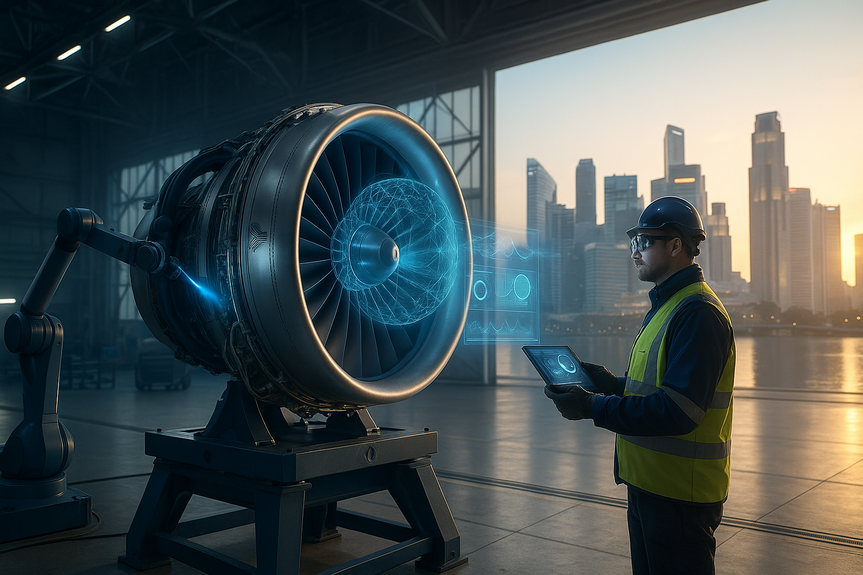
GE is pouring up to $300 million into the GE Aerospace Singapore repair hub to speed engine fixes with AI and automation. The move aims to lift service margins, cut turnaround times, and support Asia Pacific airlines. A long-term EDB partnership signals durable capacity and better backlog-to-cash conversion.
GE Aerospace is making a big, long-term bet on Asia Pacific. The company plans to expand its engine repair and overhaul in Singapore with more automation, AI-led inspections, and new coating capabilities. A formal partnership with Singapore’s Economic Development Board (EDB) backs the plan. With a five-year investment of up to US$300 million, the site targets faster repairs, stronger customer ties, and more steady services revenue.
Why the GE Aerospace Singapore repair hub matters
Singapore sits at the center of Asia Pacific air travel. Airlines in the region want reliable, local support. The GE Aerospace Singapore repair hub brings that support closer. It should reduce shipping time, improve schedule control, and cut downtime for carriers. For GE, that helps shift its mix toward high-margin aftermarket work, which is more stable than new engine sales.Automation and AI drive faster, safer repairs
AI-enabled inspection
The hub will use AI tools to spot wear, cracks, and heat damage earlier and with more accuracy. This can catch issues before they get costly. It also helps standardize quality across shifts and teams.Advanced automation
Robotics and automated processes can handle repeat tasks with steady precision. That supports consistent turn times, reduces rework, and frees skilled staff to solve harder problems.Predictive maintenance and coatings
By combining inspection data with engine performance records, the shop can predict failure risks and plan parts and labor in advance. New chemical-compliant coating capabilities can extend part life and protect components, which supports lower lifecycle costs for airlines.Services flywheel: margins, cash, and backlog conversion
GE has a large installed base and a reported order backlog near US$190 billion. Turning that backlog into cash depends on smooth delivery and strong services. A faster, smarter regional hub helps on both counts. – Better turn times can raise shop throughput and billable hours – Predictive work can grow long-term service agreements – Higher reliability can lift customer retention and win new contracts – Stable services revenue can support better free cash flow As airlines route engines to the GE Aerospace Singapore repair hub, GE can lock in recurring work that tends to carry better margins than original equipment sales. That mix shift can smooth earnings across cycles.Rivals, risks, and what to watch
Competitive landscape
Rolls-Royce, Pratt & Whitney, and Safran are also investing in digital maintenance. The race is about speed, reliability, and cost. Customers will choose partners who deliver on-time, on-budget, and with less downtime.Key risks
– Air travel could slow, which would reduce shop visits – Supply chain or certification delays could push out capacity gains – New AI tools must meet safety and regulatory standards – Labor and training need to keep pace with new techInvestor scorecard
Watch these markers to judge impact: – Average turnaround time per shop visit – On-time delivery rates and rework rates – Parts availability and scrap reduction – Services revenue growth and margin trend – Free cash flow conversion from servicesSingapore’s role in a durable services network
The EDB partnership suggests a long-term plan, not a quick fix. The location gives GE a hub-and-spoke model for Asia Pacific, with proximity to key fleets and airports. The reported AI Center of Excellence in Singapore can also spread best practices across GE’s global network, lifting consistency and speed worldwide. In time, the GE Aerospace Singapore repair hub could anchor a wider regional ecosystem—training, data analytics, and supplier coordination—that keeps engines flying longer between shop visits and back in service faster when they land. The bottom line: this buildout aims to turn data and design know-how into dependable, repeatable service value. That is where returns improve. GE’s Singapore move looks like a clear push to grow high-quality services revenue, improve customer trust, and turn a large backlog into cash. If automation and AI hit their marks, the GE Aerospace Singapore repair hub can sharpen margins, reduce downtime for airlines, and support steadier returns over the long run. (Source: https://finance.yahoo.com/news/ge-aerospace-bets-singapore-ai-190923608.html) For more news: Click HereFAQ
Q: What is the GE Aerospace Singapore repair hub and why is GE investing in it?
A: The GE Aerospace Singapore repair hub is an expansion of GE Aerospace’s engine repair and overhaul capabilities in Singapore backed by a formal partnership with the Economic Development Board. GE is investing up to US$300 million over five years to add automation, AI-enabled inspection and coating capabilities intended to speed repairs, lift service margins, and support Asia Pacific airlines.
Q: How much is GE investing in the GE Aerospace Singapore repair hub and over what timeframe?
A: GE has outlined a five-year plan committing up to US$300 million to expand the GE Aerospace Singapore repair hub. The plan is tied to a government partnership with the EDB and is intended as durable regional capacity rather than a short-term adjustment.
Q: What technologies will the GE Aerospace Singapore repair hub use to improve maintenance?
A: The GE Aerospace Singapore repair hub will deploy AI-enabled inspection tools, advanced automation and robotics, and predictive maintenance that combines inspection data with engine performance records. It will also add chemical-compliant coating capabilities to extend part life and lower lifecycle costs for airlines.
Q: How will the GE Aerospace Singapore repair hub benefit airlines in the Asia Pacific region?
A: By locating repair capacity in Singapore, the GE Aerospace Singapore repair hub aims to reduce shipping time, improve schedule control and cut engine downtime for regional carriers. Faster turnaround times and predictive maintenance at the hub should support higher reliability and lower operating costs for airlines.
Q: How could the GE Aerospace Singapore repair hub affect GE’s backlog conversion and services revenue?
A: With an installed base and an order backlog of about US$190 billion, GE expects faster, smarter regional repairs to help convert backlog into services revenue and free cash flow. The hub is intended to help shift GE’s mix toward higher‑margin aftermarket work that can smooth earnings across cycles.
Q: What competitive and operational risks could affect the GE Aerospace Singapore repair hub?
A: Key risks cited include a slowdown in air travel, supply chain or certification delays, and the need for new AI tools to meet safety and regulatory standards. Competitors such as Rolls‑Royce, Pratt & Whitney and Safran are also investing in digital maintenance, which raises the competitive stakes for the GE Aerospace Singapore repair hub.
Q: What does the partnership with Singapore’s Economic Development Board (EDB) signal about the project?
A: The formal EDB partnership signals the project is intended as a long-term platform with local support rather than a temporary capacity increase. Backing from the EDB reinforces GE’s plan to use the GE Aerospace Singapore repair hub as a regional hub-and-spoke model for Asia Pacific services.
Q: What operational metrics should investors watch to judge the GE Aerospace Singapore repair hub’s impact?
A: Investors should monitor average turnaround time per shop visit, on-time delivery and rework rates, parts availability and scrap reduction, as well as services revenue growth and margin trends. Those indicators will show whether the GE Aerospace Singapore repair hub is improving efficiency and cash conversion from services.
Contents