Crypto
07 Mar 2026
Read 12 min
How to invest $1000 in Ethereum for long-term gains *
Invest $1000 in Ethereum to gain exposure to core DeFi infrastructure and long-term growth for years.
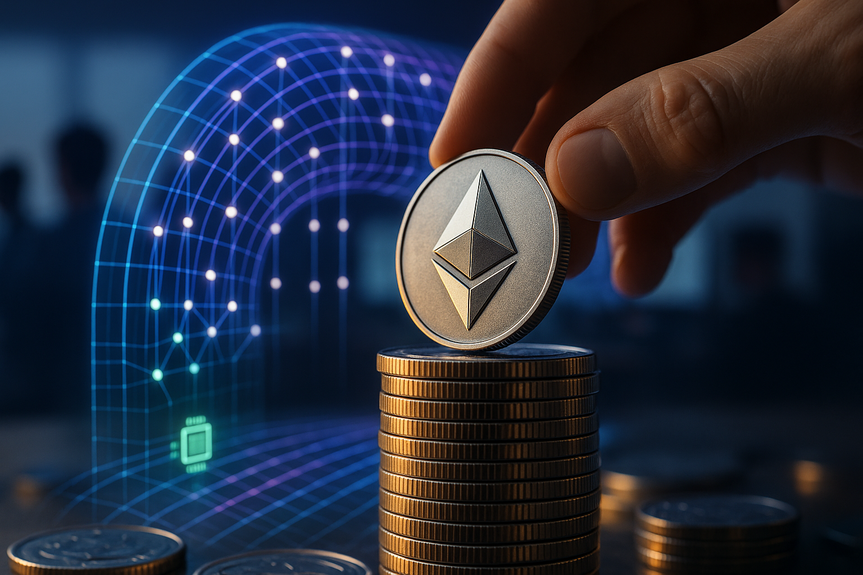
If you want to invest $1000 in Ethereum, focus on long-term strength, not short-term swings. Ethereum anchors most of decentralized finance, holds the largest share of stablecoins, and continues to attract builders. With two network upgrades slated for 2026, it aims to get faster, cheaper, and more secure—key drivers for steady demand over time.
The last few years have been choppy for crypto. Prices bounced around as inflation, rates, and global tensions rose and fell. Ethereum’s price gains look modest over three years and weak in recent months. Yet the network’s heartbeat is strong. More users, more apps, and more capital keep showing up. If you plan to hold for years, that matters more than this quarter’s chart.
Trim 10% of your position if it grows beyond a fixed share of your portfolio.
Add more only on planned schedule, not on emotion.
– Keep an emergency fund outside crypto. Do not invest rent or short-term cash needs.
Why invest $1000 in Ethereum right now
Ethereum acts like an operating system for open finance. Apps for lending, borrowing, trading, and payments run on its smart contracts. That gives Ether, the native token, real use. It pays for transactions, secures the network through staking, and serves as core collateral across decentralized apps.Dominance in DeFi and stablecoins
– Ethereum secures the largest pile of value in decentralized finance. Out of roughly $96 billion in total value locked, about $55 billion sits on Ethereum. That is a big lead. – Its closest rival in DeFi, Solana, holds under $7 billion by the same measure. – Ethereum also hosts more than half of all stablecoins: around $159 billion of a roughly $309 billion market. This depth brings a powerful network effect. Capital attracts developers. Developers attract users. Users bring more capital. That loop feeds demand for Ether over time.Developer momentum and rising activity
Builders keep shipping on Ethereum. In Q4 2025, developers deployed a record 8.7 million smart contracts. Daily active wallets nearly doubled during 2025 to more than 651,000. High developer activity means more apps, more payments, and more reasons to hold and use Ether. It also signals confidence that the platform will keep leading.How to invest $1000 in Ethereum without overthinking it
You do not need a complex plan to get started. You need a safe setup, a simple buy method, and clear rules.Step 1: Pick a secure way to buy and store
– Use a well-known exchange with strong security and clear fees. – Move long-term holdings to a wallet you control after buying. – Start with a user-friendly hardware wallet or a trusted software wallet with two-factor authentication.Step 2: Choose lump sum or dollar-cost averaging
– Lump sum: Buy your full amount at once. This is fast and avoids missing a sudden move up. – Dollar-cost averaging (DCA): Split your $1,000 into weekly or biweekly buys over 2–3 months. This reduces the risk of buying at a local peak. Both approaches work. Pick one and stick with it. Many new investors choose DCA to sleep better during volatility when they invest $1000 in Ethereum.Step 3: Keep fees low
– Compare trading fees on a few platforms before you buy. – Consider using an Ethereum Layer 2 network (such as major rollups) to move tokens at lower cost after purchase. – Batch moves. Fewer transactions means fewer fees.Step 4: Consider staking a portion
– Staking helps secure the network and can earn yield in ETH. – You can stake directly or use a reputable liquid staking service. – Understand risks. Smart contract bugs or provider issues can impact your funds. Do not stake more than you can leave untouched.Step 5: Set guardrails
– Decide your time horizon in years, not months. – Define a rebalancing rule. For example:What upgrades in 2026 could change the game
Ethereum’s roadmap aims to make the network faster, cheaper, and more resilient. Two major upgrades are planned for 2026. Timelines can slip, and details may change, but the direction is clear: better performance and broader access.Glamsterdam: Laying the groundwork for speed and lower costs
– Targeted for the first half of 2026. – Prepares the chain for parallel transaction processing, a key step to speed up throughput. – Includes changes designed to reduce gas fees for users. Cheaper, faster transactions attract more activity. More activity builds more demand for block space and for Ether.Hegota: Lowering hardware costs for validators
– Aims for late 2026. – Seeks to reduce the cost of running validator nodes. – Could increase the number of independent validators, boosting decentralization and network resilience. A broader validator set reduces single points of failure. It can also increase trust from institutions and developers who rely on the network staying up and secure.The long-term case: Patience over prediction
Short-term price moves are noisy. What compounds is utility. Ethereum anchors the largest pools of DeFi capital and stablecoins. It keeps adding developers, apps, and users. If you invest $1000 in Ethereum with a multi-year plan, you are betting that usage, liquidity, and security will keep reinforcing one another.Expect volatility and plan for it
Crypto cycles are sharp. Big upgrades often spark hype and then a dip. Macro shocks can hit everything at once. Rate changes, regulation, and global conflicts can all weigh on risk assets. That is normal for this space. Your edge is discipline. Stick to your schedule, keep fees low, and avoid leverage.Where it fits in a broader portfolio
– Make Ethereum the core of your crypto slice, not your whole portfolio. – Balance with cash, bonds, or stocks to control risk. – Revisit allocation once or twice a year. Rebalance on set dates, not headlines.Risks to watch before and after you buy
– Competition: Faster chains like Solana push hard on fees and speed. Ethereum’s lead comes from liquidity, tools, and security, but the race continues. – Technical delays: Upgrades can slip or ship with fewer features than hoped. Markets can overreact both ways. – Security and smart contract risk: DeFi protocols can fail or get exploited. Use caution with new or untested apps. – Regulatory pressure: Rules for exchanges, stablecoins, and staking can change and impact prices or access. None of these risks erase the core use case. They do argue for sizing your position wisely and holding cash for opportunities.A simple example plan for new buyers
– Week 1: Open accounts, secure your wallet, and buy $250 worth of ETH. – Weeks 2–5: Buy $250 of ETH each week on the same day and time. – After week 5: Stake 25%–40% through a provider you researched. Keep the rest liquid in your wallet. – Quarterly: Review your allocation. If ETH grows far beyond your target slice, trim a bit and add to cash or a broad index fund. If it falls, continue your scheduled buys only if it still fits your plan and risk level. This approach keeps emotions low and lets the network’s growth do the work. You will not time every move. You will capture the long arc if the platform keeps compounding adoption. The bottom line: If your goal is to invest $1000 in Ethereum and hold for years, focus on the network’s real-world use, its leadership in DeFi and stablecoins, and the 2026 upgrades that aim to cut costs and boost resilience. Keep fees down, consider staking carefully, and stay patient. That is how long-term gains most often show up.(Source: https://www.fool.com/investing/2026/03/05/got-1000-this-cryptocurrency-is-a-no-brainer-buy-f/)
For more news: Click Here
FAQ
Q: Why might I choose to invest $1000 in Ethereum for the long term?
A: If you plan to invest $1000 in Ethereum for the long term, Ethereum’s role as the operating system for most decentralized finance, its roughly $55 billion of the $96 billion in DeFi TVL, and its hosting of about $159 billion in stablecoins support persistent demand for Ether. Strong developer activity — a record 8.7 million smart contracts deployed in Q4 2025 and more than 651,000 active daily wallets — further indicates continued use and build-out.
Q: What are the main risks to consider before investing $1000 in Ethereum?
A: Main risks include competition from faster, lower-cost chains like Solana, potential delays or reduced scope for planned upgrades, security problems in DeFi smart contracts, and changing regulatory pressure that can affect access or prices. These risks argue for sizing your position wisely, keeping cash outside crypto for emergencies, and not overallocating if you decide to invest $1000 in Ethereum.
Q: How should I buy and store Ethereum securely?
A: Use a well-known exchange with clear fees to buy Ethereum, then transfer long-term holdings to a wallet you control. Prefer a user-friendly hardware wallet or a trusted software wallet with two-factor authentication to keep your assets secure.
Q: Is it better to buy a lump sum or use dollar-cost averaging when I invest $1000 in Ethereum?
A: Lump sum buys your full amount at once and avoids missing a sudden move, while dollar-cost averaging (DCA) splits your $1,000 into regular purchases over two to three months to reduce the risk of buying at a local peak. Many new investors choose DCA to sleep better during volatility when they invest $1000 in Ethereum.
Q: What are the Glamsterdam and Hegota upgrades, and why do they matter for investors?
A: Glamsterdam, targeted for the first half of 2026, prepares Ethereum for parallel transaction processing and includes changes designed to lower gas fees, which could make transactions faster and cheaper. Hegota, aiming for late 2026, seeks to lower the hardware cost of running validator nodes to attract more independent validators and boost network resilience.
Q: Should I stake part of my Ethereum holdings after I invest $1000 in Ethereum?
A: Staking can help secure the network and earn yield, and you can stake directly or use reputable liquid staking services. Understand the risks — smart contract bugs or provider issues can affect funds — and avoid staking more than you can leave untouched.
Q: How does Ethereum fit into a broader investment portfolio?
A: Make Ethereum the core of your crypto slice, not your whole portfolio, and balance the rest with cash, bonds, or stocks to control overall risk. Revisit and rebalance your allocation once or twice a year on a set schedule rather than reacting to headlines.
Q: What is a simple example plan for a new buyer who wants to invest $1000 in Ethereum?
A: A simple example from the article starts with opening accounts, securing your wallet, and making an initial $250 purchase, followed by scheduled weekly purchases and then staking 25%–40% after the buying period while keeping the rest liquid. Review the allocation quarterly, trim if ETH grows far beyond your target slice, and continue planned buys only if they still fit your risk profile.
* The information provided on this website is based solely on my personal experience, research and technical knowledge. This content should not be construed as investment advice or a recommendation. Any investment decision must be made on the basis of your own independent judgement.
Contents