Crypto
08 Mar 2026
Read 13 min
US contractor crypto theft arrest: What owners must know *
US contractor crypto theft arrest underscores insider risk; owners must secure custody and audit keys
The US contractor crypto theft arrest involves a former federal contractor accused of stealing $46 million in seized cryptocurrency before being tracked down in St. Martin. The FBI says he used insider access from a vendor that helped manage government-held wallets. The case highlights insider risk, private key controls, and steps owners should take now.
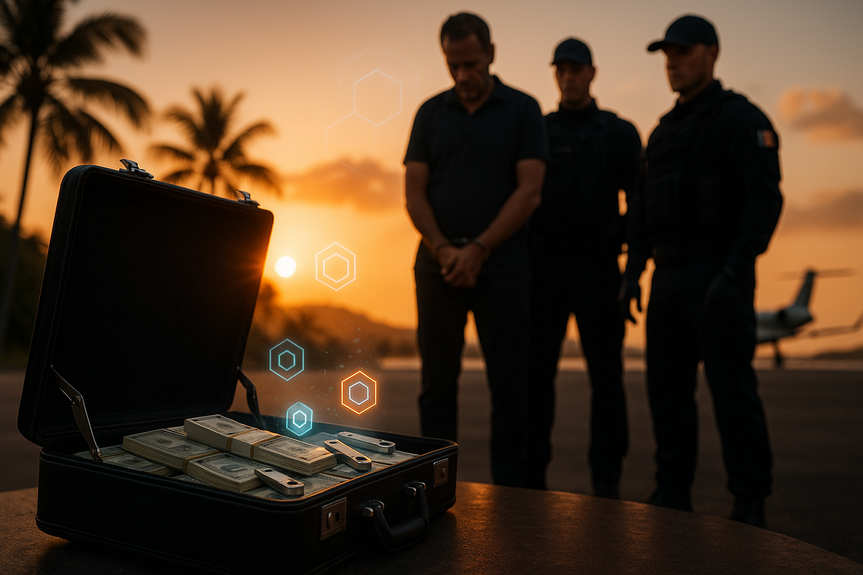
A high-profile arrest has put a bright light on a quiet but growing risk: theft from the inside. Investigators say a former contractor tied to a government vendor slipped into private crypto addresses and moved funds that the US Marshals Service had seized in cases. French officers on the island of St. Martin took him into custody. Reports say agents found a briefcase full of cash and several USB drives.
This story matters beyond the headline. It shows how one person with the right access can move millions in minutes. It also shows how fast cross-border teams can act when digital assets go missing. Most of all, it reminds every crypto owner that keys, controls, and audits matter more than ever.
Prefer hardware wallets for long-term holds. Store seeds offline, on paper or metal, in locked, separate places.
Use multisig (multi-signature) for large balances. For example, 2-of-3 or 3-of-5. No one person should move funds alone.
Add a passphrase to your seed when your wallet supports it. Keep the passphrase separate from the seed.
Turn on address whitelists and set withdrawal limits when available. This stops surprise moves to new addresses.
Use a unique email and username for crypto accounts. Keep them private.
Use a hardware key (FIDO2) for 2FA instead of SMS. Keep backup keys in a safe place.
Lock down your main devices. Update firmware, remove risky apps, and use a password manager.
Use dedicated “clean” devices for high-value moves. Do not browse or install extras on them.
If you self-custody, write a clear plan. Who can approve a move? Who can access backups? How soon after a move do you verify?
If you use a custodian, ask for proof of segregation of funds (on-chain addresses), not just a PDF report.
Test recovery on a schedule. Restore a wallet from seed on an offline device and confirm you see the right balances.
Use small test withdrawals before any big transfer. Confirm addresses with a known, trusted source, not a chat or email link.
Keep cold storage truly cold. No network link. Use air-gapped signing when possible.
Log every access and change. Keep logs read-only. Check them weekly.
Back up seeds and passphrases in at least two safe places. If you can, store in different cities.
Plan for emergencies. If you are unavailable, who can recover funds? Write it down. Update it yearly.
Who holds the private keys? Are keys split across people, devices, and places? Is it multisig?
What controls stop one insider from moving funds? Is there a “four-eyes” rule for approvals?
Do you have independent audits (e.g., SOC 2), penetration tests, and on-chain proof of reserves?
How do you vet staff? Do you run background checks and enforce role-based access with reviews?
What is your incident response plan? Have you tested it in drills? How fast do you alert clients?
Do you carry crime insurance that covers insider theft? What are the limits and exclusions?
How do you store cold keys? HSMs? Secure vaults? Is there a documented key ceremony?
What happens if a key holder leaves the company or travels? Do you rotate keys? Are there travel rules?
One person can push a large transfer alone.
Poor or vague answers on custody, audits, and insurance.
No on-chain addresses for your assets or commingled funds.
Weak 2FA (SMS only) or no hardware security keys.
No clear logging or access review process.
Segregate duties. Separate key shares and approvals across teams.
Use strict multisig with thresholds that match risk. Rotate signers on a schedule.
Enforce “four-eyes” (two-person) checks on every high-value move.
Run quarterly access reviews. Remove unused rights at once.
Protect key material in HSMs or hardware wallets. Never expose full keys to one user.
Use transaction policies: address whitelists, rate limits, time locks, and out-of-band verification.
Keep clean audit trails. Store them offsite and tamper-evident.
Monitor on-chain flows with alerts for new addresses, large moves, or odd timing.
Do tabletop drills. Practice your response to insider theft and lost keys.
Vet vendors deeply. Add clear contract terms on controls, audits, and breach notice.
What happened in the US contractor crypto theft arrest
Authorities say a former US government contractor used his link to a Virginia firm, run by his father, to reach private crypto addresses that the government held after seizures. The firm had contracts to help the Marshals Service hold and manage digital assets. According to reports, he allegedly siphoned more than $46 million from those wallets. French authorities in St. Martin arrested the suspect in a joint operation with the French Gendarmerie’s top tactical unit. The FBI announced the arrest and thanked partners in Saint Martin and Guadeloupe for tight coordination. During the arrest, officers reportedly seized a cash-stuffed briefcase and several USB drives. For years, the US Marshals Service has handled crypto seized in federal cases. It stores assets and later auctions them. That job needs strong custody tools, strict access rules, and clean audits. This case suggests at least one of those controls may have failed.Why this case matters for crypto owners
Insider risk beats hacker hype
We talk a lot about hackers. But many big losses happen because of insiders. The US contractor crypto theft arrest is a sharp example. A person with trusted access can be more dangerous than a stranger on the internet.Private keys are the real treasure
Coins do not move without keys. Keys must be split, stored cold, and guarded with clear rules. If one person can reach a full key set, your funds are at risk. If keys live on a simple USB drive without controls, risk goes up fast.Vendors and third parties are part of your attack surface
You may use a wallet app, an exchange, or a custody firm. Each one hires people and uses tools. If they fail at screening, logging, or key control, you carry that risk. Ask hard questions. Make them show proof.How to protect your tokens now
Use strong custody basics
Harden your access
Control the keys, or control the risk
Improve storage and logging
If you use custodians or service providers
Questions to ask before you trust
Red flags to watch
For companies that hold customer crypto
Build defense-in-depth
What to watch next
Legal process and recovery
Courts will sort out charges, evidence, and asset recovery. If funds moved across chains or through mixers, tracing may take time. Still, seized cash, devices, and cooperation between agencies raise the odds of progress.Impact on auctions and markets
The Marshals Service often auctions seized crypto. This case could slow parts of that work while controls are checked and improved. A pause or policy change could shift the timing of large coin sales, which sometimes nudge market price and volume.Policy and custody standards
Expect more talk about digital asset custody rules for both public and private sectors. Clear standards for key splits, audits, staff screening, and logging can lower insider risk. The US contractor crypto theft arrest will likely push for tighter guidelines across agencies and vendors.Cross-border teamwork
The arrest in St. Martin shows how fast partners can move when digital assets shift across borders. We may see more joint operations and shared playbooks between the FBI and foreign police units. Strong controls beat trust alone. Whether you keep coins yourself or rely on a provider, treat keys as a team sport. Split control. Log everything. Test recovery. And ask vendors to prove, not promise. The bottom line: the US contractor crypto theft arrest is a clear warning. Insider access can move millions in moments. Build layers that no single person can break. If you do, you make your wallet, your business, and your future far safer.(Source: https://www.newser.com/story/384891/ex-us-contractor-accused-of-stealing-46m-in-crypto.html)
For more news: Click Here
FAQ
Q: What happened in the US contractor crypto theft arrest?
A: The US contractor crypto theft arrest involved a former US government contractor accused of siphoning more than $46 million in cryptocurrency seized by the US Marshals Service. French authorities on St. Martin arrested him in a joint operation with the FBI and the French Gendarmerie’s top tactical unit.
Q: Who was arrested in the US contractor crypto theft arrest?
A: Authorities arrested John Daghita, a former contractor who had worked for Command Services & Support, a Virginia firm run by his father that held contracts to manage seized digital assets. He is accused of using that vendor connection to access private crypto addresses and move funds.
Q: How did the suspect allegedly access the seized cryptocurrency?
A: Investigators say he used insider access from the vendor that managed government-held wallets to slip into private crypto addresses and move funds. The case highlights how a single person with the right access can move millions in minutes if controls fail.
Q: Where and how was the suspect apprehended?
A: French authorities arrested him on the Caribbean island of St. Martin in a coordinated operation that involved the French Gendarmerie’s top tactical unit and the FBI. FBI Director Kash Patel publicly thanked partners in Saint Martin and Guadeloupe for the coordination, according to reporting.
Q: What evidence did authorities reportedly find during the arrest?
A: Reports say officers seized a briefcase stuffed with cash and several USB drives during the arrest. News outlets cited those items as part of the evidence recovered at the scene.
Q: Why does the US contractor crypto theft arrest matter to crypto owners?
A: The US contractor crypto theft arrest highlights that insider risk can be more dangerous than outsider hacking because someone with privileged access can move funds quickly. It also reinforces that private key controls, strict custody tools, and clean audits are essential to reduce that risk.
Q: What practical steps can individual crypto holders take now to protect their tokens?
A: Owners should use strong custody basics such as hardware wallets, multisig arrangements (for example 2-of-3 or 3-of-5), adding a passphrase to seeds, and storing seeds offline in locked, separate places. They should also harden access with hardware 2FA keys, use address whitelists and withdrawal limits when available, test recovery procedures, and keep logs and audits.
Q: How might this case affect auctions of seized crypto and custody rules?
A: The case could slow Marshals Service auctions while agencies and vendors review and improve custody controls, which may change the timing of large coin sales and potentially affect market volume. It is also likely to prompt more discussion of custody standards such as key splits, staff vetting, and cross-border cooperation between law enforcement, as shown by the recent US contractor crypto theft arrest.
* The information provided on this website is based solely on my personal experience, research and technical knowledge. This content should not be construed as investment advice or a recommendation. Any investment decision must be made on the basis of your own independent judgement.
Contents