AI News
22 Apr 2026
Read 9 min
How to prevent retail smart glasses fraud in 5 steps
How to prevent retail smart glasses fraud by securing employee logins and blocking $500K in losses.
Wondering how to prevent retail smart glasses fraud? Start with five moves: block views of screens, lock down logins with IDs and timeouts, restrict gift card loading, train staff against distractions, and react fast to odd behavior. These actions cut risk and help stop camera-based credential theft before money leaves your store.
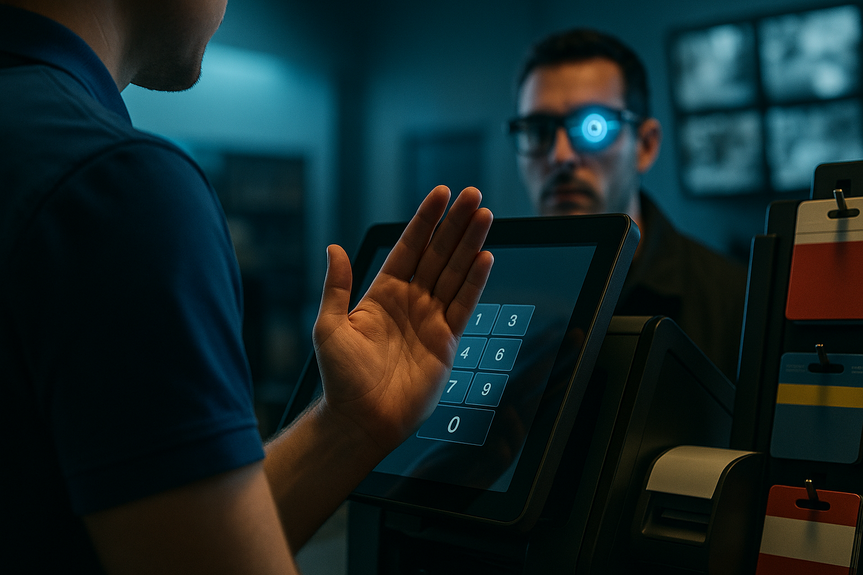
Police in Toronto say a coordinated group used smart glasses and phones to film or observe employee logins, then loaded funds onto gift cards at self-checkouts. Investigators linked more than 100 events and estimated losses at about $500,000. This story shows why knowing how to prevent retail smart glasses fraud matters for any store, from small shops to national chains.
End shared accounts. Give every worker a unique ID, short permissions, and audit trails.
Turn on auto-lock. Set POS screens to lock after 30–60 seconds of no use.
Require re-auth for risky tasks. Ask for a PIN, passkey, or tap badge before gift card loads, refunds, and voids.
Add privacy gear. Use screen privacy filters and PIN shields on keypads to block side views.
Place terminals smartly. Angle screens away from customer lines and reflective surfaces.
Ban sticky notes. Never write passwords near a till. Rotate passwords on a set schedule.
Use MFA where possible. Protect back-office portals and admin tools with FIDO keys or app prompts.
Disable gift card loads at self-checkout. Route all loads to staffed lanes.
Set dollar limits. Cap per-transaction, per-day, and per-employee amounts.
Use dual control. Require a manager override or second login for loads over a threshold.
Slow the speed. Add short delays between back-to-back loads to different cards.
Watch the data. Trigger alerts for odd hours, high velocity, or new users doing big loads.
Secure inventory. Keep high-value cards behind the counter until activation.
Teach red flags. Unusual questions, crowding the till, or someone wearing camera glasses near the keypad.
Buddy up at busy times. Have two associates watch self-checkout bays.
Shield entries. Cover keypads with a hand or body when typing PINs or passwords.
No reading out codes. Never say credentials or overrides out loud.
Set a zone policy. Post “No filming” signs and ask customers to remove smart glasses near POS.
Report fast. Tell a manager and loss prevention right away if something feels off.
Reposition tills. Keep screens out of direct customer sightlines and away from windows with glare.
Add side panels. Low privacy wings or mini-walls near POS reduce shoulder views.
Tune CCTV. Aim cameras to capture hands at the keypad and faces of people hovering behind customers.
Improve lighting. Cut reflections on glass that can mirror your screen.
Post rules. Visible “No recording devices beyond this point” signage supports staff action.
Stop the flow. Pause the transaction and switch lanes if needed.
Lock accounts. Disable the user ID, force a password reset, and review recent actions.
Freeze gift cards. Void or hold suspicious loads before redemption.
Save evidence. Bookmark CCTV footage, save receipts, and note times and staff on duty.
Escalate. Alert your fraud team and contact police when losses are likely.
Drill it. Run short tabletop exercises each quarter so teams know the steps.
Keep software current. Patch POS systems and turn off unused features.
Use role-based access. Only a few trusted users should have gift card privileges.
Audit weekly. Review exception reports and spot patterns early.
Communicate often. Share recent scams in shift huddles so everyone stays alert.
Smart glasses and other small cameras make shoulder-surfing easy, but simple controls still work. By focusing on people, process, and screens, you reduce exposure and keep funds safe. Put these five steps into daily habits, and you will know how to prevent retail smart glasses fraud before it starts.
(p Source: https://www.cp24.com/local/toronto/2026/04/17/suspects-used-smart-glasses-other-ai-tools-to-commit-organized-retail-fraud-across-gta-toronto-police/)
How to prevent retail smart glasses fraud: 5 steps
1) Lock down logins at the register
If you are planning how to prevent retail smart glasses fraud, start by making credentials hard to see, steal, or reuse.2) Tighten gift card and self-checkout controls
Most losses hit through gift cards. Cut off that path.3) Train staff to beat distraction and shoulder-surfing
Fraudsters often work in pairs: one distracts, one records.4) Fix the floor and camera setup
Small changes in layout can block clear views of screens.5) Respond fast when you suspect a compromise
Speed limits damage and preserves evidence.Extra tips that pay off
For more news: Click Here
FAQ
Q: What happened in the Toronto investigation into smart glasses-enabled retail fraud?
A: Toronto police say a coordinated group used smart glasses and cellular devices to film or observe employee login credentials, which were then used to load funds onto gift cards at self-checkout terminals. Investigators linked 112 occurrences across the Greater Toronto Area between September 2025 and February 2026, estimated about $500,000 in losses, and seven individuals face charges.
Q: How can retailers lock down POS logins to reduce risk?
A: When planning how to prevent retail smart glasses fraud, start by making credentials hard to see, steal, or reuse by giving each worker a unique ID, enabling auto-locks on POS screens after 30–60 seconds, and requiring re-authentication for risky tasks. Add privacy filters and PIN shields, angle terminals away from customer lines, ban sticky-note passwords, rotate credentials on a set schedule, and use MFA where possible.
Q: What gift card and self-checkout controls should stores use?
A: Retailers should disable gift card loads at self-checkout or route those transactions to staffed lanes and set per-transaction, per-day, and per-employee dollar limits to reduce exposure. Require manager overrides or a second login for loads above thresholds, add short delays between back-to-back loads, trigger alerts for odd hours or high-velocity activity, and keep high-value cards behind the counter until activation.
Q: What training should staff receive to counter distraction and shoulder-surfing?
A: Train employees to recognize red flags such as unusual questions, crowding the till, or customers wearing smart glasses, and teach them to shield keypads and never read out passwords or overrides aloud. Encourage buddy coverage of self-checkout bays during busy times, post “No filming” signage or ask customers to remove smart glasses near POS, and require immediate reporting of suspicious activity to management or police.
Q: How can physical layout and CCTV be adjusted to block views of screens?
A: Reposition tills and add low privacy wings or side panels to keep screens out of direct customer sightlines and away from windows that cause glare, and improve lighting to reduce reflections that mirror screens. Tune CCTV to capture hands at the keypad and faces of people hovering behind customers, and post visible signage restricting recording to support staff action.
Q: What immediate actions should be taken if a compromise is suspected?
A: Pause the transaction and switch the customer to a staffed lane if needed, lock the implicated user account and force a password reset, and freeze or void suspicious gift card loads. Preserve evidence by saving CCTV footage and receipts, noting times and staff on duty, and escalate promptly to your fraud team and police.
Q: How often should retailers audit and rehearse responses to credential-theft risks?
A: Audit exception reports weekly to spot patterns early, keep POS software patched, and limit gift card privileges to a small set of trusted users. Running short tabletop exercises each quarter is a practical part of how to prevent retail smart glasses fraud because it gives teams practice responding to suspected compromises.
Q: Were any arrests or charges made in the Toronto case?
A: Seven individuals face charges including fraud over $5,000, possession of property obtained by crime over $5,000, and using a computer system with intent to commit an offence. Two suspects, Danibros Flores and Remfrance Jusi, are wanted on Canada-wide warrants while the others have made first court appearances and are currently out on bail.
Contents