Crypto
08 May 2026
Read 11 min
How to Fix third-party content timeout error Fast *
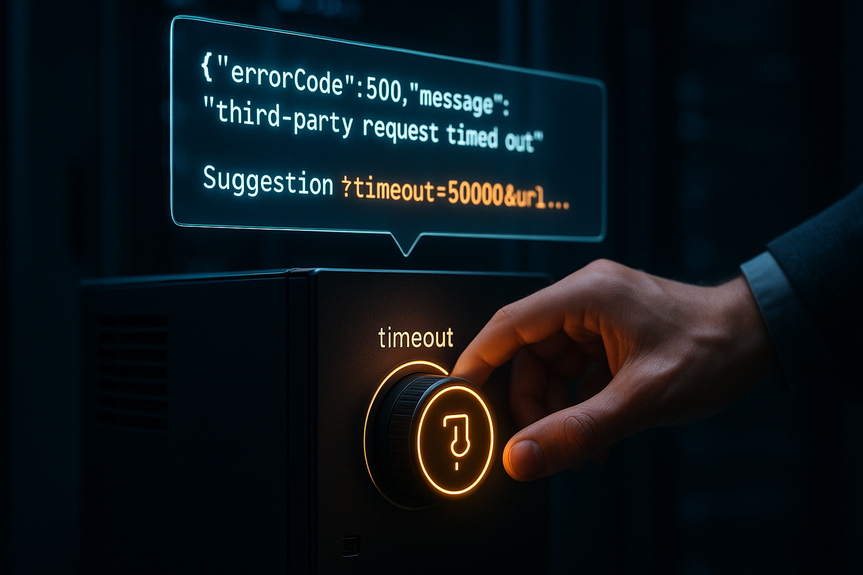
Fix third-party content timeout error fast by raising the timeout querystring so pages load reliably.
A third-party content timeout error means your app waited too long for an external script, API, or embed to load. Fix it fast by checking the vendor’s status, increasing the request timeout in milliseconds, adding retries with backoff, loading resources async, and adding a clear fallback so your page still works.
When you rely on outside scripts, ads, analytics, maps, or payment widgets, a slow or blocked request can stall your page or break key flows. You may see messages that suggest adding a timeout parameter to your URL in milliseconds. For a quick recovery, raise the timeout for urgent paths, retry on failure, and serve a fallback so users can move on.
What causes a third-party content timeout error
Common triggers
- Vendor outage or heavy traffic at the provider
- Network issues like DNS delays, packet loss, or regional routing trouble
- Firewall, ad blocker, content filter, or CORS rules that block the request
- Too short client or server timeout settings for today’s latency
- Large payloads, uncompressed responses, or slow cold starts on serverless
- Rate limits, throttling, or quota caps at the third party
What it looks like
- UI elements that spin forever or show “Loading…” then fail
- Console errors, 408/504/500 status codes, or fetch aborted by timeout
- CLS and TTI spikes as render blocks on an external script
- Higher bounce rates from pages with heavy embeds or ads
Fast triage: steps to restore service in minutes
1) Confirm the scope
- Check if the issue is global or only in some regions or browsers
- Compare Wi‑Fi vs mobile, VPN on/off, and a different DNS (like 1.1.1.1)
2) Check the vendor
- Open their status page and recent incident posts
- Test their API with curl or Postman from two regions
- Scan response headers for rate limit or cache hints
3) Raise the timeout briefly
- If your service accepts a milliseconds parameter, increase it. Example: ?timeout=50000&url=…
- Only do this as a short-term patch so users can proceed
4) Add retries with backoff
- Retry 1–3 times with exponential backoff (e.g., 200 ms, 500 ms, 1,200 ms)
- Jitter your waits so bursts do not overload the vendor
5) Degrade gracefully
- Show a cached or static version if the live embed fails
- Use a friendly message and a “Try again” button
- Do not block page render—load third-party code async
Client-side fixes that pay off
Load third-party code without blocking
- Add async or defer to external scripts so they do not delay HTML parsing
- Lazy-load below‑the‑fold widgets using IntersectionObserver
- Move noncritical scripts after first contentful paint
Add a request timeout and abort control
- Wrap fetch with AbortController so you can cancel stuck requests
- Set a clear time budget (for example, 4–6 seconds on mobile)
- After timeout, show fallback UI, then log the event
Speed the connection
- Use rel=preconnect and rel=dns-prefetch for known third-party domains
- Enable HTTP/2 or HTTP/3 where possible
- Compress text (gzip or brotli) and prefer modern image formats
Cache smart
- Respect Cache-Control and ETag headers to avoid repeated fetches
- Use a Service Worker to cache successful responses for offline or slow paths
- Preload critical assets at app start if they are small and stable
Handle blockers
- Plan for ad blockers to remove some scripts
- Detect blocked loads and switch to a privacy-safe or first-party route
Server and proxy settings to review
Right-size timeouts
- Set upstream timeouts to match the slowest reliable path, not the best case
- Examples: Node.js agent keep-alive; NGINX proxy_read_timeout; Apache ProxyTimeout
- In serverless, align function timeout with upstream SLA plus retry budget
Connection reuse and pools
- Enable keep-alive and HTTP/2 for fewer TCP/TLS handshakes
- Use connection pools with limits to prevent thundering herds
Backoff, circuit breakers, and queues
- Implement exponential backoff and jitter for outbound calls
- Add a circuit breaker: open it when error rate is high, serve cached data
- Use a queue for non-urgent tasks so user flows stay fast
Edge and CDN help
- Cache static third-party responses at the edge when allowed
- Set short stale-while-revalidate to keep content available during brief outages
When the vendor is the bottleneck
Communicate and escalate
- Check the vendor’s status and subscribe to alerts
- Open a ticket with request IDs, timestamps, and regions
- Share traceroute or mtr results if you see regional network loss
Use alternative paths
- Switch to a backup endpoint or mirror if your contract allows it
- Serve a reduced feature set (e.g., static map image instead of live embed)
- Batch requests to lower rate limit pressure
Tune your contract
- Set SLAs that match your user needs and peak hours
- Request regional capacity and clear error budgets
- Ask for cache headers and pagination to cut payload size
Testing and monitoring to prevent repeat incidents
Set budgets and alerts
- Define a time budget per request and page
- Alert on p95/p99 latency, 408/504 errors, and rising retry counts
- Record timeout reasons and include the third-party host in logs
Observe from the user’s view
- Use Real User Monitoring to spot slow regions and devices
- Run synthetic tests from multiple locations and networks
- Track Core Web Vitals on pages that load outside scripts
Drills and chaos checks
- Run failure drills: block the third-party domain and watch your fallbacks
- Validate that retries stop and that the circuit breaker opens on time
- Confirm your UI still lets users complete main tasks
Practical playbook: from error to stable
Immediate actions
- Raise timeout parameter briefly and add 1–3 retries with backoff
- Switch to async loading and show a clear fallback message
- Post a status note if the issue affects many users
Short-term fixes
- Add AbortController timeouts in the client
- Tune server/proxy timeouts and keep-alive
- Preconnect to the vendor domain and cache stable assets
Long-term prevention
- Install a circuit breaker and set time budgets
- Monitor latency and error rates with alerts tied to SLAs
- Negotiate vendor limits and add a backup path where possible
Troubleshooting tips developers love
- Compare success vs failure requests to spot header or CORS differences
- Check DNS resolution time; try a different resolver for a test
- Look for large Set-Cookie headers or no compression on text
- Audit bundle size; remove unused SDK features that slow init
- Throttle network in DevTools to test 3G timeout behavior
- Log the full request path, timeout value, retries, and vendor response time
For more news: Click Here
FAQ
Q: What does a third-party content timeout error mean?
A: A third-party content timeout error means your app waited too long for an external script, API, or embed to load. You may see UI elements that spin forever, console errors like 408/504/500, or fetches aborted by timeout.
Q: What commonly causes a third-party content timeout error?
A: Common triggers include vendor outages or heavy traffic, network issues such as DNS delays or packet loss, and blockers like firewalls, ad blockers, or CORS rules. Other causes are too-short timeout settings, large uncompressed payloads or slow cold starts, and rate limits or throttling at the third party.
Q: How should I triage a third-party content timeout error quickly?
A: To triage a third-party content timeout error quickly, confirm whether the issue is global or limited to regions, networks, or browsers and test the vendor API from multiple locations while checking their status page. Temporarily raise the timeout, add 1–3 retries with exponential backoff, and serve a fallback so users can continue.
Q: What immediate actions can restore service in minutes?
A: Immediate actions include briefly increasing the timeout parameter for urgent paths, adding retries with backoff, switching to async loading, and showing a clear fallback or status note for affected users. These short-term patches keep the page usable while you implement longer-term fixes.
Q: How can I prevent external scripts from blocking my page on the client side?
A: Load third-party code with async or defer, lazy-load below-the-fold widgets using IntersectionObserver, and move noncritical scripts after first contentful paint to avoid blocking rendering. Wrap fetch calls with AbortController, set a clear time budget (for example, 4–6 seconds on mobile), and show a fallback UI after timeout.
Q: Which server and proxy settings should I review to reduce timeouts?
A: Right-size upstream and proxy timeouts to match the slowest reliable path rather than best-case latency, tuning settings like NGINX proxy_read_timeout or Node.js keep-alive. Also enable connection reuse such as keep-alive or HTTP/2, use connection pools with limits, and align serverless function timeouts with upstream SLAs plus retry budget.
Q: What should I do when the vendor is the bottleneck?
A: Check the vendor’s status page, open a ticket with request IDs, timestamps, and regions, and escalate with traceroute or mtr results if you see regional network loss. Use alternative paths like a backup endpoint or a reduced feature set (for example a static map image) and batch requests to lower rate limit pressure.
Q: How can I monitor and test to prevent future third-party content timeout errors?
A: Set time budgets per request and alert on p95/p99 latency, 408/504 errors, and rising retry counts while recording timeout reasons and including the third-party host in logs. Use Real User Monitoring and synthetic tests from multiple locations, run failure drills that block the third-party domain, and validate that retries, circuit breakers, and fallbacks behave as expected.
* The information provided on this website is based solely on my personal experience, research and technical knowledge. This content should not be construed as investment advice or a recommendation. Any investment decision must be made on the basis of your own independent judgement.
Contents