Crypto
14 May 2026
Read 12 min
XRP surge on Upbit South Korea: How to Spot a Breakout *
XRP surge on Upbit South Korea signals traders to prepare now for a breakout as volume eclipses BTC
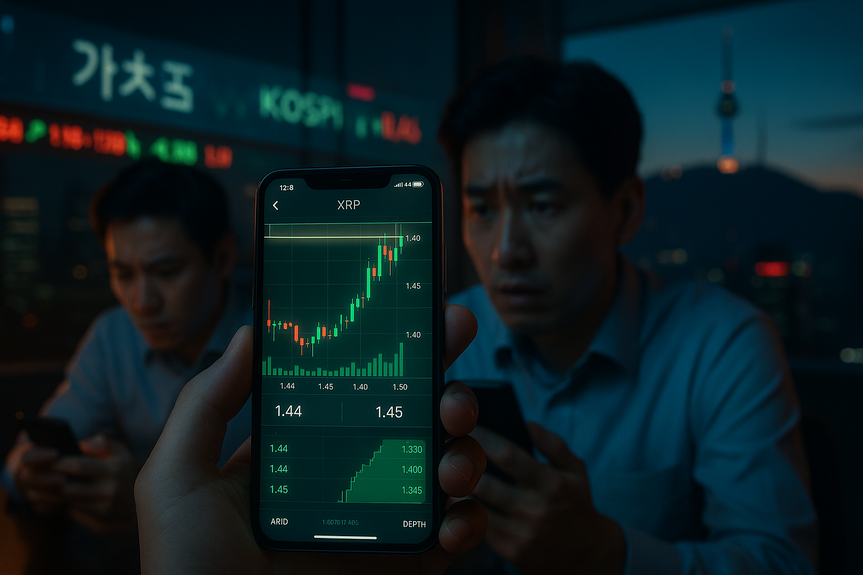
Traders are watching the XRP surge on Upbit South Korea after volume jumped past Bitcoin and Ethereum, topping about $110 million in local activity. Price sits under the $1.49–$1.50 ceiling. To spot a true breakout, look for strong volume above that line, a clean close, and a retest that holds.
South Korean traders just pushed XRP to the top spot on Upbit and near the top on Bithumb, outpacing Bitcoin and Ethereum in local volume. The price has stayed tight around $1.44–$1.45, with a clear wall at $1.49–$1.50 that bulls have failed to break since February. When volume rises but price stays compressed under a well-known ceiling, pressure can build fast. If that ceiling breaks with conviction, the move can run quickly. This is why many eyes are on the tape right now.
Government talk around AI-related corporate taxes weighed on the KOSPI, and some local investors appear to be shifting attention to crypto. In times like this, familiar names with strong liquidity often get the bid. This time, the focus is on XRP, and the action is centered on South Korea’s largest exchange.
Upbit is the country’s largest exchange, so leadership there signals strong local conviction.
When XRP leads volume, it often points to a short-term rotation into faster-moving coins.
South Korean markets can trade at a “premium” to global prices during heavy demand, which can attract more attention and fuel momentum.
The XRP surge on Upbit South Korea also tells us something about sentiment. Traders are favoring a fast payment token with deep liquidity over the usual leaders. That is often a sign that participants want movement and are willing to crowd into a clear theme.
Strong close above $1.50 on the 1-hour chart, with volume above the recent average on Upbit and across major global exchanges.
No instant rejection: after the break, price should hold above $1.49–$1.50 for at least one to three hours.
Healthy retest: a small pullback to $1.50 that bounces shows buyers are defending the level.
Broader support: Bithumb and global pairs (USD, USDT) should also show firm bids and higher volume.
Clean structure: higher lows on the 15-minute chart into the break suggest steady demand, not just a single spike.
During an XRP surge on Upbit South Korea, fake breaks can happen. A quick wick above $1.50 followed by a fast drop back into the range is a warning. If that happens on weak volume or only on one venue, it is likely a trap. Wait for the next test with better confirmation.
Ask walls thinning near $1.50–$1.52: when large sell orders get eaten or pulled, it clears a path higher.
Buy walls stepping up at $1.49–$1.50 after the break: this shows new support.
Big inflows of XRP to exchanges can mean more sell pressure is coming.
Outflows from exchanges to cold wallets often suggest holders plan to sit tight, which can help a trend hold.
If funding rates spike too fast, it shows crowded longs. That can lead to sharp pullbacks even in an uptrend.
Rising open interest with rising price and steady funding is healthier than a frenzy of leverage.
You do not need to track every metric, but watching one or two simple signals together with price and volume can improve your read.
Premium swings: Local prices can trade above global prices during hot periods, and that gap can snap back fast.
Headline risk: Policy talk or exchange notices can hit the market during local hours and reverse moves quickly.
Weekend and late-night liquidity: Breakouts during thin hours can fail more often. Look for follow-through during high-volume sessions.
Rotation whiplash: Capital can move from one coin to another within hours. Strength can fade without warning.
Plan for these risks before you enter. Decide where you are wrong and how you will exit.
Wait for a 1-hour close above $1.50 with above-average volume.
Consider a starter position on the retest of $1.50 that holds.
Define a clear invalidation, such as a close back below $1.49 with weak bid support.
Fade moves near $1.49–$1.50 when volume is weak and wicks are long.
Take profits fast near the middle of the range; ranges end suddenly when volume spikes.
Use small size until the trend proves itself.
Place stops where your idea is invalid, not where it “feels” safe.
Avoid chasing green candles; plan entries at levels.
Set alerts at $1.49, $1.50, and $1.52 to respond, not react.
None of this is financial advice. These are basic rules that help many traders stay disciplined.
Daily close above $1.50 that turns the level into support.
Higher highs and higher lows on the 4-hour chart with steady volume.
Continued softness in local equities could keep attention on crypto in the short term.
Broad crypto strength that lifts liquidity and sentiment across majors and large-cap alts.
Stablecoin inflows to local exchanges can add buying power.
Exchange reserves of XRP trending down can limit immediate sell supply.
Why the XRP surge on Upbit South Korea matters
South Korea has a history of leading bursts in crypto trading. Retail traders move fast, and local exchanges can show unique demand. When big volume arrives in one country, it can spill into global prices, especially if the move lines up with a clear chart level that many traders watch. Several factors make the current push important:Key price levels to watch
Immediate resistance: $1.49–$1.50
This zone has stopped every rally attempt since February. A real breakout needs a strong push through it. The more times price knocks on the door, the more buyers and sellers focus there. That makes the reaction stronger when the level finally breaks.Near-term support: $1.44–$1.45
This band has held during the volume surge. If price holds above it during dips, it shows buyers are still active. If it fails, it warns the rally is not ready.What rising volume means here
Volume is fuel. Rising volume under resistance means many orders are building. If price closes above $1.50 on strong volume, trapped sellers can be forced to buy back, which can add speed to the move.How to spot a real breakout
You do not need advanced tools to spot a clean break. Focus on price, volume, and a few simple checks on timing and behavior.Simple confirmation checklist
Order flow and on-chain clues you can use
Order book signals
Exchange flows
Derivatives temperature
Local risks and common traps
Simple plans and risk control
Breakout buyers
Range traders
Risk rules that help
What could extend the move
Technical follows
Market context
Fund flows
Putting it all together
XRP sits just under a clear wall while South Korean traders drive heavy volume. The setup is simple: pressure is building below $1.49–$1.50, and a strong break can run, but fakeouts are common when hype is high. Focus on confirmation, not hope: a solid close above $1.50, a clean retest that holds, and support from multiple venues. Manage risk tightly if you trade the move, and be ready for quick pullbacks if leverage spikes. If the XRP surge on Upbit South Korea clears that ceiling with real demand, the next leg can develop fast—and discipline will matter even more as price accelerates.For more news: Click Here
FAQ
Q: What happened during the XRP surge on Upbit South Korea?
A: Traders are watching the XRP surge on Upbit South Korea after volume jumped past Bitcoin and Ethereum, topping about $110 million in local activity. Despite the volume, price remained compressed around $1.44–$1.45, under resistance at $1.49–$1.50.
Q: Why does the XRP surge on Upbit South Korea matter?
A: The XRP surge on Upbit South Korea matters because the country has a history of leading crypto bursts and Upbit is the largest exchange, so heavy local volume can spill into global prices. When local volume concentrates on XRP it often signals a short-term rotation into faster-moving coins and can create a local premium that fuels momentum.
Q: What key price levels should traders watch during the XRP surge on Upbit South Korea?
A: During the XRP surge on Upbit South Korea, watch $1.49–$1.50 as immediate resistance since it has stopped rallies since February, and $1.44–$1.45 as near-term support. A strong close above $1.50 on above-average volume and a holding retest would indicate a valid breakout.
Q: How can traders spot a real breakout during the XRP surge on Upbit South Korea?
A: To spot a real breakout during the XRP surge on Upbit South Korea, look for a strong 1-hour close above $1.50 with volume above recent averages on Upbit and other major exchanges, followed by a one-to-three-hour hold above $1.49–$1.50. A healthy retest that bounces and confirming bids on Bithumb and global USD/USDT pairs, plus higher lows on short-term charts, would further validate the move and help avoid fakeouts.
Q: What order book and on-chain clues are useful in the XRP surge on Upbit South Korea?
A: Order-book and on-chain clues that matter in the XRP surge on Upbit South Korea include thinning ask walls near $1.50–$1.52, buy walls forming at $1.49–$1.50 after a break, and exchange flows with large inflows signaling potential sell pressure or outflows suggesting holders plan to hold. Derivatives signals such as rapidly rising funding rates can warn of crowded longs, while rising open interest with rising price and steady funding is a healthier setup.
Q: What local risks and common traps should traders watch during the XRP surge on Upbit South Korea?
A: Local risks during the XRP surge on Upbit South Korea include premium swings where local prices trade above global prices, headline risk from policy talk or exchange notices, and thin liquidity during weekends or late-night hours that make breakouts more likely to fail. Additionally, rapid rotation between coins can cause strength to fade quickly, so plan entries and exits and set clear invalidation levels before trading.
Q: How should breakout buyers and range traders approach the XRP surge on Upbit South Korea?
A: During the XRP surge on Upbit South Korea, breakout buyers should wait for a 1-hour close above $1.50 with above-average volume and consider a starter position on a successful retest, using a close back below $1.49 as an invalidation. Range traders may fade weak-volume attempts near $1.49–$1.50 and take profits quickly, while risk rules include using small size, placing stops where the idea is invalid, and setting alerts at $1.49, $1.50 and $1.52.
Q: What factors could extend the move if the XRP surge on Upbit South Korea breaks the ceiling?
A: The XRP surge on Upbit South Korea could extend if there is a daily close above $1.50 that turns the level into support, higher highs and higher lows on the 4-hour chart with steady volume, and continued weakness in local equities keeping attention on crypto. Supporting fund flows would include stablecoin inflows to local exchanges and falling exchange XRP reserves, which can limit immediate sell supply.
* The information provided on this website is based solely on my personal experience, research and technical knowledge. This content should not be construed as investment advice or a recommendation. Any investment decision must be made on the basis of your own independent judgement.
Contents