AI News
31 May 2026
Read 10 min
How to detect AI hiring bias and fix unfair screening
how to detect AI hiring bias and remove unfair screening to reduce racial disparities and hire fairly
Want to know how to detect AI hiring bias? Start by measuring selection rates by race and gender at every stage, run matched-resume tests, and inspect model features for proxies like zip code or school. Then set fairness thresholds, audit vendors, monitor results each month, and document actions.
Automated hiring tools promise speed. But recent reports show some systems screen out qualified people and create racial gaps in callbacks and interviews. This guide shows teams how to detect AI hiring bias and fix it fast, using plain steps that fit real hiring workflows.
Past hiring data may reflect old bias. Models then learn to copy it.
Features like school, zip code, or gaps in work history can act as race proxies.
Free-form resumes vary by culture and language style. Scorers may favor one style.
Vendors often hide features and weights. That blocks proper audits.
Teams measure only speed or cost, not fairness or error rates.
No one owns bias risk across the full funnel, from ads to offers.
Selection rate ratio (the 80% rule): Compare pass rates for each group at every stage. If Group B’s rate is below 80% of Group A’s, flag it.
Error rates by group: Check false negatives (qualified people rejected) and false positives (unqualified people advanced).
Calibration: A score of 70 should predict the same hire chance for every group.
Drop-off points: Track where candidates quit tests or forms. Bad UX can push out certain groups.
Intersectional gaps: Look at combined groups (for example, Black women) not just single categories.
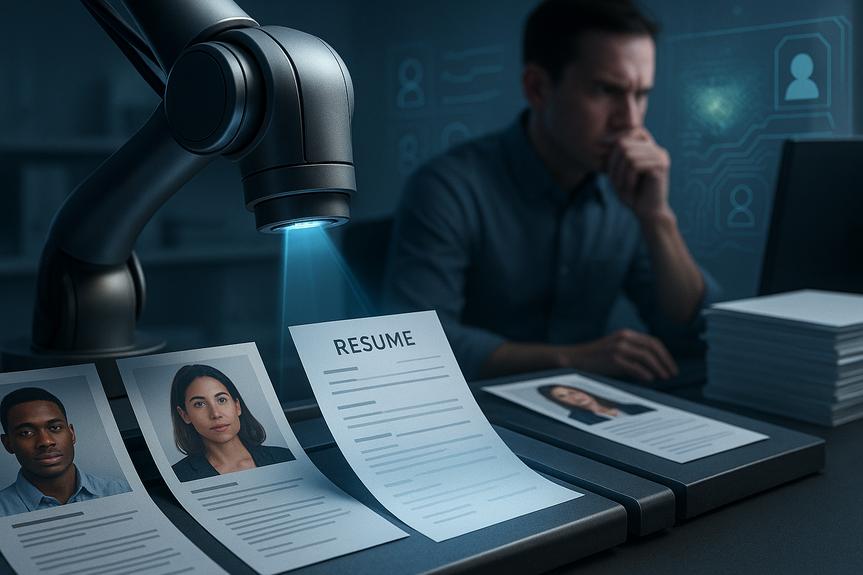
Matched-resume audit: Create pairs of equal resumes. Vary only names, schools, or zip codes. Compare scores and pass rates.
Counterfactual test: Hide or swap likely proxies (zip, school tier). See how much scores change.
Feature sensitivity: Use simple tools (feature importance or SHAP) to find which inputs drive rejections. Probe high-impact proxies.
Shadow model baseline: Score candidates with a simple rules model (skills checklist). Compare gaps to the AI tool.
Candidate experience review: Test devices, time limits, and language. Check accessibility for screen readers and low bandwidth.
If you need a quick path on how to detect AI hiring bias, run these three checks first: selection rate ratio by stage, matched-resume audit, and proxy sensitivity. You will see where the biggest gaps form and what likely causes them.
Collect voluntary self-ID data with clear purpose and storage rules. Explain that it will not affect decisions.
Protect privacy: restrict access, set minimum sample sizes, and report in aggregates.
Audit for accuracy: ensure categories are consistent across systems.
Blind the early screen: hide names, photos, and schools during first passes.
Score for skills, not signals: use structured rubrics tied to key tasks.
Balance data: reweight or resample training examples so groups are represented.
Remove or cap proxies: limit the influence of zip code, school rank, and gap length.
Fairness constraints: train or tune models to meet error-rate or selection targets.
Threshold tuning: adjust decision cutoffs to reduce gaps, then validate with legal and compliance.
Human-in-the-loop: reviewers check edge cases and can override with reasons.
Require independent bias audits and shareable summaries (model cards, data sheets).
Demand feature transparency, configurable weights, and an API for testing.
Put audit rights in the contract: allow matched-resume and counterfactual tests.
Log all decisions with reasons and scores for traceability.
Know the rules: NYC Local Law 144, Illinois AI Video Interview Act, EU AI Act, and other laws may require notices, risk assessments, and audits.
Assign owners: HR, Legal, Data, and DEI share a RACI. Publish a bias risk policy.
Procurement should document how to detect AI hiring bias in RFPs and ask vendors to provide metrics, audit history, and fixes for any gaps.
Dashboards: track selection ratios, error rates, and calibration by stage and group.
Guardrails: set alert thresholds (for example, selection ratio under 0.8) and auto-pause rules.
Drift checks: re-run audits monthly or per 1,000 candidates. Watch for seasonal changes.
Feedback loop: collect candidate complaints and recruiter notes, and tie them to data.
Postmortems: document every incident and the fix. Share lessons across teams.
Start with the 80% rule to spot likely adverse impact.
Add significance tests (chi-square or Fisher’s exact) and confidence intervals when sample sizes allow.
Compare AUC, Brier score, and calibration by group to see accuracy and reliability.
Prefer equal opportunity (similar true positive rates) when the goal is to not miss qualified talent.
Track time-to-hire by group. Long waits can drive unequal drop-offs.
Inventory every screening tool and the stages they touch.
Enable voluntary self-ID and secure storage.
Run selection rate ratios and a small matched-resume test.
Freeze risky features (zip, school tier) if gaps are large.
Shift to skills-first rubrics and blind early screens.
Retrain or re-tune models with fairness constraints.
Pilot threshold changes and check impact on quality and speed.
Write vendor addendums for audit rights and transparency.
Launch dashboards and alert thresholds.
Publish a bias risk policy and RACI.
Schedule quarterly independent audits.
Train recruiters and hiring managers on fair use and overrides.
Closing thought: You do not need a PhD to spot unfair screening. With a few strong measures, consistent tests, and clear ownership, you can protect candidates and improve hiring quality. If your team asks how to detect AI hiring bias, follow the steps above, keep auditing, and fix issues fast.
Why AI screening goes wrong
Hidden patterns in the data
Opaque systems and weak checks
How to detect AI hiring bias
What to measure first
Tests you can run this week
Data, consent, and privacy
Fix unfair screening and reduce risk
Product and process fixes
Vendor standards and governance
Ongoing monitoring
Metrics that matter (and how to read them)
Simple first, then deeper
A 30-60-90 day action plan
Day 0–30: Map and measure
Day 31–60: Fix and validate
Day 61–90: Govern and monitor
(Source: https://www.ft.com/content/5c442b38-6989-461a-988e-653f7a275eee)
For more news: Click Here
FAQ
Q: What are the first steps to detect bias in automated hiring tools?
A: If your team asks how to detect AI hiring bias, start by measuring selection rates by race and gender at every stage and running matched-resume audits that vary only names, schools, or zip codes to compare pass rates. Inspect model features for proxies like zip code or school, set fairness thresholds, audit vendors, monitor results each month, and document actions.
Q: Which metrics should teams measure first to spot unfair screening?
A: Measure the selection rate ratio using the 80% rule by comparing pass rates for each group at every stage and flagging groups whose rate falls below 80% of another’s. Also check error rates by group (false negatives and false positives), calibration of scores across groups, drop-off points, and intersectional gaps such as combined race and gender groups.
Q: What quick tests can my team run this week to check for bias in hiring tools?
A: Run matched-resume audits with paired resumes that differ only by names, schools or zip codes and compare scores and pass rates, and perform counterfactual tests that hide or swap likely proxies to see score changes. Use feature-sensitivity tools such as feature importance or SHAP, score candidates with a simple shadow rules model for comparison, and review candidate experience for devices, time limits and accessibility.
Q: How should demographic data be collected and protected during audits?
A: Collect voluntary self-identification data with a clear stated purpose and secure storage rules, and explain that it will not affect hiring decisions. Protect privacy by restricting access, setting minimum sample sizes, reporting in aggregates, and auditing category consistency across systems.
Q: What product or process changes can reduce unfair screening?
A: Blind early screening by hiding names, photos and schools and adopt skills-first structured rubrics tied to key tasks to focus on relevant ability. Balance or reweight training data to improve representation, remove or cap proxies like zip code and school tier, apply fairness constraints or threshold tuning, and keep human reviewers to check edge cases and override when needed.
Q: What vendor standards should be in procurement to enable bias checks?
A: Require independent bias audits and shareable summaries such as model cards and data sheets, plus feature transparency, configurable weights and an API for testing. Put audit rights into contracts to allow matched-resume and counterfactual tests, and require logging of all decisions with reasons and scores for traceability.
Q: How can teams set up monitoring and guardrails to catch bias over time?
A: Build dashboards that track selection ratios, error rates and calibration by stage and group, and set alert thresholds and auto-pause rules such as a selection ratio under 0.8. Re-run audits monthly or per 1,000 candidates, collect candidate complaints and recruiter notes, and document incidents and fixes in postmortems.
Q: What short-term (30-60-90 day) plan helps detect and fix hiring bias?
A: Follow the 30-60-90 plan: days 0–30 map and measure by inventorying screening tools, enabling voluntary self-ID, running selection rate ratios and a small matched-resume test, and freezing risky features if gaps are large. Days 31–60 focus on fixes and validation with skills-first rubrics, blind early screens and retraining or retuning models with fairness constraints, and days 61–90 launch dashboards, publish a bias risk policy and RACI, schedule independent audits, and train recruiters and hiring managers.
Contents