Crypto
03 Jul 2026
Read 11 min
XRP price prediction 2026 reveals how to spot a 20x catalyst *
XRP price prediction 2026 outlines clear signals to spot a 20x catalyst and position ahead confidently
XRP price prediction 2026 centers on one big question: what real catalyst could drive a 20x jump from roughly $1 to $20? The most likely path blends real-world asset tokenization, stronger payment rails, and rising institutional use. This guide shows the milestones to watch, the risks to weigh, and the realistic price path.
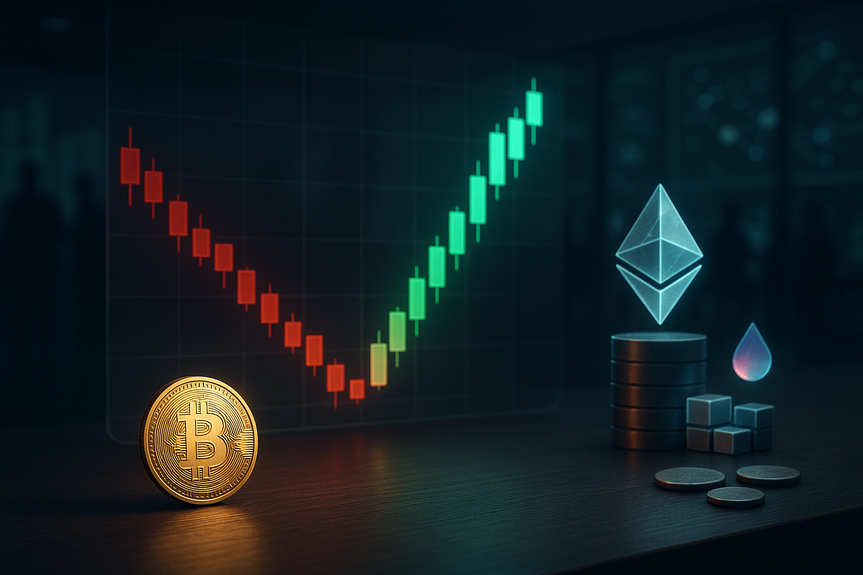
Bitcoin and Ethereum still control most of crypto’s value. Together, they sit around $1.4 trillion in market cap. XRP sits far lower, near $65 billion. For XRP to close that gap, it would need about a 20x move. That means new utility must show up in the data, not just in hype. XRP price prediction 2026 depends on whether those real drivers take hold and endure.
Ripple, the company behind XRP, has spent billions to build a full-stack payment network that runs on blockchain. That network could connect banks, fintechs, and tokenized assets. If it works at scale, value should flow to the XRP token. But big visions are not enough. We need clear signals that the pieces are clicking.
Growth in tokenized treasuries, funds, and bonds on networks that connect to XRP rails
Custody banks and asset managers launching tokenized products that settle using XRP or its infrastructure
Daily settlement volume tied to RWAs that includes XRP as a liquidity layer
New corridors (for example, U.S.–Mexico, EU–APAC) that report sustained on-chain volume
Partnerships with licensed payment firms and banks using XRP as a bridge currency
Stable spreads and deep liquidity on exchanges that handle those payment routes
Major custodians and prime brokers adding XRP with insurance and audit support
Regulatory green lights for tokenized funds and cross-border settlement pilots
Inclusion of XRP in compliant, institution-facing liquidity venues
On-chain settlement volumes: Rising, steady volumes linked to RWAs and payment corridors suggest real use
Liquidity depth: Tighter spreads and larger order books across top exchanges show healthier demand
Institutional adoption: Public pilots with banks, remitters, and asset managers, plus case studies with volume stats
Product launches: Tokenized treasuries, funds, and bonds that settle with or through XRP rails
Regulatory milestones: Approvals that make it easier for funds and fintechs to hold and use XRP
Network reliability: Low downtime, fast finality, and stable fees through periods of high activity
Price goal: Clear the mid-single digits and hold above them
Driver: Visible growth in tokenized asset settlement and a few strong payment corridors
Evidence: Monthly volume and liquidity metrics trend up even when markets get choppy
Phase 2: A sustained push toward $10
Price goal: Reach and base around $10
Driver: More corridors go live, deeper liquidity, and integration by large custodians
Evidence: Lower volatility, higher exchange depth, and repeat enterprise use
Phase 3: Setup for $20
Price goal: Attempt a run at $20
Driver: RWAs reach scale, and XRP becomes a common bridge asset across several high-volume markets
Evidence: Multi-billion daily settlement touching XRP rails, strong regulatory clarity, and robust uptime
Regulatory setbacks: New rules could limit how institutions use or hold XRP
Competing rails: Other networks may win RWA settlement or cross-border flows
Liquidity shocks: Exchange issues or market stress could widen spreads and slow adoption
Execution risk: Integrations may take longer and cost more than planned
Macro cycles: Risk-off markets can delay even strong adoption stories
Adoption stalls, and RWA pilots remain small
Liquidity stays thin outside a few venues
Range: $0.60 to $1.20
Base case
One or two strong payment corridors scale
Early RWA flows link to XRP infrastructure
Range: $3 to $6 as the network builds a higher floor
Stretch case
Multiple corridors show durable volume and tight spreads
Tokenized funds gain traction with XRP-linked settlement
Range: A test of $10 with brief extensions higher if momentum accelerates
A full 20x move to $20 likely needs more time and broader adoption. But sustained progress in 2026 can lay the groundwork.
Make a catalyst checklist: corridors live, RWA partners, custodians, volumes, spreads
Follow monthly data: on-chain settlement, exchange depth, and fee stability
Watch enterprise news: bank pilots, fintech integrations, and audited case studies
Use risk controls: diversify, size positions modestly, and set review dates
XRP price prediction 2026: what would power a 20x move
Sizing the gap: from $65 billion to the big leagues
The math is simple. A $65 billion asset needs a 20x rise to reach about $1.3 trillion. That implies a token price near $20 if the circulating supply stays stable. Big jumps like this do not come from retail buzz alone. They come from major new demand. That demand must be steady, global, and hard to replace.Catalyst 1: Real-world asset tokenization
Tokenization turns assets like money market funds, bonds, and real estate into digital tokens that settle fast and trade 24/7. Many banks and asset managers see this as a multi-trillion-dollar shift. If XRP becomes a core bridge asset for these flows, demand could rise sharply. What to watch:Catalyst 2: Payments network and Ripple’s buildout
Ripple has invested more than $3 billion across crypto and blockchain deals to speed up a global payments stack. The aim is lower fees, faster settlement, and fewer intermediaries. If banks, remitters, and fintechs route real cross-border volume through this stack, XRP demand could increase. What to watch:Catalyst 3: Clearer rules and institutional rails
Institutions need clarity on custody, compliance, and reporting. As rules improve and top-tier custodians support XRP, large players can participate with less friction. That can boost volumes and reduce volatility spikes. What to watch:Signals to watch to spot the real catalyst
You do not need to guess. You can track on-chain and off-chain data to see whether the 20x case is growing stronger.Price targets and path: $10 first, then a run at $20
Many splashy calls put XRP at $100 or even $500. Those numbers assume that XRP replaces SWIFT or takes over all cross-border payments, which is unlikely. A more grounded path is step-by-step and driven by proof. Phase 1: Break and hold key levelsRisks that could derail the 20x case
Scenarios for XRP price prediction 2026
These scenarios are not guarantees. They are simple ways to frame risk and reward for the rest of 2026 based on the signals above. Bear caseHow to position and track progress
You can reduce guesswork by using a simple checklist and by pacing entries.Bottom line for 2026
A credible XRP price prediction 2026 rests on real utility, not bold headlines. The most plausible roadmap hits $10 first, proves staying power, and then aims for $20 as tokenized assets and payment rails scale. Track the signals listed above. If they strengthen together, the 20x case moves from hope to plan.(Source: https://www.fool.com/investing/2026/07/01/prediction-1-crypto-will-be-more-than-btc-eth/)
For more news: Click Here
FAQ
Q: What would XRP need to reach $20 and match the combined market value of Bitcoin and Ethereum?
A: XRP would need roughly a 20x increase from a market cap near $65 billion to about $1.3–1.4 trillion, which implies a token price near $20 if circulating supply stays stable. Real, steady demand and new utility — not just retail hype — must drive that change for the XRP price prediction 2026 to be credible.
Q: What are the main catalysts that could drive a 20x move for XRP?
A: The article highlights three primary catalysts: real‑world asset (RWA) tokenization that uses XRP as a bridge asset, Ripple’s payments‑network buildout connecting banks and fintechs, and clearer institutional rails including custody and regulatory progress. Ripple’s more than $3 billion in crypto and blockchain acquisitions supports the payments buildout and institutional push.
Q: What on‑chain and off‑chain signals should I watch to see if XRP adoption is real?
A: Track rising, steady on‑chain settlement volumes tied to RWAs and payment corridors, improved liquidity depth with tighter spreads, and public institutional pilots and custody support that report volume and audit details. Also watch product launches for tokenized treasuries or funds, regulatory approvals, and network reliability metrics like uptime and fast finality.
Q: What price path does the article suggest for XRP in 2026 and beyond?
A: The piece outlines a phased path: clear and hold mid‑single digits first, then a sustained push to about $10, and finally a setup to attempt $20 if adoption scales and RWAs reach meaningful volume. This stepwise approach is central to the XRP price prediction 2026 roadmap and depends on repeated evidence such as deeper liquidity and stable enterprise use.
Q: What are the realistic scenarios and price ranges for XRP in 2026?
A: The article presents a bear case around $0.60 to $1.20 if adoption stalls, a base case of roughly $3 to $6 with one or two corridors and early RWA flows, and a stretch case that tests $10 with brief extensions higher if momentum accelerates. It also notes that a full 20x move to $20 likely needs more time and broader adoption than 2026 alone may allow.
Q: Which risks could derail XRP’s move toward a 20x valuation?
A: Key risks include regulatory setbacks that limit institutional use, competing settlement rails winning RWA or cross‑border flows, exchange or liquidity shocks that widen spreads, integration and execution delays, and adverse macro cycles that slow adoption. Any of these factors could keep volumes thin and stall the progression outlined.
Q: How would regulatory clarity and custodial support affect XRP’s institutional adoption?
A: Clear rules and top‑tier custodial support address custody, compliance, and reporting needs, reducing friction and enabling larger players to participate with less risk, which can boost sustained volumes and reduce volatility. Inclusion in insured custodial services and compliant, institution‑facing liquidity venues is listed as a major enabler in the XRP price prediction 2026 roadmap.
Q: How can an investor practically track progress and position for the XRP thesis?
A: Use a catalyst checklist that monitors live corridors, RWA partners, custodians, monthly on‑chain settlement and exchange depth data, and product launch announcements, while sizing positions modestly and setting review dates. Following those signals and applying risk controls like diversification and staged entries can help move decisions from speculation toward evidence‑based action.
* The information provided on this website is based solely on my personal experience, research and technical knowledge. This content should not be construed as investment advice or a recommendation. Any investment decision must be made on the basis of your own independent judgement.
Contents