Crypto
10 Jul 2026
Read 13 min
How to spot crypto kiosk scams before you lose money *
how to spot crypto kiosk scams and protect your savings and loved ones from fast, costly theft today
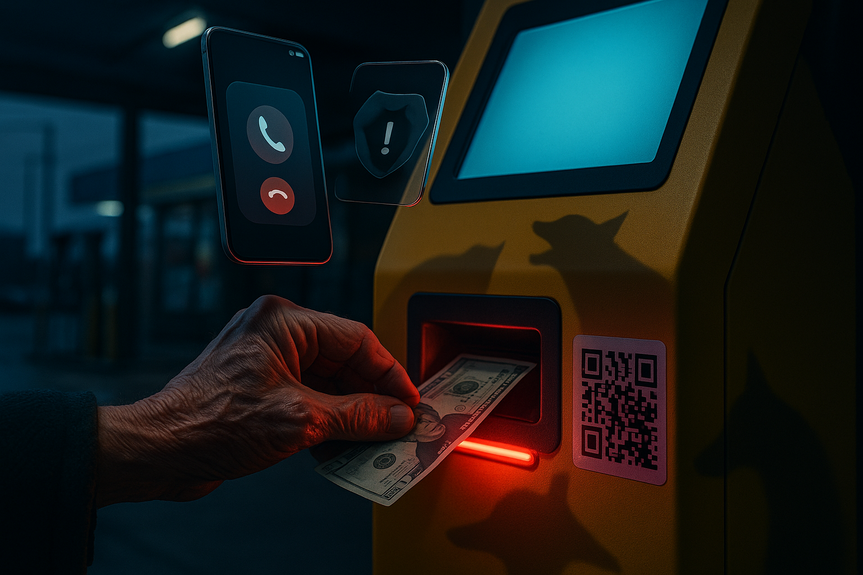
Thieves use pressure, fear, and speed to push people to feed cash into “crypto kiosks” that convert money into untraceable coins. Here’s how to spot crypto kiosk scams fast: look for urgent calls to pay “bail,” “overdue taxes,” or “account holds” using a QR code at a kiosk, demands to stay on the phone, and warnings not to tell anyone.
Last year, almost 1,200 Texans lost $56.8 million after scammers steered them to cryptocurrency ATMs. Many victims were older adults, but people of all ages were hit. The con often starts with a call or text that looks official. It may cite real names, titles, or badge numbers. The goal is simple: get you to withdraw cash, scan a QR code, and load money into a kiosk. Once you send the crypto, the crooks move it across many wallets within hours. Police say the window to claw funds back is only 36 to 48 hours.
Maria, a 72-year-old from Austin, almost lost $5,000 after a caller posed as a sheriff’s deputy and sent fake court papers. She stopped at the sight of the yellow machine. “That’s a Bitcoin machine. I’m not putting any money there,” she said. Many others did not get that final warning.
What is a crypto kiosk? It is a machine in a convenience store or gas station that takes cash and sends cryptocurrency to a wallet you name, often by scanning a QR code. Texas has an estimated 4,000 of them. Law enforcement says scammers rely on these devices because the transfers are fast and hard to reverse.
Someone tells you to pay a bill, fine, bail, or tax with a kiosk.
You must scan a QR code someone else sent you.
You are told to keep the call active while you pay.
You are warned not to speak to store staff, your bank, or your family.
You plan to deposit thousands of dollars in cash at a random store.
Claims of a warrant, missed jury duty, or a frozen bank account.
Threats of arrest, deportation, or legal action if you hang up.
Urgent timelines: “Pay in 30 minutes or you’ll be jailed.”
Demands for secrecy: “Do not tell the bank this is for bail.”
Official-looking messages with real names but odd sender IDs or links.
If you want to learn how to spot crypto kiosk scams, start with the caller’s behavior. Real police, courts, and banks do not make you pay with gift cards, wire transfers to strangers, or crypto kiosks. They also do not demand that you stay on the phone while you move money.
Tech support: “Your device is hacked—pay a security fee in crypto.”
Romance: “Send me crypto so we can book travel or clear a fee.”
Investment: “Double your money fast—fund your wallet at a kiosk.”
Hang up. Call back using a number you find on an official website or card.
Refuse any demand to pay with a kiosk, gift card, or crypto address.
Ask a clerk for help. Many have seen these scams and can step in.
Do not scan QR codes you did not create yourself.
If you are at the machine, walk away. Take a breath. Recheck the story.
For “police” or “court” claims, call the local non-emergency line.
For “bank” claims, use the number on the back of your card.
For “IRS” or “SSA” claims, use the official agency website to verify.
Learning how to spot crypto kiosk scams means trusting pause over panic. Scammers win when you rush. You win when you confirm.
Call your bank right away. Report the scam and the cash withdrawal.
File a report at your local police department. Ask for a case number.
Report the wallet address and QR code to the FBI at IC3.gov.
Contact the kiosk operator’s support line with the machine’s ID, time, amount, and wallet QR. Some operators can flag or freeze transfers very quickly, though recovery is rare.
Save everything: texts, emails, call logs, receipts, screenshots, QR codes, and photos of the kiosk.
Never pay government fees, fines, bail, or taxes with crypto, gift cards, or wire to strangers.
Set a personal 24-hour rule for any money request from a call or text.
Create a “no-secrets” policy: tell a spouse, friend, or adult child before big transfers.
Enable bank alerts for cash withdrawals and large purchases.
Silence unknown callers and block spam texts.
Do not click links in urgent messages; go to the official site yourself.
Ignore caller ID trust. Numbers can be spoofed.
Talk about scams openly. Shame keeps people quiet and vulnerable.
Post a simple sign near the phone: “Police, courts, and banks will NEVER ask for crypto.”
Agree on a code word family can use to verify real emergencies.
Place bold warning signs on or above kiosks with examples: jury duty, bank fraud, and tech support lies.
Train staff to spot distress: a caller on speaker guiding a payment; large sums of cash; repeat visits.
Set a store policy to interrupt and ask, “Is someone telling you to pay a fine or bail?”
Post local non-emergency police numbers near the register.
Did someone contact you first with a threat or prize? Big red flag.
Are you asked to pay today to “avoid arrest” or “unlock funds”? Big red flag.
Is the payment method unusual for the claim? Courts, utilities, and banks do not accept crypto kiosks.
Do you feel scared, rushed, or sworn to secrecy? Stop. Verify with a second source.
If you remember nothing else, remember this: real agencies and banks give you time, options, and a paper trail. Scammers give you fear, a QR code, and a crypto kiosk.
Staying safe is not about knowing everything. It is about pausing, checking, and saying no to high-pressure payments. Share these tips with your family, neighbors, and coworkers. When more people know how to spot crypto kiosk scams, fewer people lose their savings.
How to spot crypto kiosk scams in the wild
Quick red flags at the machine
Quick red flags on calls, texts, and emails
Inside the scammer’s playbook
The “authority” threat
Scammers pose as police, judges, IRS agents, or court clerks. They accuse you of skipping jury duty or owing fines. They send forged documents and real-looking case numbers. The “fix” is to post “bail” right now at a kiosk by scanning their QR code.The “bank fraud” ruse
A crook claims to be from your bank’s fraud team. They say your account is at risk and you must “move your money to a safe wallet.” They rush you to a kiosk and guide each step. They may spoof real bank phone numbers and repeat your personal details.Other common hooks
What to do in the moment
Stop, slow down, and verify
Check the story with a second source
If you already paid, act fast (first 48 hours)
Build habits that block the scam
Money rules to live by
Phone and message defenses
Help older family members
At the store: small steps that save big
Clerks and store managers often see scam victims in real time. Simple actions help:Rules and trends to watch
Some states now regulate or even ban crypto kiosks as scams surge. In Texas, cities like San Antonio require warning signs, and lawmakers are weighing broader action. Officials say about 70% of kiosk users they see in scams are over age 60. The largest U.S. operator, Bitcoin Depot, shut down its network after facing lawsuits and enforcement pressure, including roughly 900 machines in Texas. While some operators add hotlines and on-machine warnings, police still report rapid, hard-to-trace losses, and only a short recovery window.Real-world checkpoints before you pay
(Source: https://www.texastribune.org/2026/07/08/texas-cryptocurrency-kiosk-bitcoin-atm-scam-fraud/)
For more news: Click Here
FAQ
Q: What is a crypto kiosk and how do scammers use it?
A: A crypto kiosk is an ATM-like machine in convenience stores or gas stations that accepts cash and sends cryptocurrency to a wallet you name, often by scanning a QR code. Understanding what the machine does is a first step in learning how to spot crypto kiosk scams because scammers direct victims to scan QR codes and feed cash into kiosks while they coach the payment over the phone.
Q: What common red flags should I watch for on calls, texts, or at the machine?
A: If you want to learn how to spot crypto kiosk scams, watch for urgent demands to pay “bail,” “overdue taxes,” or “account holds,” instructions to scan a QR code at a kiosk, and orders to stay on the phone or keep the payment secret. Also be wary of threats of arrest, spoofed numbers, and messages that pressure you to act immediately.
Q: Who do these scams usually target and how widespread are the kiosks in Texas?
A: Law enforcement says scammers particularly target older adults — roughly 70% of kiosk users seen in scams are over age 60 — but adults of all ages have been hit. Texas has an estimated 4,000 kiosks and almost 1,200 Texans lost a combined $56.8 million last year after being steered to cryptocurrency ATMs.
Q: What should I do immediately if someone pressures me to use a crypto kiosk?
A: Hang up and verify the claim by calling the agency or bank using a number from an official website or your card, and refuse any demand to pay with a kiosk, gift cards, or a crypto address. If you are at a store, ask the clerk for help, do not scan QR codes you did not create, and walk away to avoid rushed, pressured payments.
Q: If I already paid at a kiosk, what steps can I take to try to recover my money?
A: Act fast in the first 36 to 48 hours: call your bank, file a report with local police and the FBI at IC3.gov, and contact the kiosk operator’s support line with the machine ID, time, amount, and wallet QR. Save all texts, emails, call logs, receipts, screenshots, and photos because recovery is rare but these records can help investigations.
Q: How can families help elderly relatives avoid falling for these scams?
A: Teach older relatives the signs and set simple rules such as a 24-hour pause before acting on money requests and a “no-secrets” policy that requires telling someone before large transfers. Small steps like posting a sign near the phone that real police, courts, and banks will never ask for crypto and agreeing on a family code word can prevent panic-driven losses and help people learn how to spot crypto kiosk scams.
Q: What can store owners and clerks do to prevent people from being scammed at kiosks?
A: Stores can place bold warning signs on or above kiosks, post local non-emergency police numbers, and train staff to spot distress such as a customer guided by someone on a phone or depositing large sums of cash. Clerks should be empowered to interrupt with a simple question like “Is someone telling you to pay a fine or bail?” because staff intervention has helped stop some victims.
Q: Are there any laws or industry actions addressing crypto kiosk fraud in Texas?
A: Thirty states have passed laws regulating the kiosks, including four that recently banned the machines, while Texas currently has no statewide oversight but some cities like San Antonio require warning signs. Lawmakers are weighing broader action ahead of the 2027 Legislature, and operators such as Bitcoin Depot have shut down large parts of their networks amid litigation and enforcement pressure.
* The information provided on this website is based solely on my personal experience, research and technical knowledge. This content should not be construed as investment advice or a recommendation. Any investment decision must be made on the basis of your own independent judgement.
Contents