AI News
23 Aug 2026
Read 7 min
How Epic Ergo Visit works to streamline outpatient care
how Epic Ergo Visit works to summarize records and keep clinicians focused during outpatient visits.
Here’s how Epic Ergo Visit works: it pulls key details from a patient’s electronic health record before an appointment, prompts the clinician with timely topics during the visit, and drafts documentation after. The result is less clicking and more conversation, with faster decisions and clearer follow-ups in outpatient care.
Epic is adding another AI tool to its EHR playbook, and outpatient teams may feel the impact first. Ergo Visit gathers and organizes information across a patient’s record so clinicians can focus on the person in front of them. Ochsner Health is the first site to use it, with early users starting in August. Epic says more than 1.4 million clinicians now interact with AI inside its EHR each month.
Collects data from the Epic EHR and related sources
Surfaces the reason for the visit from scheduling notes
Flags due items, like vaccinations or overdue labs
Prepares a concise snapshot so the clinician can start fast
Shows relevant prompts tied to symptoms, history, and risks
Reduces tab-hunting by pulling patterns across the chart
Keeps the conversation patient-first while tracking key points
Drafts a visit note the clinician can edit and sign
Identifies issues to review or address later
Supports routing follow-ups, tests, or referrals
Understanding how Epic Ergo Visit works helps teams plan training and set expectations: it is a guide, not a replacement for clinical judgment. The clinician remains in control, reviewing suggestions and approving every note.
Prompts and summaries reduce cognitive load
Clinicians can maintain eye contact and build trust
First-draft notes save minutes per visit
Fewer missed follow-ups or gaps in care
Timely reminders (like vaccines due) appear when needed
A physician compared it to a GPS that finds the fastest route
Ochsner Health has the first live users; four clinicians started Aug. 3
Five additional physicians outside Ochsner are piloting the tool
Epic reports 1.4 million clinicians use AI in its EHR each month
Epic leads the U.S. acute care EHR market, with competitors also adding AI
At its annual meeting, Epic previewed Agent Factory (to build custom AI agents) and Curiosity (for predictive insights on outcomes and readmissions)
Accuracy of prompts and summaries must be monitored
Clinicians should confirm content before finalizing notes
Sites need guardrails to spot bias and prevent overreliance
Local teams should define when prompts appear and who closes tasks
Clear metrics can show value: time saved, note quality, follow-up completion, patient satisfaction
Audit trails and feedback loops help improve suggestions
Privacy and security policies must cover cross-record pattern finding
Clinicians who grasp how Epic Ergo Visit works can set simple goals for each phase: arrive prepared, stay present, and leave with a solid plan. Early adopters should share wins and misses to refine prompts and policies. As health systems measure results, clarity on how Epic Ergo Visit works will guide safe, steady adoption.
how Epic Ergo Visit works
Before the visit: highlights ready at check-in
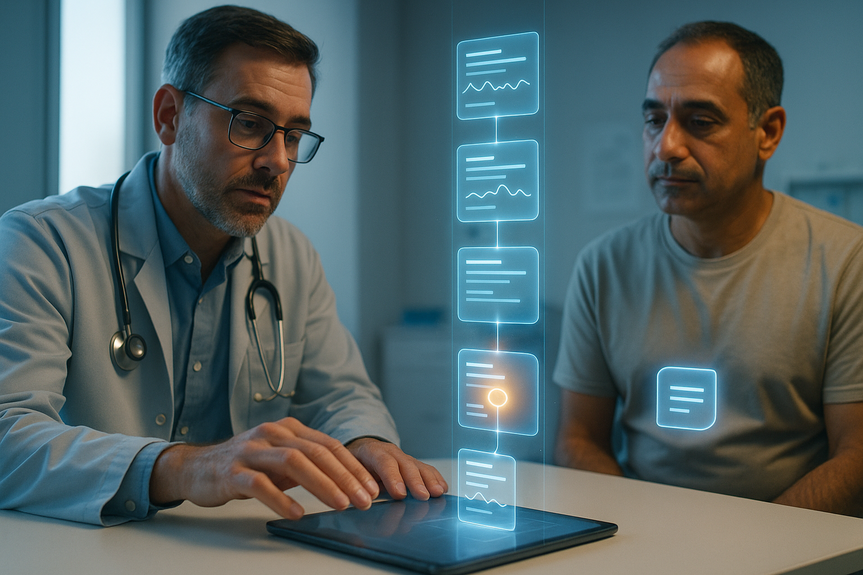
During the visit: guidance without losing eye contact
After the visit: documentation and next steps
Why it matters for outpatient care
More face time, less screen time
Faster, cleaner documentation
Smarter decisions in the moment
Adoption and market context
Rollout status
Broader AI momentum
What to watch next
Safety, quality, and equity
Workflow fit
IT and governance
(Source: https://www.healthcaredive.com/news/epic-targets-outpatient-visits-with-new-ai-tool/828230/)
For more news: Click Here
FAQ
Q: What is Epic’s Ergo Visit and what problem does it aim to solve?
A: Here’s how Epic Ergo Visit works: it compiles patient EHR data before appointments, prompts clinicians during visits, and drafts documentation after to reduce clicking and support clearer follow-ups. The feature is aimed at outpatient clinicians and is being piloted at sites including Ochsner Health.
Q: What does Ergo Visit do before a patient’s appointment?
A: Before the visit, Epic Ergo Visit collects data from the Epic EHR and related sources, surfaces the reason for the visit from scheduling notes, and flags due items like vaccinations or overdue labs. It prepares a concise snapshot so the clinician can start the appointment quickly.
Q: What kind of prompts and support does Ergo Visit provide during an outpatient visit?
A: During the visit, Ergo Visit shows relevant prompts tied to symptoms, history and risks and pulls patterns across the chart to reduce tab-hunting. This guidance is presented so clinicians can maintain eye contact and keep the conversation patient-first while tracking key points.
Q: How does Ergo Visit support documentation and follow-up after a visit?
A: After the visit, Ergo Visit drafts a visit note that the clinician can edit and sign and identifies issues for review or later action. It also supports routing follow-ups, tests or referrals.
Q: Is Ergo Visit intended to replace clinical judgment?
A: No; Ergo Visit is intended as a guide, not a replacement for clinical judgment. Clinicians remain in control, reviewing suggestions and approving every note before finalization.
Q: Who has started using or piloting Ergo Visit so far?
A: Ochsner Health is the first site to implement Ergo Visit, with four clinicians starting on Aug. 3, and five additional physicians outside Ochsner are piloting the tool. Epic also reports that more than 1.4 million clinicians interact with AI within its EHR each month.
Q: What safety, quality and equity concerns should be monitored when deploying Ergo Visit?
A: Organizations should monitor the accuracy of prompts and summaries and ensure clinicians confirm content before finalizing notes. They need guardrails to spot bias and prevent overreliance, local workflows that define when prompts appear and who closes tasks, and audit trails plus feedback loops to improve suggestions. Privacy and security policies must also address the tool’s cross-record pattern finding.
Q: What metrics should health systems track to measure Ergo Visit’s impact?
A: Health systems can track metrics like time saved per visit, note quality, follow-up completion rates and patient satisfaction to assess value. Local teams should set simple goals for each phase, such as arriving prepared, staying present, and leaving with a solid plan, and share early wins and misses to refine prompts and policies.
Contents