AI News
28 Mar 2026
Read 8 min
German army AI decision support How to speed decisions
German army AI decision support analyzes battlefield data to speed planning and improve troop safety.
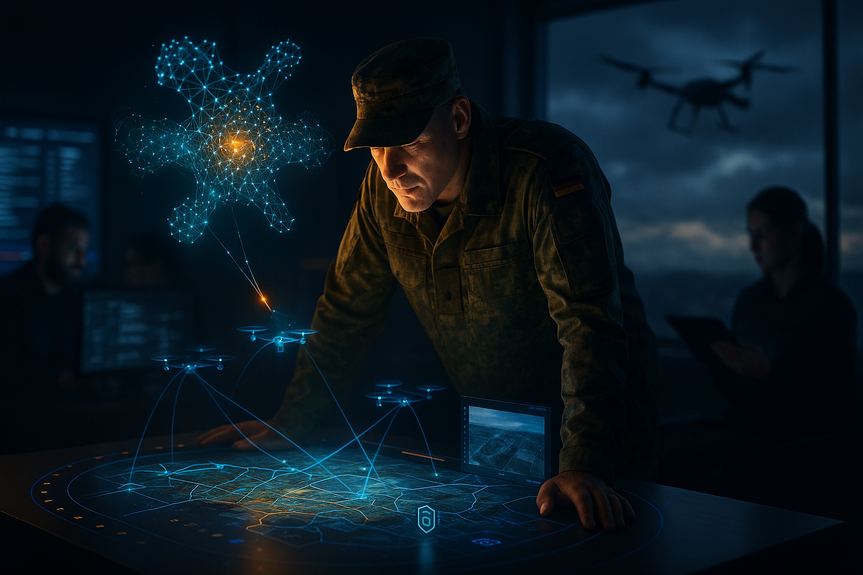
Germany’s army plans to use AI to turn huge streams of battlefield data into faster, clearer choices. German army AI decision support will draw on lessons from Ukraine, combine drone and sensor feeds, and suggest options while keeping humans in charge. The goal: speed up the decision cycle and improve NATO-ready operations.
Why German army AI decision support matters now
Modern battlefields produce nonstop video, images, signals, and maps. Humans cannot review it all in time. Commanders in Germany have seen how Ukraine uses data to predict enemy moves and answer faster. That is the push: use AI to find patterns, spot threats, and recommend actions before the enemy acts.Lessons from Ukraine: Sensors, drones, and data
Ukraine’s front lines run on drones, dispersed sensors, and geolocation tools. These feeds flood command posts. German leaders visited and learned two key truths: more data does not equal more insight, and speed decides who gains ground. AI can help by linking sources and ranking what matters.What smart tools could do
- Fuse drone video, satellite images, and radio signals into one map
- Flag likely enemy routes, decoys, and artillery positions
- Match live activity with past patterns to predict next moves
- Recommend counteractions with confidence levels and time costs
- Show the sources behind each alert to support trust and review
How the tools could speed the decision cycle
From days to minutes
Staff work that can take hundreds of people days could drop to hours or minutes. AI can scan terabytes, cut noise, and surface the top three options. With German army AI decision support, staff officers could focus on judging choices, not hunting for data.Human in the loop, always
Commanders in Berlin say the machine will advise, not decide. Soldiers will make the final call. Clear “human-in-command” rules, audit trails, and overrides keep control where it belongs. That also helps ethics boards and parliaments see how the system is used.Data, ethics, and NATO fit
Any system for German army AI decision support must align with NATO standards so allies can share maps, tracks, and alerts. It also must protect data sovereignty. War data from Ukraine and German exercises can train models, but access, storage, and use need strict rules:- Interoperability: common data models and APIs for allied sharing
- Security: encryption at rest, in transit, and in use
- Governance: logs, red-teaming, and bias checks before fielding
- Reliability: graceful fallback when sensors are jammed or cut
- Resilience: edge processing if links to HQ go down
What Germany can buy, build, or blend
Some European teams are building decision tools, but U.S. options are already in use. The U.S. Army is rolling out Maven, a system from Palantir, to turn imagery and video into faster awareness. Germany may choose a European product, an American one, or a hybrid. The near-term priority is to field something that works now, then evolve it.Practical steps to move fast
- Start with a pilot at brigade level using live exercise feeds
- Train models on approved Ukraine data and German scenarios
- Measure time saved from sensor detection to commander decision
- Set a human-in-the-loop policy and publish clear SOPs
- Stress-test against jamming, deception, and false data
Risks to watch
AI can be fooled by adversary decoys. Bad or biased data can lead to wrong advice. Over-trust can cause errors. Germany will need red teams, frequent model updates, and simple displays that show why the system suggests an option. Clear training for staff is as vital as code.The bottom line
Germany wants faster, better choices under fire. German army AI decision support can help compress the decision cycle, raise situational awareness, and strengthen allied operations, while keeping humans in charge. With careful testing, strong data rules, and NATO-ready design, the army can field useful capability now and improve it over time.For more news: Click Here
FAQ
Q: What is German army AI decision support and why is Germany pursuing it?
A: German army AI decision support is an effort to use artificial intelligence to turn huge streams of battlefield data into faster, clearer choices by analyzing drone, sensor and other feeds. The aim is to compress the decision cycle, improve situational awareness and speed commanders’ responses while keeping humans in charge.
Q: How would these AI tools process and present battlefield information?
A: German army AI decision support tools could fuse drone video, satellite imagery and radio signals into a single map, flag likely enemy routes and match live activity with past patterns to predict moves. They would also recommend counteractions with confidence levels and show the sources behind alerts to support trust and review.
Q: Will AI replace commanders or make final combat decisions?
A: German army AI decision support is intended as an advisory tool only, with the task of taking analytical and balanced decisions remaining with human soldiers. Clear human-in-command rules, audit trails and override options are planned to keep control with commanders.
Q: What lessons from Ukraine are informing Germany’s approach?
A: German leaders saw that drones, dispersed sensors and geolocation tools produce vast amounts of data and that Ukrainian forces use that data to predict enemy moves and respond faster. They concluded that more data does not automatically mean more insight, and that speed in processing is decisive for battlefield advantage.
Q: How will Germany ensure NATO interoperability and protect data sovereignty?
A: German army AI decision support must align with NATO standards, use common data models and APIs for allied sharing, and protect data sovereignty with encryption and strict governance. The plan also calls for logs, red-teaming, bias checks, graceful fallbacks and edge processing to ensure security and reliability.
Q: What procurement options is Germany considering for these AI systems?
A: Germany may choose a European-developed system, an American product already in use, or a hybrid approach, with a near-term priority to field something that works quickly while accounting for data sovereignty and security. Officials have not selected a specific product, but U.S. tools such as the Army’s Maven are cited as examples of already-deployed options.
Q: What practical steps will the army take to pilot and roll out AI decision support?
A: Proposed steps include a brigade-level pilot using live exercise feeds, training models on approved Ukraine data and German scenarios, and measuring time saved from detection to commander decision. The process would also set human-in-the-loop policies, publish standard operating procedures and stress-test systems against jamming, deception and false data.
Q: What are the main risks of using AI for wartime decision-making and how will they be mitigated?
A: German army AI decision support carries risks such as adversary decoys fooling systems, biased or poor data producing incorrect advice, and the danger of over-trust by operators. To mitigate these risks, planners propose red teams, frequent model updates, simple displays that explain why a suggestion was made, and thorough staff training alongside technical fixes.
Contents