AI News
11 Feb 2026
Read 8 min
How AI brain MRI emergency triage speeds lifesaving care
AI brain MRI emergency triage flags cases in seconds, reducing delays and speeding lifesaving care
A new system from the University of Michigan shows how AI brain MRI emergency triage can flag strokes and bleeds in seconds. The Prima model reads scans, checks clinical notes, and alerts the right specialist with up to 97.5% accuracy, helping hospitals cut delays and start lifesaving care faster.
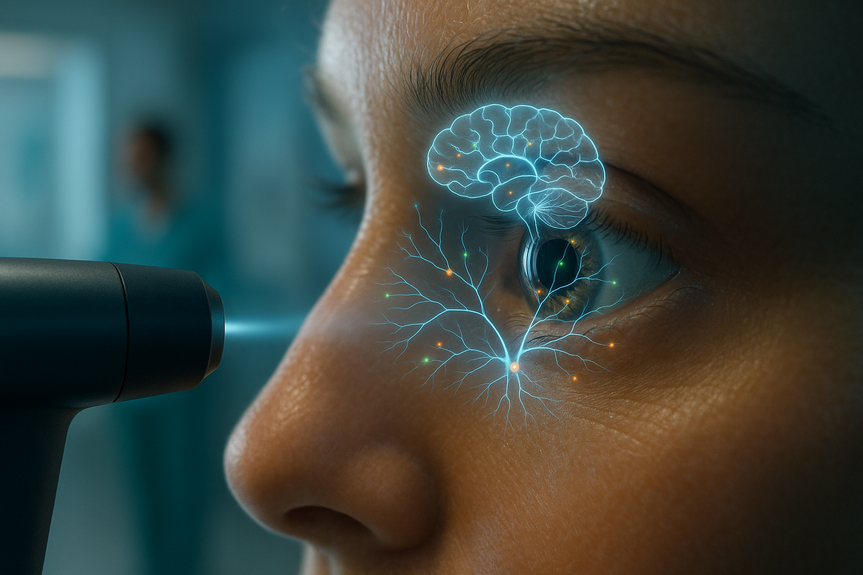
Hospitals face more MRIs than experts can read in time. Prima, a vision-language model, helps close that gap. It can scan images, read context from a patient’s chart, and rank cases by urgency so doctors act sooner.
Up to 97.5% diagnostic accuracy across 50+ radiologic diagnoses
Reliable urgency scoring to rank which cases need fastest care
Instant feedback after scanning, reducing report wait times
Outperformed other advanced AI models tested in the study
Reduce diagnostic delays in emergency rooms and inpatient units
Improve weekend and overnight coverage
Support smaller and rural hospitals that lack neuroradiology on site
Lower error risk tied to fatigue and high workloads
Validation: Test on multi-center, multi-vendor datasets
Safety: Keep a radiologist in the loop for final reads
Equity: Monitor performance across age, race, and sex
Privacy: Protect patient data and comply with regulations
Integration: Fit cleanly into PACS, EMR, and call workflows
The team plans to add richer electronic health record data to boost accuracy. The same core approach could extend to mammograms, chest X-rays, and ultrasounds, creating a general imaging “co-pilot” that speeds up results while keeping experts in charge.
Scan completes
Prima processes images and notes in seconds
Model flags an emergency and sends an alert
Specialist sees key findings and takes action
Radiologist confirms and finalizes the report
This flow supports rapid stroke codes and surgical decisions. It also reduces the time routine cases spend waiting behind hidden emergencies.
AI brain MRI emergency triage: how Prima works in seconds
Trained like a radiologist
Prima is a vision-language model. It takes MRI images and text together. The team trained it on more than 200,000 MRI studies and 5.6 million sequences from University of Michigan Health. It also used clinical history and the physician’s reason for the scan. This broad view helps the model “think” more like a radiologist.Alerts the right team
When the scan suggests stroke, hemorrhage, or another emergency, Prima can ping the right subspecialist, such as a stroke neurologist or neurosurgeon. The alert arrives right after imaging ends. This shortens the time to treatment, when minutes matter most.What the study found
Researchers evaluated Prima over one year on more than 30,000 MRI studies. The findings, published in Nature Biomedical Engineering, show strong accuracy and speed across many brain conditions.Why this matters for patients and hospitals
Faster care saves brain tissue
Strokes and brain bleeds need fast action. Every minute counts. AI brain MRI emergency triage can cut the delay from scan to treatment by surfacing critical cases first.Less backlog, more access
Many centers face staff shortages and rising scan volumes. Results can take days in some settings. By routing the most urgent studies to the front of the line, hospitals can:What makes Prima different
Broad training, not a single task
Past AI tools often focused on one job, like finding a lesion. Prima learned from a wide set of cases and combined images with clinical context. That design supports many tasks at once: detect disease, suggest diagnoses, and set urgency.Vision-language AI for clinical context
Because Prima reads both pictures and words, it can consider the reason for the MRI and relevant history. This context reduces false alarms and helps match alerts to the right subspecialist.Limits, safeguards, and next steps
Prima is in early evaluation. It needs more external testing at other health systems and on diverse scanners and populations.How it improves the care journey
From scanner to action
Bottom line
Prima shows how AI can read a brain MRI fast, understand urgency, and alert the right expert. With up to 97.5% accuracy and instant feedback, it points to a safer, faster path from imaging to treatment. As validation grows, AI brain MRI emergency triage could become a standard tool that saves time, money, and lives. (p.s. AI brain MRI emergency triage remains a support system, not a replacement for clinical judgment.)(Source: https://www.sciencedaily.com/releases/2026/02/260210005419.htm)
For more news: Click Here
FAQ
Q: What is the Prima system and how does it relate to AI brain MRI emergency triage?
A: Prima is a vision-language model developed at the University of Michigan that processes MRI images and clinical text together to deliver diagnoses in a matter of seconds. As an example of AI brain MRI emergency triage, it integrates patient history and imaging to flag urgent neurological conditions and suggest the appropriate subspecialist.
Q: How accurate is Prima at identifying neurological emergencies?
A: In the University of Michigan study, Prima reached diagnostic accuracy up to 97.5% across more than 50 radiologic diagnoses and was evaluated on over 30,000 MRI studies. The research reported that Prima outperformed other advanced AI models tested in the study.
Q: How quickly can AI brain MRI emergency triage like Prima flag strokes or bleeds?
A: The study found Prima can analyze scans and return feedback in a matter of seconds, with alerts available immediately after imaging completes. When scans suggest stroke or hemorrhage, the system can automatically notify the appropriate subspecialist so care can begin sooner.
Q: What kinds of data were used to train Prima?
A: Researchers trained Prima on a broad dataset that included every digitized MRI collected at University of Michigan Health, more than 200,000 MRI studies and 5.6 million imaging sequences, plus clinical histories and the reasons physicians ordered scans. This combination of images and text was intended to make the model’s assessments closer to how a radiologist interprets studies.
Q: How does Prima change the clinical workflow in hospitals?
A: Prima ranks cases by urgency and routes instant alerts to the most appropriate subspecialist, which reduces report wait times and helps prioritize cases that need immediate attention. By surfacing critical studies first, AI brain MRI emergency triage can shorten the time from scan to treatment in settings facing high MRI volume or limited neuroradiology coverage.
Q: What limitations and safeguards did the researchers identify for AI brain MRI emergency triage systems?
A: The authors emphasize Prima is still in early evaluation and requires external validation on multi-center, multi-vendor datasets, along with monitoring for equity across age, race, and sex. They also recommend keeping a radiologist in the loop, protecting patient privacy, and ensuring clean integration with PACS and EMR systems for safe AI brain MRI emergency triage.
Q: Can Prima help smaller or rural hospitals that lack neuroradiology on site?
A: The article states Prima can support smaller and rural hospitals by improving access to timely radiology services, improving weekend and overnight coverage, and reducing diagnostic delays. By prioritizing urgent studies, it can help centers with limited specialist availability surface critical cases faster.
Q: What next steps do researchers plan before wider adoption of AI brain MRI emergency triage?
A: Researchers plan further validation across other health systems and aim to incorporate richer electronic health record data to boost diagnostic accuracy while studying safety, equity, and integration needs. The team also notes future work could adapt the same approach to other imaging types such as mammograms, chest X-rays, and ultrasounds.
Contents