AI News
25 Mar 2026
Read 8 min
How Bulloch County generative AI rollout protects students
Bulloch County generative AI rollout protects student data and builds critical thinking in secure site
Bulloch County generative AI rollout brings Google’s Notebook LM and Gemini to high school students in a secure, district-managed setup. The “walled garden” protects student data and blocks model training on school content. The goal is simple: help students write, study, and think more critically while teachers guide safe, smart use of AI.
STATESBORO, Ga. is preparing students for a tech-driven future. Bulloch County Schools will let high schoolers use two AI tools, Notebook LM and Google Gemini, through school accounts. Assistant superintendent Teresa Phillips says the district spent two years studying best practices with a consultant, building protections, and training staff so students can learn with confidence.
Summarize readings, outline essays, and brainstorm topics
Generate study questions, flashcards, and quick explanations
Organize sources and notes in one place
Get suggestions to improve clarity and tone in drafts
Teachers will set classroom rules. Students should always follow assignment instructions, cite any AI help if asked, and check facts before they submit work.
School logins only: Access runs through district-managed Google accounts
Privacy first: Student information is protected like Gmail and Drive
Walled garden: Content stays inside the district’s environment
No external training: Data from student use is not used to train outside AI models, per the district
Policy-backed use: Activity follows school technology and conduct policies
These steps fit the district’s message: AI is a tool, not a shortcut. The Bulloch County generative AI rollout centers on safe use, clear rules, and real learning.
Ask, “Where did this information come from?”
Check if a source is reliable
Verify claims with trusted materials
Compare outputs against class notes and teacher guidance
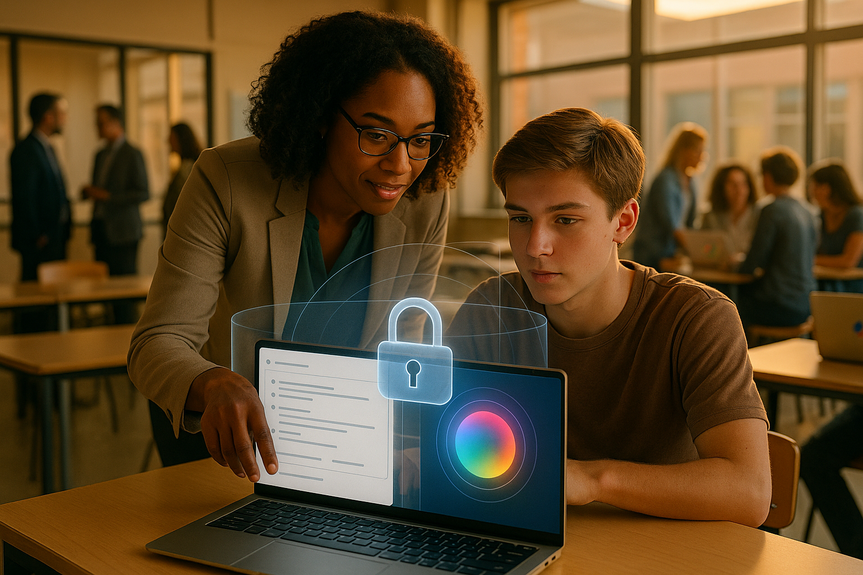
With the Bulloch County generative AI rollout, teachers can design activities that make students think. For example, a teacher may ask students to use Gemini to draft an outline, then revise it using evidence from class texts. Students learn to test, challenge, and improve ideas, not copy them.
More drafting and revision in class
Rubrics that reward process, evidence, and reflection
Explicit rules on when and how AI can be used
Short reflections where students explain their choices and cite sources
This approach keeps the focus on thinking, voice, and proof. It also helps teachers spot strong learning habits over time.
Use only your school login
Follow your teacher’s directions on AI use
Never enter personal or sensitive information into prompts
Double-check facts and cite your sources
Read the district’s AI guidelines and FAQs
Write clearer drafts with better structure
Back claims with class materials and reliable sources
Ask sharper questions and spot weak arguments
Use AI to save time on busywork, then spend more time thinking
Teachers will:
Give targeted feedback on ideas and evidence
Design tasks that require original thought
Model how to verify and cite information
Celebrate growth in judgment and curiosity
Parents will:
See students use AI as a helper, not a crutch
Hear more about source quality and verification
Notice steady gains in confidence and clarity
The Bulloch County generative AI rollout shows careful planning, strong privacy, and a clear goal: help students become wise, safe, and critical users of modern tools.
In closing, the Bulloch County generative AI rollout prioritizes privacy, literacy, and real thinking. With Notebook LM, Gemini, and a protected “walled garden,” the district is teaching students to use AI well—and to question, verify, and learn with care.
Inside the Bulloch County generative AI rollout
The tools: Notebook LM and Gemini
Notebook LM helps students organize notes and ideas. Gemini acts like a writing and study partner. Together, they support classwork without replacing effort or thought. What students can do:Guardrails and student privacy
The district is launching these tools with strong guardrails that mirror protections in existing Google for Education services.Teaching with AI, not replacing it
Phillips says the district will continue to teach digital literacy. Students will practice key habits:How writing and grading may change
As AI becomes common, classrooms will shift:What families and students should expect next
Parents can expect that the Bulloch County generative AI rollout will start in a measured way. Teachers will introduce the tools where they fit best and will remind students to protect their privacy and follow class rules. The district suggests that families talk about smart use at home, too. Quick tips for day one:What success looks like
Students will:(Source: https://www.wsav.com/news/education/bulloch-county-schools-to-introduce-gen-ai-tools/)
For more news: Click Here
FAQ
Q: What AI tools will Bulloch County high school students be able to use?
A: The Bulloch County generative AI rollout will provide high school students access to Notebook LM and Google Gemini through district-managed accounts. These tools are meant to support writing, studying, and organization while teachers guide their use.
Q: How will student privacy be protected under the Bulloch County generative AI rollout?
A: The district uses a “walled garden” setup where access runs through district-managed Google accounts and follows the same protections as Gmail and Google Drive. Bulloch County says student information stays within the district and is not used to train external AI models.
Q: Who planned and approved the introduction of the AI tools in Bulloch County Schools?
A: Assistant superintendent Teresa Phillips said the district partnered with a consultant and spent about two years researching best practices and training teachers and administrators. The decision to introduce the tools followed that research and local discussion focused on student safety and classroom integration.
Q: How will teachers manage AI use in the classroom?
A: Teachers will set classroom rules, explain how AI fits into assignments, and ask students to follow instructions and cite AI help when required by the teacher. The district expects teachers to design activities and rubrics that emphasize process, evidence, and reflection so AI supports learning rather than replaces critical thinking.
Q: What kinds of tasks can students accomplish with Notebook LM and Gemini?
A: Students can use the tools to summarize readings, outline essays, brainstorm topics, generate study questions and flashcards, organize sources and notes, and get suggestions to improve clarity and tone in drafts. These supports are intended to assist classwork and strengthen students’ critical thinking with teacher oversight.
Q: Will student work be used to train outside AI models or shared on the internet?
A: According to the district, content from student use will remain inside the district’s environment and will not be used to train external AI models or sent out to the internet. That containment is part of the “walled garden” protections the district describes.
Q: How might writing instruction and grading change because of the Bulloch County generative AI rollout?
A: Classrooms may shift toward more drafting and in-class revision, and rubrics will increasingly reward process, evidence, and student reflection on AI-assisted work. Teachers may require explicit rules and short reflections where students explain their choices so grading emphasizes original thought and verification.
Q: What should families and students expect when the new AI program begins?
A: The district says the rollout will be measured, with teachers introducing the tools where they fit best and reminding students to protect their privacy and follow class rules. Families are encouraged to discuss smart use at home, use only school logins, avoid entering personal or sensitive information into prompts, and read the district’s AI guidelines and FAQs.
Contents