AI News
28 Mar 2026
Read 10 min
How German army AI decision support tools cut delays
German army AI decision support tools speed battlefield analysis, turning days of work into minutes.
German army AI decision support tools aim to cut delays by turning drone and sensor data into fast, human-ready insights. Commanders get pattern-based recommendations within minutes, not days. The tech stays advisory, keeps humans in charge, and will align with NATO standards while weighing data security and U.S.-built options.
Germany’s army is moving fast to shrink the gap between sensing and acting. Leaders saw how Ukraine uses drones and sensors to collect huge amounts of data. They now want software that can scan that data and suggest likely enemy moves. The goal is simple: give soldiers clearer choices, faster, while keeping people in control.
Why speed wins on today’s battlefield
Modern battles create more data than any staff can handle by hand. Maps, videos, radio logs, and satellite feeds pile up by the minute. If teams need days to sort it, they act too late. AI can help staff cut noise, surface patterns, and bring options to the table in time to matter.Inside the German army AI decision support tools
From raw feeds to usable insights
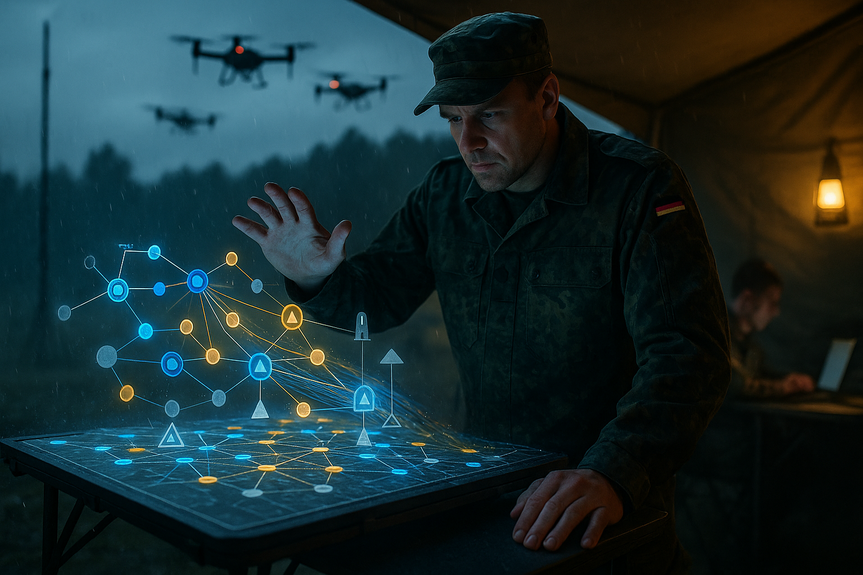
Drones, ground sensors, and radios send constant updates. The software ingests these streams and compares them to known patterns from past fights and exercises. It spots likely enemy routes, decoys, or artillery setups and highlights them on a shared map. It then proposes countermeasures for the commander to consider.Human in the loop, by design
Leaders stress that software will advise, not decide. The system ranks options, flags risks, and explains why it suggests a move. The commander sets the rules and makes the call. This keeps judgment, context, and accountability with the soldier.Gains measured in hours and people
Tasks that once took large analysis cells days can shrink to minutes with smaller teams. That frees people to plan, coordinate fires, and protect supply lines. It also helps “break” an opponent’s decision cycle by acting before they expect a response.- Faster pattern spotting turns sensor overload into a clear picture.
- Shared dashboards reduce miscommunication across units.
- Ranked options speed up orders and reduce rework.
- Explainable outputs help trust and training.
Training the models on real and relevant data
Lessons from Ukraine, grounded in German doctrine
Ukraine has four years of hard data from the front. That history shows how enemies move, hide, and adapt. Germany plans to blend lessons from that war with data from its own field exercises. This mix helps the software learn patterns while staying aligned with German tactics, rules, and values.Quality, not just quantity
Clean, labeled, and timely data matters more than raw volume. Bad inputs lead to bad outputs. Units will need clear processes to check sources, tag events, and share updates securely. The better the data, the better the advice.Standards, security, and buying fast
NATO interoperability is a must
Any system must plug into allied networks, formats, and procedures. NATO data standards reduce friction when forces work together. This also lets the German army test and operate with partners before a crisis.Europe or U.S. solutions? Weighing trade-offs
Germany may choose a European tool or an American one already in use. The U.S. Army is fielding Project Maven from Palantir to process imagery and video. A ready-to-field system could speed rollout. But leaders also point to data sovereignty and security. Final choices will balance speed, control, and long-term support.Cyber and access controls
Decision tools are high‑value targets. Strong encryption, role‑based access, and continuous monitoring are table stakes. Systems should work in degraded conditions and sync when networks recover. Resilience matters as much as speed.What the command post could look like
From cluttered feeds to a common picture
Instead of separate screens for each sensor, staff see one map with live layers. The system auto-tags likely threats and friendly movements. It flags gaps in coverage and suggests where to send a drone or patrol next.From hunches to data‑backed options
Planners still use experience. Now they also see how similar situations played out before. The tool presents two or three courses of action, with pros, cons, and timing. Leaders can accept, edit, or ignore them.- Spot artillery signatures and recommend counter‑battery moves.
- Detect likely ambush zones based on terrain and past behavior.
- Prioritize reconnaissance to close key information gaps.
- Estimate enemy resupply routes and propose interdiction points.
Risks to manage as adoption grows
Bias and overconfidence
Models can inherit bias from their training data. They can also be wrong in new conditions. Training must teach teams to question outputs and seek confirmation.Adversary deception
Opponents will try to feed false signals and spoof sensors. The system should cross-check sources and flag anomalies. Human analysts remain vital to catch traps.Change management and skills
Units need new workflows, not just new software. Clear roles, drills, and after‑action reviews will help build trust and skill. Simple interfaces and explainable AI reduce the learning curve.Roadmap: from pilots to practice
Start small, scale what works
Pilot in a few brigades. Measure decision times, accuracy, and user trust. Improve the model and data flows. Then expand across the force with standard kits, training, and support.Keep the loop tight with industry
Frequent updates will be key. Vendors and the army should iterate together, push patches fast, and test in field conditions. Clear service‑level rules will keep systems ready. The direction is clear: faster, clearer choices with human control. By blending frontline lessons, NATO standards, and strong security, German army AI decision support tools can shave hours off critical calls without removing judgment from soldiers. That balance—speed plus accountability—will decide their real value.For more news: Click Here
FAQ
Q: What are German army AI decision support tools intended to do?
A: German army AI decision support tools are designed to accelerate wartime decision-making by analysing drone, sensor and other battlefield data faster than humans to produce human-ready insights. They can spot patterns, suggest likely enemy moves and recommend countermeasures within minutes rather than days.
Q: How will the army use data from Ukraine and German exercises to train these systems?
A: The army plans to train models on lessons from Ukrainian command posts and data from German field exercises so the software learns relevant patterns while staying aligned with German tactics and values. Units will focus on clean, labeled and timely inputs because data quality matters more than raw volume.
Q: Will these AI systems replace human commanders in decision-making?
A: No, the systems are explicitly advisory and will not replace human commanders; the task of taking analytical and balanced decisions remains with the soldier. German army AI decision support tools rank options, flag risks and explain suggestions, while commanders set the rules and make the final call.
Q: What types of battlefield data will the system process to produce recommendations?
A: The software ingests streams from drones, ground sensors, radios, satellite feeds, maps, imagery and video to build a common picture and surface patterns. German army AI decision support tools compare those inputs to known patterns from past fights and exercises to spot likely routes, decoys or artillery setups and propose countermeasures.
Q: How much faster can decisions be made with these tools compared to traditional analysis?
A: Tasks that once required large analysis cells and days to complete can be reduced to minutes with smaller teams, according to the reporting. That speed shortens decision cycles, frees personnel to plan and coordinate, and helps act before an opponent expects a response.
Q: What security and interoperability considerations are being highlighted for these systems?
A: Any system must align with NATO standards and address data sovereignty and security concerns, including strong encryption, role-based access and continuous monitoring. German army AI decision support tools are expected to be resilient in degraded conditions, able to sync when networks recover, and interoperable with allied formats and procedures.
Q: What operational risks do commanders need to manage when using these AI tools?
A: Commanders must manage risks such as model bias and overconfidence, the danger of adversary deception or spoofed sensors, and the continued need for human analysts to verify outputs. They also face change-management challenges requiring new workflows, drills and explainable interfaces to build trust and skill.
Q: How will the German army test and implement these systems across the force?
A: The plan is to start with pilots in a few brigades, measure decision times, accuracy and user trust, then refine models and data flows before wider rollout. German army AI decision support tools will be iterated with industry through frequent updates and field testing, then scaled with standard kits, training and support.
Contents