AI News
10 Feb 2026
Read 9 min
How to detect AI-generated images and spot fakes fast
how to detect AI-generated images and verify authenticity fast with easy checks to stop viral hoaxes
Want a quick way to spot fake photos? Here’s how to detect AI-generated images fast: check context and source, zoom in on hands and text, run a reverse image search, inspect lighting and reflections, and use metadata or content-credential checks. Combine two or three tests to stop most viral fakes.
A new study shows AI tools can fabricate lifelike photos of well-known people in seconds. Images of a disgraced financier smiling with world leaders spread online even when no real photo exists. That speed makes everyone a target. Use this guide to learn how to detect AI-generated images before you share or believe them.
Ask who posted it first and when. New accounts and vague captions are red flags.
Look for a news article, press release, or eyewitness post that matches the scene.
Check if trusted outlets reported the event. If not, be careful.
Lighting: Do shadows fall in the same direction? Do faces match the room light?
Reflections: Do mirrors, windows, and sunglasses reflect the same scene?
Text: Street signs, badges, book covers, or shirts often have warped or nonsense letters.
Patterns: Watch for repeating textures in grass, bricks, or crowds.
Hands and ears: Count fingers. Look for fused or extra parts and odd ear shapes.
Teeth and eyes: Are pupils aligned? Do teeth look like a smooth block?
Jewelry and glasses: Do frames bend into skin? Do earrings mismatch between ears?
Body borders: Check where hair meets the sky or clothing meets skin for blur or halos.
Metadata: If you can, open image details. Missing camera data is common in edited files, though not proof alone.
Content Credentials (C2PA): Some images carry “Content Credentials” you can view with tools like the Content Authenticity Initiative verifier.
File oddities: Very sharp faces with muddy backgrounds can signal AI upscaling or synthesis.
Reverse image search: Use Google Images, Bing Visual Search, or Yandex. Find the earliest known version.
Cross-post checks: Search keywords from the caption plus site:twitter.com or site:reddit.com to trace the source.
AI image detectors: Use multiple detectors, but treat results as a clue, not proof.
If two checks disagree, do a third. If doubt remains, do not share.
Save the image and note the source if you plan to report it.
AI struggles with global consistency. Light, shadows, and reflections often clash.
Fine details break first. Hands, ears, small text, and jewelry expose flaws.
Context is king. Real events leave a trail: multiple angles, local posts, and time-stamped reports.
Metadata and credentials can help. Some cameras and newsrooms embed tamper-evident data.
Watchdogs tested major image generators. One tool made convincing fakes of public figures “in seconds.”
Some platforms block certain prompts, but others still output realistic scenes of famous people together.
Tech firms are adding watermarks and C2PA Content Credentials. These are useful but not on every image.
Bad actors can crop or re-save files to strip signals. That is why you should stack several checks.
10 seconds: Read the caption. Ask “Who says this?” and “Where did it happen?”
15 seconds: Reverse image search. Scan top matches for older or different versions.
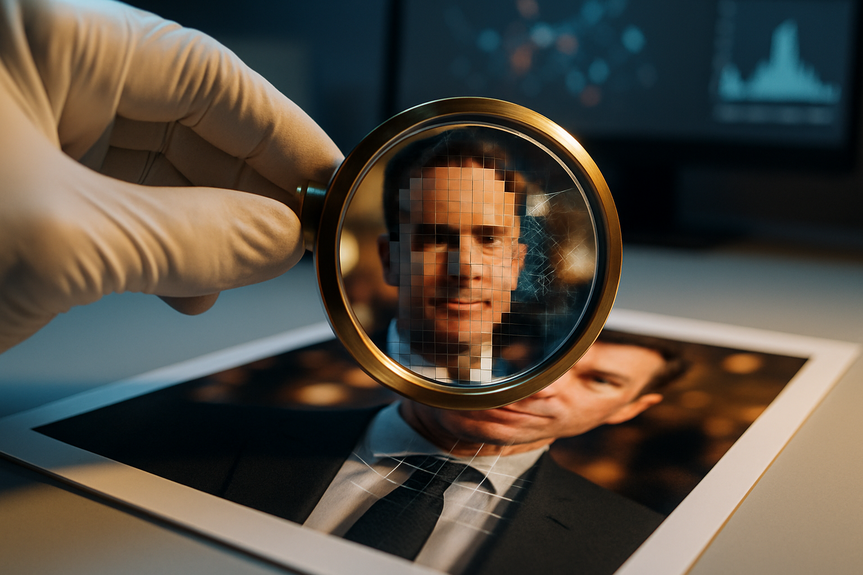
10 seconds: Zoom on hands, eyes, and text for distortions.
10 seconds: Check shadows and reflections for mismatch.
10 seconds: Look for a matching news post or local source.
5 seconds: If still unsure, pause and do not share.
Celebrity mashups: Famous faces together boost shares. Verify with credible news before you believe it.
Perfect lighting and perfect smiles: Studio-perfect looks in a gritty scene are a warning sign.
Crowd chaos: Background people may have blended faces or odd limbs. Zoom out, then in.
False urgency: “Share before it’s deleted!” is a tactic. Slow down.
Single-source claim: One post is not proof. Look for independent confirmation.
Browser add-ons: Use extensions for reverse image search and Content Credentials.
Saved searches: Keep a bookmark folder for quick fact-check tools.
Note-taking: Jot down the earliest URL you find. It helps you and others verify.
Community checks: Ask a trusted forum or newsroom when stuck.
The stakes are high because AI photos can shape what people think in minutes. You do not need special skills to push back. If you know how to detect AI-generated images, you can break the chain of false shares, protect your feed, and help others see what is real.
How to detect AI-generated images: a fast checklist
Start with context
Scan the picture
Zoom in on people
Check technical traces
Run quick tools
Decide before you share
Why these tests work
What’s happening behind the scenes
Speed test: verify an image in under 60 seconds
Common traps and how to avoid them
Tools and habits that help
For more news: Click Here
FAQ
Q: What quick steps can I take to verify if a photo is fake?
A: If you need a quick method for how to detect AI-generated images, start by checking context and source, zooming in on hands and text, running a reverse image search, inspecting lighting and reflections, and checking metadata or content credentials. Combine two or three of these tests to stop most viral fakes.
Q: Which visual signs in a picture most often indicate AI manipulation?
A: Look for inconsistent lighting or reflections, warped or nonsense text, repeating textures and blurred or haloed borders where hair meets sky or clothing meets skin. Zoom in on hands, ears, teeth and eyes for fused or extra fingers, misaligned pupils or teeth that look like a smooth block, and check jewelry and glasses for mismatches.
Q: How can metadata and content credentials help verify an image?
A: If you can, open image details to view metadata, but remember missing camera data is common in edited files and is not proof of manipulation by itself. Content Credentials (C2PA) can show provenance when present and tools like the Content Authenticity Initiative verifier can display them, though bad actors may strip signals so use these checks alongside other steps to learn how to detect AI-generated images.
Q: Are reverse image searches useful for tracing a photo’s origin?
A: Yes, reverse image search tools like Google Images, Bing Visual Search or Yandex can help find earlier versions and the earliest known appearance of a photo. Cross-post checks using caption keywords plus site-specific searches can also trace the original source or reveal matching news coverage.
Q: Should I trust AI image detectors to tell me if an image is fake?
A: AI image detectors can provide useful clues but are not definitive, so use multiple detectors and treat results as indicators rather than proof. Combine detector outputs with context checks, reverse searches and metadata or content-credential inspections for a stronger assessment.
Q: How fast can AI tools fabricate realistic photos of public figures?
A: Very fast — the NewsGuard study found some image generators produced convincing fakes of public figures in seconds, with Grok Imagine making lifelike images of multiple politicians. The fabricated photos in the study depicted scenes such as parties, private jets and beaches, showing how quickly realistic-seeming fakes can spread online.
Q: What should I do before sharing a suspicious image online?
A: Before sharing, run two or three quick checks like a reverse image search, zooming on hands and eyes, and checking shadows, reflections and caption context; if two checks disagree, do a third and if doubt remains, do not share. Save the image and note the earliest URL or poster if you plan to report it, and remember that learning how to detect AI-generated images helps stop viral fakes.
Q: Why do small details such as hands and text often give away AI-generated images?
A: AI systems often struggle with global consistency, so fine details break first and items like hands, ears, small text and jewelry frequently show errors. Checking these areas along with lighting, reflections and repeating patterns can expose inconsistencies that point to AI synthesis.
Contents