AI News
15 Nov 2025
Read 14 min
How to ensure responsible AI use in higher education
responsible AI use in higher education helps students build real skills and succeed in careers today
Responsible AI use in higher education means using tools like ChatGPT to learn better, not to skip the work. Students can use AI to quiz themselves, clarify tough ideas, and improve drafts. But outsourcing reading, writing, or quizzes to a bot hurts real skills, erodes fairness, and weakens career readiness.
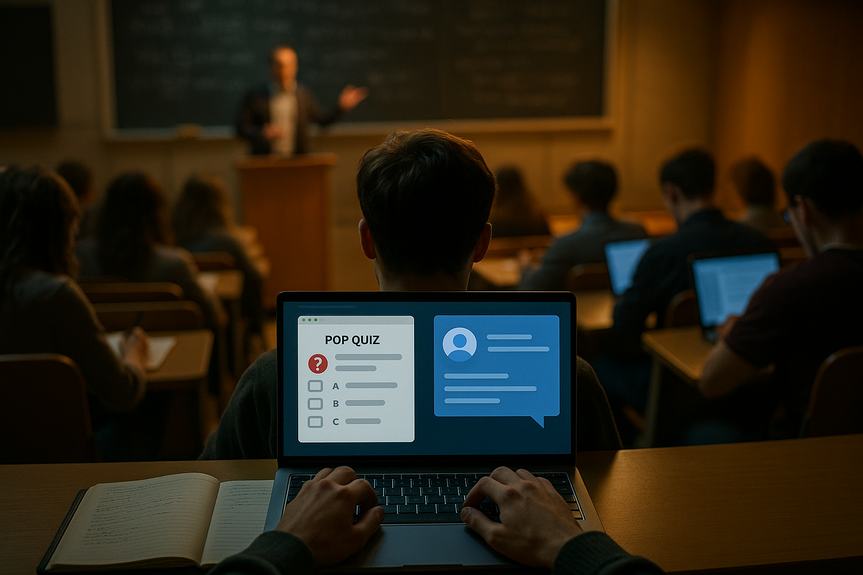
College classrooms are changing fast. Laptops open, tabs multiply, and a second window often holds an AI tool. Some students ask AI to explain a chapter. Others paste a quiz question into a chat box. The pattern is clear: AI can help or harm. The difference lies in intent and method. If we want long-term success, we must build habits that make technology a coach, not a crutch. That is the heart of responsible AI use in higher education.
Read the assignment and try on your own first.
Use AI to check understanding, not to replace thinking.
Return to the source text to confirm what the AI said.
Disclose how you used AI in a short note at the end of your work.
Name the tool, the purpose, and the key prompts used.
Never claim AI text as your own original writing.
Do not paste private, proprietary, or confidential content into public models.
Follow course and employer data rules at all times.
If the tool offers privacy controls, learn and use them.
Check facts, quotes, citations, and numbers.
Revise AI suggestions to match your voice and the assignment goals.
Accept full responsibility for errors in the final work.
Use AI to outline, question, and practice, not to produce finished answers.
If the assignment bans AI for certain parts, follow the rules.
When unsure, ask your instructor before using a tool.
These principles help build a culture of responsible AI use in higher education. They keep human skills at the center while still using smart tools for support.
Skim the reading and write three questions.
Underline key terms and note one unclear idea.
“Explain this paragraph in simple steps.”
“Give me two practice questions that test the main idea.”
“List common mistakes students make on this topic.”
“Help me outline a 5-paragraph essay. I will write each paragraph.”
Write your own answer first. Keep it short.
Ask AI for counterarguments to stress-test your idea.
Update your draft using your judgment, not the model’s style.
Verify facts with the original sources.
Run a brief style and clarity pass on your own.
Add a one-line disclosure such as: “I used [Tool] to generate practice questions and to suggest an outline; I wrote and edited the final text.”
Grade steps: proposal, outline, draft, peer review, final.
Ask for short “process memos” on how students used AI and why.
Require prompt logs or screenshots when AI use is allowed.
Use in-class writing, oral defenses, whiteboard problems, and short viva checks.
Use open-book exams that reward reasoning over recall.
Include questions tied to class-only materials and discussions.
Define what is allowed: brainstorming, outlines, practice questions, code linting.
Define what is banned: full drafts, final problem sets, take-home exams.
Align rules with learning goals and share examples of acceptable vs. unacceptable use.
Focus on personal analysis, local data, and class-specific sources.
Ask for annotations that explain why each paragraph exists.
Use portfolio grading to reward growth over time.
Show how to check model claims against readings and databases.
Offer a simple format for AI acknowledgments.
Explain why AI detectors are unreliable and should not be the sole evidence of misconduct.
Publish course-level and program-level guidelines with examples.
Explain academic integrity in the age of generative tools.
Provide a fair, transparent process for suspected misuse.
Offer campus-licensed tools with privacy controls.
Run short AI literacy sessions: safe use, data care, prompt design, bias awareness.
Create quick-reference guides for students and faculty.
Set tools to opt-out of training on user inputs where possible.
Map what data may never leave the campus environment.
Teach students about contracts, NDAs, and client restrictions.
Writing centers can coach “AI as tutor” workflows.
Libraries can teach source evaluation after AI search.
IT can audit tools and publish risk ratings and approved use cases.
Courses that model responsible AI use in higher education show students how to think with tools, not through them. This prepares graduates for jobs where AI is present but judgment still decides.
Require an annotated outline with reasons for each section.
Ask for a short video or audio “think-aloud” reflection.
Grade how students revise after feedback, not just the final text.
Analyze a local policy, dataset, or case you discussed in class.
Interview a campus expert and integrate the insights.
Create a study guide for next year’s class and defend its choices.
Pair take-home assignments with brief oral reviews.
Use small spot quizzes that ask “why” rather than “what.”
Include live problem-solving sessions where students explain steps.
Discuss bias, copyright, confidentiality, and source credit.
Explain sector-specific rules, like health, finance, and education privacy standards.
Model how to ask permission before using AI on client content.
Reading for argument and evidence.
Writing with clarity and structure.
Quantitative reasoning and basic coding logic.
Fact-checking and quick research.
Communication with humans: speaking, listening, and debate.
AI can speed routine tasks, but employers hire for judgment and trust. People who only press “generate” are easy to replace. People who can ask sharp questions, test ideas, and make sound calls are rare. They will lead teams that use technology well.
Use AI to push your thinking, not to hide from it.
Disclose use, verify claims, and protect data.
Keep your voice. Keep your effort. That is your edge.
State clear rules and design for process.
Teach AI literacy and model good habits.
Assess with variety and reward honest work.
Provide safe tools, clear policy, and training.
Align integrity processes with today’s tools.
Celebrate examples of smart, ethical use in class.
When we align incentives and habits, students gain more than grades. They gain the power to learn on their own, adapt fast, and act with care. That is the goal of higher education—and smart use of technology can support it.
In the end, the point is simple. AI should make learning deeper, not cheaper. It should help students face hard texts, not flee them. It should help teachers see thinking, not mask it. With clear rules, honest disclosure, and a focus on process, responsible AI use in higher education protects human skills and prepares graduates for real work.
What AI can do well for students
Use AI as a tutor, not as a ghostwriter
AI can explain a concept in plain words. It can break a dense paragraph into steps. It can show a second example. When you get stuck, it can point to the next idea to review. This is helpful when time is short and the topic feels confusing.Practice and feedback on demand
Students can ask AI to create practice questions. They can test themselves, then ask for hints. They can analyze the mistakes and try again. This builds recall and confidence.Scaffold tricky tasks
AI can help outline a paper. It can suggest a structure. It can propose sources to verify. It can offer phrasing ideas for an abstract or a cover letter. The student still writes. The tool only supports the steps.Accessibility support
Some students learn better with summaries, audio, or bilingual help. AI can reformat content to match a need. This can make learning more inclusive when the student stays engaged with the core material.Where over-reliance breaks learning
Shallow understanding and fragile skills
If a student lets AI read for them, they miss nuance. If a student lets AI write for them, they miss the practice that grows voice and logic. Shortcuts block the struggle that turns facts into insight.Fairness and morale
When one student uses AI to produce full answers and another does the work alone, grades can look the same. The honest student feels punished. Trust in the class falls. Respect for effort fades.Career readiness risks
Many jobs limit what you can paste into public tools. Some contract work bans it. If a student never learned to read closely, reason through a case, and write clearly, they will struggle at work when AI is off-limits.Privacy and compliance
Uploading sensitive text can break rules. It can expose data. It can violate an honor code or a client agreement. This can have serious outcomes.Principles for responsible AI use in higher education
1) Learn first, then leverage
2) Be transparent
3) Protect data
4) You are the editor of record
5) Align use with learning goals
A simple student workflow that works
Before you ask a model
Ask targeted, learning-first prompts
Draft, then compare
Finish with a check and a note
Instructor strategies that reduce misuse and boost learning
Design for process, not just product
Mix assessment formats
Calibrate allowed use
Rethink writing tasks
Teach verification and citation
Campus policy and support that make good habits easy
Clear policy language
Access and training
Data protection by default
Support services that scale
Assessment ideas that reward real thinking
Make students show their path
Use authentic tasks
Balance individual and oral checks
Preparing students for work with AI
Legal and ethical basics
Skill stack that endures
A shared commitment that pays off
Students
Faculty
Institutions
(Source: https://www.carolinajournal.com/opinion/ai-in-college-should-aid-not-replace-academic-skills/)
For more news: Click Here
FAQ
Q: What does responsible AI use in higher education mean?
A: Responsible AI use in higher education means using tools like ChatGPT to support learning—acting as a tutor or scaffold rather than replacing the student’s own work. It requires verifying facts, protecting private data, disclosing tool use, and taking responsibility for the final product.
Q: How can students use AI without undermining their learning?
A: Follow the “learn first, then leverage” workflow: skim the reading, write questions, try problems on your own, then ask AI for targeted explanations, practice questions, or an outline. After that, draft your own answers, verify claims with source texts, revise in your own voice, and add a brief disclosure of the tool’s role.
Q: What classroom activities are appropriate for AI assistance?
A: Appropriate uses include creating practice tests, explaining difficult concepts, scaffolding outlines, and providing accessibility formats like summaries or audio. Students should not rely on AI to write full drafts or complete exams and must remain the editor of record who checks citations and accuracy.
Q: What are the main risks of over-relying on AI in college work?
A: Over-reliance can produce shallow understanding and fragile skills because students skip the struggle that builds reasoning, writing, and reading comprehension. It also undermines fairness and morale when peers use shortcuts, creates privacy and compliance risks if private work is uploaded, and can leave students unprepared for workplaces that restrict AI use.
Q: How can instructors design assessments to reduce misuse and boost learning?
A: Instructors can grade process as well as product by requiring proposals, outlines, drafts, peer review, and short process memos or prompt logs when AI is allowed. They can also mix formats—use in-class writing, oral defenses, open-book reasoning exams, and class-specific sources—to reward reasoning over recall.
Q: What campus policies and supports encourage responsible AI use?
A: Publish clear course- and program-level guidelines with examples of allowed and banned uses, provide campus-licensed tools with privacy controls, and run brief AI literacy sessions on safe use, prompt design, and bias awareness. Default data protections such as opting out of model training and mapping what data may not leave campus help reduce risk.
Q: How should students disclose their use of AI on assignments?
A: Students should include a brief note naming the tool, its purpose (for example, practice questions or an outline), and key prompts used, and they must not claim AI-generated text as their original writing. A concise disclosure example from the guidance is: “I used [Tool] to generate practice questions and to suggest an outline; I wrote and edited the final text.”
Q: How does responsible AI use in higher education prepare students for the workforce?
A: Responsible AI use in higher education helps students build enduring skills—reading for argument, clear writing, quantitative reasoning, fact-checking, and human communication—that employers value more than routine task speed. Students who treat AI as a coach rather than a replacer are better prepared for jobs where judgment, trust, and data privacy matter.
Contents