AI News
09 Dec 2025
Read 9 min
How to use AI for comedy and sharpen your jokes
how to use AI for comedy to refine your voice and prototype jokes that actually land with audiences.
Want crisp jokes faster? Here’s how to use AI for comedy without losing your voice. Use chatbots for rough ideas, visual and audio tools for quick demos, then punch up with human timing and edge. Iterate, test with small audiences, and follow clear ethics to avoid legal trouble.
AI can help you draft, animate, and publish sketches in hours, not weeks. But it still needs your brain. Comedians like Jon Lajoie use it to turn wild ideas into watchable bits, while creators like King Willonius use it to scale parody videos. If you want to learn how to use AI for comedy, treat it like a sharp assistant, not a stand-in for your point of view.
Humans write the laughs, AI ships the sketch
Comedy scholars say bots speak “joke grammar,” but they miss edge, timing, and cultural read. That is why AI drafts often feel corny. Your taste decides what is funny. AI helps you try more things, faster, for cheap. You keep control of setup, turn, and delivery.How to use AI for comedy: a step-by-step workflow
1) Start with a human angle
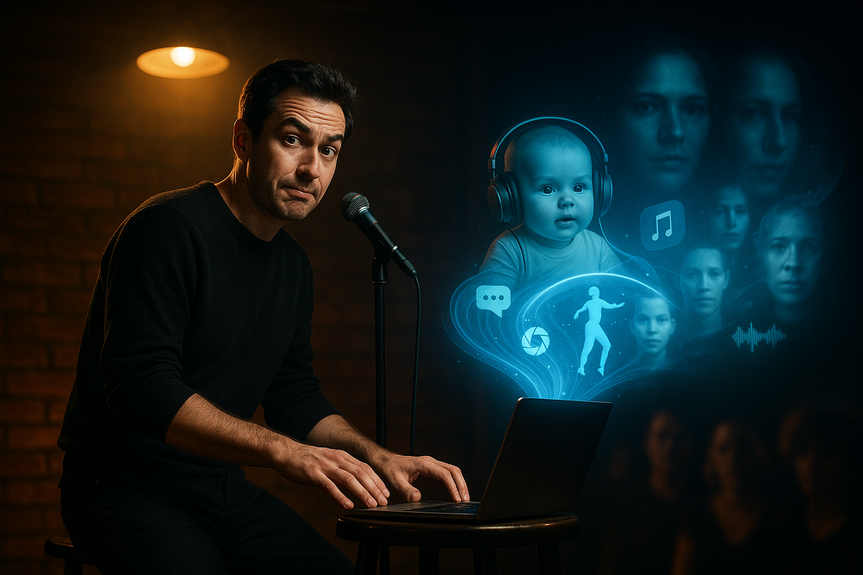
- Write 3–5 lines on your take. Example: “A baby hosts a podcast and roasts the family dog.”
- Name the tension: status swap, misunderstanding, hypocrisy, or surprise.
- List two risky edges you will avoid or soften. Keep it smart, not mean.
2) Draft with a chatbot, but keep the wheel
- Ask for 10 premises and 10 alt punch lines. Keep only what fits your voice.
- Have it beat out a scene: 60–90 seconds, three jokes, one tag, one button.
- Use it for variations, not for final jokes. Your edits make it land.
3) Build quick visuals and voices
- Generate simple characters and settings for storyboard frames.
- Use text-to-speech for temp voices, or record your own for control.
- Add light motion or lip-sync to sell the bit. Rough is fine if timing hits.
4) Edit for timing
- Cut faster than you think. Hold only on the laugh.
- Trim hedges and filler words. Shorter lines hit harder.
- Use subtitles. They boost watch time and clarity on mute.
5) Test, iterate, and scale
- Show a draft to 3–5 friends. Ask where they laughed, not if they “liked” it.
- Post short cuts to measure hook and button. Expand only what performs.
- Build a series from the bits that people quote in comments.
What AI still misses (and why that’s good)
- Point of view: Bots remix takes; they do not live them. Your life is the source of truth.
- Risk and calibration: Good jokes walk a line. A model does not feel the room.
- Delivery: Breath, pause, look, and tone carry laughs. You own that timing.
Ethics and rights you cannot ignore
Artists have pushed back on training data and deepfakes, and some estates have sued over voice clones. Protect your work and respect others.- Do not clone living or deceased performers without consent.
- Avoid using brand marks, songs, or characters you do not have rights to.
- Label AI-assisted content when relevant. Be transparent with your audience.
- Keep original recordings and scripts to prove authorship.
- Use parody and satire fairly. Punch up; do not defame.
Prompts that help you punch up
Use prompts as creative push, not as a crutch. These frames keep your voice clear.- “Give me 10 alt punch lines for this setup. Keep it clean, absurd, and under 10 words. My voice: dry, high-status idiot.”
- “Beat this 60-second sketch into 6 shots. Note cut points after each joke.”
- “List 5 visual gags that heighten this premise without new dialogue.”
- “Rewrite this tag three ways: misdirection, callback, status flip.”
- “Suggest 5 safe targets for satire on this topic. Avoid real people.”
Measure what lands
Treat your sketch like a product test. Let data guide your rewrites.- Hook rate: Do 50% of viewers stay past 3 seconds?
- Watch time: Do viewers reach the button?
- Replays: Do people rewatch the punch?
- Comments: Which lines do people quote?
- A/B tests: Try two openings; keep the winner.
A simple toolkit to get started
- Idea tools: a general chatbot for beats, tags, and alt jokes.
- Visuals: image or video generators for storyboards and simple motion.
- Audio: text-to-speech for temp tracks; your mic for final reads.
- Edit: any basic editor for cuts, captions, and timing.
For more news: Click Here
FAQ
Q: What role can AI play in writing and producing comedy?
A: AI can help draft, animate, and publish sketches in hours rather than weeks, but it typically does not craft final punch lines and lacks an inherent comedic point of view. Human comedians still control the setup, turn, delivery and timing to make jokes land.
Q: How do comedians like Jon Lajoie and King Willonius use AI?
A: Jon Lajoie uses AI to cheaply animate wild ideas while saying chatbots aren’t inherently funny, and King Willonius starts with his own notes, refines prompts with a chatbot, then generates imagery, music and voices to build parody videos. Both iterate and keep human timing and voice central to the final product.
Q: What step-by-step workflow does the article recommend for AI-assisted sketches?
A: Start with a human angle by writing a few lines on your take, use a chatbot to draft premises and punchline variations, then generate simple visuals and temp voices before editing tightly for timing and testing with a small audience. Iterate based on feedback and scale only the bits that perform.
Q: How should I use chatbots without losing my comedic voice?
A: When learning how to use AI for comedy, use chatbots to generate rough ideas, premises and alternative lines but keep final selection and edits to preserve your voice and timing. Treat prompts as creative pushes rather than finished jokes and refine outputs with your own sense of edge and delivery.
Q: What technical tips improve timing and clarity in AI-made comedy videos?
A: Build simple characters and storyboards, use text-to-speech for temp tracks or record your own voice for final reads, add light motion or lip-sync, and edit tightly—cut faster than you think, trim filler and use subtitles to boost watch time. Rough visuals are acceptable if the timing and punch land.
Q: What ethical and legal precautions should creators follow when using AI?
A: Do not clone living or deceased performers without consent, avoid using brand marks, songs or characters you don’t have rights to, and label AI-assisted content when relevant. Keep original recordings and scripts to prove authorship and use parody and satire responsibly without defaming people.
Q: How can I test whether an AI-assisted sketch is landing with viewers?
A: Show drafts to three to five friends and ask where they laughed, then post short cuts to measure hook rate, watch time, replays and which lines people quote in comments. Use A/B tests on openings and expand only the elements that perform well.
Q: What limitations of AI for comedy should I expect?
A: AI can mimic the basic grammar of jokes but often misses point of view, risk calibration and the nuances of delivery like breath, pause and tone, which makes many outputs feel corny or slightly off. Those limitations mean comedians still provide the essential creative judgment and timing.
Contents