Crypto
12 Apr 2026
Read 13 min
Institutional bitcoin options hedging: How to secure upside *
institutional bitcoin options hedging helps firms protect gains while staying positioned for upside.
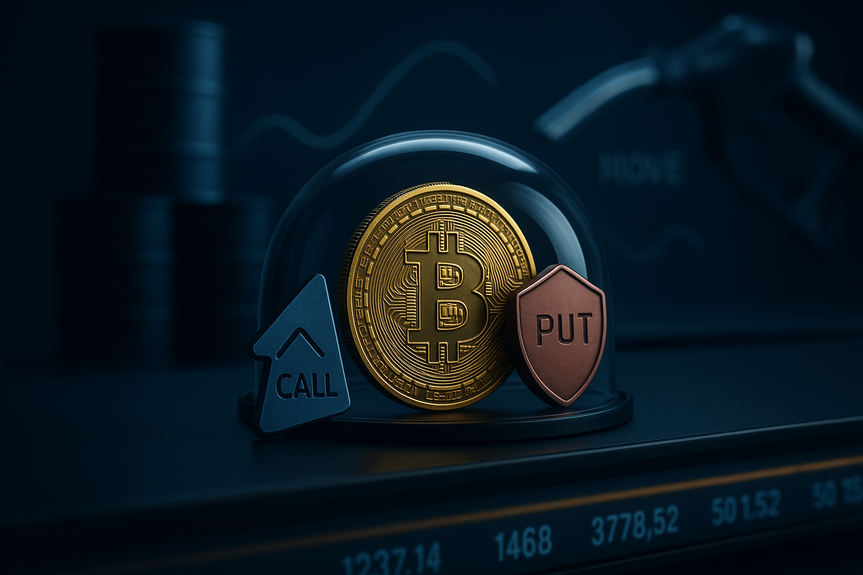
Institutions want upside in bitcoin without high risk. Institutional bitcoin options hedging lets desks buy calls for gains while keeping puts for protection. With CPI risk and Middle East talks ahead, skew stays negative and oil is high. Smart hedges can ride a breakout and guard against a fast drop.
Bitcoin bounced about 7% since Sunday to trade near $71,000, but the move lost steam around $72,000. Big players are cautious. They see two near-term risks: a hot U.S. inflation print and tense weekend talks between the U.S. and Iran. Both can shake oil, bonds, and crypto in a hurry.
Options flows confirm the careful tone. Institutions chase upside with calls, but they still pay up for puts. In BlackRock’s spot bitcoin ETF options, traders favor the May $45 call as the fund trades near $40. On Deribit, the $80,000 bitcoin call draws the most attention. Yet the skew stays negative, which means downside protection remains in demand across time frames.
Macro signs send a mixed message. The MOVE index, a gauge of U.S. Treasury volatility, spiked to 115 in March but dropped near 74 in April. Calmer bonds are good for risk assets. But oil is back near triple digits as the Strait of Hormuz stays clogged. If core CPI tops the 2.7% estimate, rate hike fears could return and weigh on BTC.
Strong open interest in the May $45 call on the big spot ETF suggests desks expect more upside into early summer.
Heavy interest in $80,000 BTC calls on Deribit shows traders still target round-number momentum if a macro catalyst hits.
At the same time, funds keep buying puts and long-dated insurance. This split stance fits a market that respects the uptrend but sees event risk. Inflation data and geopolitics can flip sentiment in a day. A hedged book helps a desk survive the news.
Pros: Limited loss, levered upside, no margin calls.
Cons: Time decay if spot stalls; implied volatility crush after events can hurt.
Pros: Floors the downside; simple to size to risk limits.
Cons: Ongoing premium spend; skew makes puts pricier when fear is high.
Pros: Low or zero net premium; protects against large drops.
Cons: Limits gains if BTC rips above the call strike.
Pros: Cheaper than a naked call; matches a realistic upside path.
Cons: Profit is capped; still exposed to decay if price drifts.
Pros: Monetizes event premium; keeps longer-term upside.
Cons: Needs careful management if spot runs through the near-term strike.
Pros: Fine-tunes exposure; reduces gap risk around headlines.
Cons: Needs active monitoring and funds for margin; funding rates can bite.
Together, these tools form a flexible institutional bitcoin options hedging playbook. Desks mix them to fit views, budgets, and risk rules. On event weeks, they often shift to lower-cost spreads and collars to avoid overpaying for volatility.
Event timing: Align expiries with CPI dates and weekend risk. Weekly options can give tight, cheap exposure into Friday. Monthlies offer more time for a thesis to play out.
Implied volatility: Do not chase sky-high IV unless you think realized volatility will beat it. Spreads and collars reduce vol spend.
Drawdown math: Set put strikes at pain points, not hopes. If a hot CPI print could knock BTC 8-12%, place protection where real stress begins.
ETF May $45 call: A simple levered upside bet into late spring without holding coins. Clear thesis, defined risk.
BTC $80,000 call: A momentum bet on a clean breakout. Pair with a lower-strike short call to cut cost if you fear decay.
Put buffer: For spot holders, a 5-10% OTM put into CPI week can save the book if rates re-price hawkish.
Cool CPI + progress on talks: BTC breaks above $72,000 and tests $75,000–$80,000. Long calls or bull call spreads pay. Roll winners or add call spreads higher.
Hot CPI + tense weekend: BTC slips 8–12% as yields rise. Protective puts or collars limit losses. Consider taking profits on short calls if volatility spikes.
Mixed print + stalemate: Range holds. Calendars or collars earn decay while keeping optionality. Rebuild cheap exposure on dips.
Liquidity first: Stick to popular strikes and expiries. Avoid deep illiquid wings near events.
Counterparty and venue: Use reputable exchanges and clear margin terms. Review liquidation rules for options-plus-futures stacks.
Slippage control: Use limit orders and break large trades into clips. Event weeks can widen spreads.
Assignment risk: ETF options can be American-style. Manage short calls near the money to avoid unwanted assignment.
Volatility trap: After a big event, implied vol can fall fast. Favor spreads or collars when IV is rich.
Funding and carry: If using perps to hedge delta, track funding rates. A negative carry can erode returns.
Keep your institutional bitcoin options hedging simple, liquid, and event-aware. Size for stress, not for the best case. Update hedges as data hits. Most of the edge comes from price discipline, not from exotic structures.
In a market that wants to go higher but fears shocks, calls can power upside while puts steady the hand. Calm in bonds helps, but oil and CPI still loom. With disciplined institutional bitcoin options hedging, you can capture the break and survive the shake.
(Source: https://www.coindesk.com/daybook-us/2026/04/10/institutions-bitcoin-positioning-lacks-conviction-cpi-iran-talks-might-help)
For more news: Click Here
Why upside calls and downside puts both matter
Reading skew and flows
Institutions often ride trends but fear sharp reversals. That shows up in options. When puts trade richer than calls, skew is negative. It signals steady demand for protection. Today, that’s the case across expiries. Funds want exposure to a breakout, but they do not drop their hedges. Two clear signals stand out:What this means for price
A wall of call interest can increase topside sensitivity if spot lifts. Dealers who sold those calls may have to buy BTC as price rises to stay neutral. That can fuel squeezes. But the put demand and call selling cap the move. The result is a climb that pauses at key levels and dips that find a floor.Institutional bitcoin options hedging in practice
Below are the core tools most desks use to keep upside while managing risk. These are simple, liquid, and easy to monitor around data days.1) Long calls for clean upside
Buy out-of-the-money calls to capture a breakout with defined risk. The cost is the premium. If CPI is friendly or the Middle East calms, calls can pay fast. The ETF May $45 call is a live example of this tactic.2) Protective puts under spot or ETF
Hold spot BTC or ETF shares, then buy puts below. This is a classic hedge for drawdowns after surprise news.3) Collars to lower net cost
Buy a put and sell a call. The call sale funds part or all of the put. You cap some upside but protect the downside.4) Bull call spreads to target breakout zones
Buy a call and sell a higher-strike call. You define the profit zone, like $72,000 to $80,000, for less cost than a single call.5) Calendars for event timing
Buy a longer-dated call and sell a near-term call at the same strike into a data week. If spot stalls after the event, the short call decays faster, lowering net cost.6) Futures/perp overlays for delta control
Combine options with futures or perpetuals to adjust net exposure as price moves. Scale in or out to keep a target delta.Choosing strikes and expiries
Anchor to catalysts, liquidity, and risk budget
Pick levels near where liquidity clusters. For BTC now, $72,000 and $80,000 matter. In ETF options, round strikes like $45 or $50 trade thick. That helps with fills and exits.Examples from current flows
Macro setup: oil, bonds, and CPI
Oil near $100 adds pressure on headline inflation and can spill into core. If the core CPI tops 2.7% year over year, rate cut hopes fade. That can lift bond yields and hurt risk assets, including bitcoin. Watch the first move in Treasury volatility. The good news: the MOVE index has cooled from 115 back near the mid-70s. Calmer bonds often mean looser financial conditions. Crypto tends to do better when credit is easy and shocks are rare. Still, that calm can change if the CPI surprise is big. Geopolitics is the wild card. The Strait of Hormuz is not fully open. If weekend talks reduce tension and tanker flows improve, oil could ease, and risk assets could rally. If talks fail, supply stress can grow. Traders now watch oil perpetual futures, even on crypto-native venues, for fast signals.Three paths and how to prepare
Risk checks and execution notes
FAQ
Q: What is institutional bitcoin options hedging and why do institutions use it?
A: Institutional bitcoin options hedging uses options to capture upside while limiting downside. Institutions buy calls for gains and hold puts for protection, reflecting caution around CPI prints and U.S.-Iran talks.
Q: How are institutions positioning in the current bitcoin market?
A: Institutions are chasing upside via calls while still paying up for puts, creating a persistent negative skew across expiries. Flows show strong open interest in the IBIT May $45 call and heavy interest in the $80,000 call on Deribit, while bitcoin rallied about 7% to near $71,000 but stalled around $72,000 ahead of CPI and U.S.-Iran talks.
Q: What does a negative options skew indicate for traders?
A: A negative skew means puts trade richer than calls, signaling ongoing demand for downside protection. In the current market the skew is negative across time frames, showing funds want upside exposure but keep hedges in place.
Q: What basic hedging strategies do desks use to capture upside while managing risk?
A: Desks use long calls, protective puts, collars, bull call spreads, calendars and futures/perp overlays to capture upside while managing risk. These simple, liquid tools form the core of institutional bitcoin options hedging playbooks and are often combined on event weeks to favor lower-cost spreads and collars.
Q: How should traders choose strikes and expiries around CPI and geopolitical events?
A: Choose strikes near liquidity clusters and catalysts — for BTC that means levels like $72,000 and $80,000 and ETF strikes near $45–$50 — and align expiries with event timing, using weeklies for tight exposure and monthlies for more time. Avoid chasing high implied volatility and use spreads or collars, while placing puts at realistic drawdown pain points rather than hopes.
Q: How can options flows amplify or limit bitcoin price moves?
A: A wall of call interest can force dealers to buy spot as prices rise, which may fuel squeezes, while persistent put demand and call selling can cap rallies. The typical result is a climb that pauses at key levels and dips that find a floor rather than an unchecked run.
Q: Which macro indicators are most important for hedging decisions right now?
A: U.S. CPI prints, oil near triple digits and Treasury volatility (the MOVE index) are the key macro indicators to watch, with the MOVE index having spiked to 115 in March and dropped near 74 in April. If core CPI tops the 2.7% estimate or geopolitics fails to calm the Strait of Hormuz, rate-hike fears and higher oil could push desks to add more protective hedges.
Q: What execution and risk checks should desks follow when implementing institutional bitcoin options hedging?
A: When implementing institutional bitcoin options hedging, prioritize liquidity, use reputable venues and review margin and assignment rules since ETF options can be American-style. Break large trades into clips to control slippage, monitor funding and carry when using perps, and favor spreads or collars when implied volatility is rich to avoid fast IV drops.
* The information provided on this website is based solely on my personal experience, research and technical knowledge. This content should not be construed as investment advice or a recommendation. Any investment decision must be made on the basis of your own independent judgement.
Contents