Crypto
15 Jan 2026
Read 13 min
Rob Ashton AI apology: What it means for voters *
Rob Ashton AI apology forces voters to reassess his transparency and weigh credibility before voting
The Rob Ashton AI apology puts trust and technology at the center of the NDP leadership race. After Reddit users flagged AI-written replies during his AMA, Ashton said staff posted drafts and promised accountability. This article explains what happened, why it matters to voters, and how the fallout could shape a close March vote.
NDP leadership candidate Rob Ashton went on Reddit for an AMA to answer questions from party members and curious readers. Users soon noticed odd patterns in several replies. Some answers used AI-like phrasing and formatting. People pointed to long em dashes and tidy bullet points that felt more like a chatbot than a person.
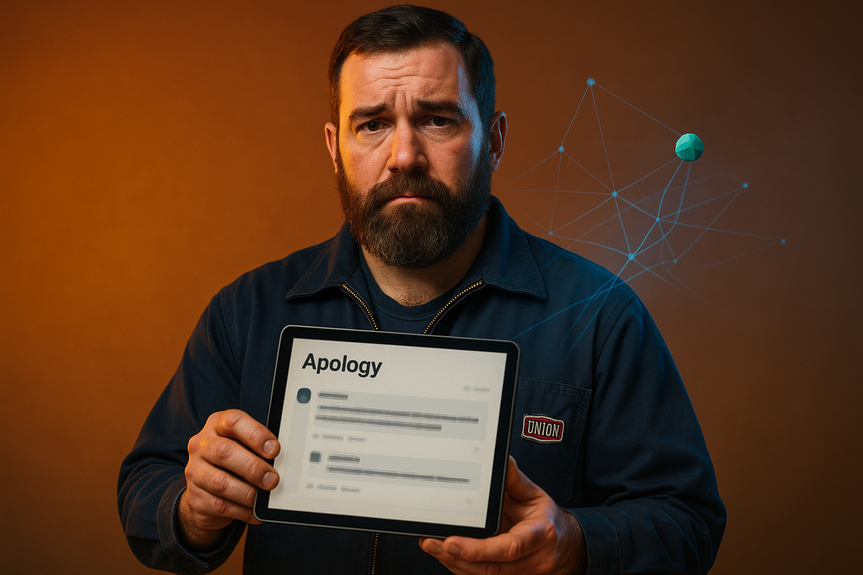
Soon after, Ashton’s campaign posted an apology. They said Ashton was traveling and had asked helpers and volunteers to draft replies for him to review. They added that some answers appeared online before he could approve them. He said he would delete those replies and rewrite them himself.
This moment matters because Ashton has made worker protection and technology risk a core theme. He says AI must not replace workers or exploit artists. He calls for tough rules. That makes this incident a credibility test and a lesson in how campaigns should handle digital tools.
Overuse of polished structures, like stacked bullet points
Long, even-toned sentences with few specifics
Formatting and cadence that felt like AI outputs
They started to discuss the pattern and asked the campaign to explain. The campaign replied with the apology and plan to replace the suspect answers.
A royal commission to study AI’s impact
Modern laws that protect people and platforms
Rules that prevent worker replacement and artist exploitation
Other candidates also weighed in:
Tony McQuail said his campaign does not use AI and would not allow it.
Avi Lewis’s team said staff produce their written content and that they will release a jobs and AI plan soon.
Heather McPherson’s team pointed to a housing plan that would ban AI-powered rent gouging.
Tanille Johnston supported accountability but criticized media focus on drama over policy.
The point is clear: AI is not only a tech subject. It is a jobs issue, a creative rights issue, and a democratic integrity issue. In a labor-focused party, candidates must show how they will protect workers and ensure fair rules. The Rob Ashton AI apology, therefore, is not only about Reddit. It is about the standards leaders set when they talk about AI and when they use it.
Explain what went wrong, without excuses
State how they will prevent it next time
Correct or remove the content
Invite further questions
Whether any AI tools are used in drafting or research
Who reviews and approves final posts
How they label or disclose AI assistance, if any
How they handle corrections
Worker protections and retraining
Transparency for AI systems used in hiring or housing
Limits on data use and surveillance
Rules for political content created or boosted with AI
Rob Ashton AI apology: why it matters
Trust is the currency of any campaign. Ashton has built his brand on straight talk and accountability. The Rob Ashton AI apology came fast and clear. He admitted the use of AI-assisted drafts, said some posts went up without his approval, and promised it would not happen again. That direct response helps. But the issue goes deeper. Voters do not only want honesty after an error. They want confidence that guardrails exist so the same mistake does not repeat. They want to know who writes public statements. They want to see that staff follow rules and that the candidate owns the message. This episode also sits inside a bigger policy debate. Ashton’s own posts say AI is being used to replace workers, spread falsehoods, and weaken democracy. If a candidate with that view accepts staff using AI tools, even in draft form, voters will ask: where is the line? What is allowed? What is disclosed? Clear answers will shape trust.What actually happened on Reddit
How users spotted the problem
People on Reddit read many AMA threads. They can tell when a voice shifts. In this case, users noted:What Ashton promised next
Ashton said he would delete the AI-assisted posts and write fresh replies. He stressed accountability. He said the mistake would not happen again. He tried to reset the conversation and keep the focus on his platform.The policy stakes: AI, jobs, and democracy
Ashton is a dockworker, a union leader, and a front-runner in this race. His message centers on workers’ rights. In his AMA, he argued that AI hurts workers and creators today. He said it helps false stories spread and can threaten democracy. He linked those risks to growing corporate power and rising authoritarian trends. He called for:How voters can weigh authenticity
Look for clear disclosure
Does the campaign say who writes posts and how they review them? If staff use tools for research or drafting, do they push a final product that the candidate has read and approved?Check for consistent voice and specifics
Real answers often include concrete examples, local context, and clear commitments. A human voice varies with emotion and detail. AI-like replies may stay very smooth, very general, and very long.Expect fast fixes
When a mistake happens, campaigns should:Ask for rules, not vibes
Campaigns should publish simple rules for their digital work. Voters can press them to share:Impact on the NDP leadership race
This race appears tight. Small moments can shift support. Before this, the contest had few major stumbles. Ashton’s Reddit issue stands out because it hits his signature theme: standing with workers in a changing economy. Supporters on Reddit voiced disappointment. One said they signed up to back Ashton and urged friends to join, but called the incident unacceptable. That reaction shows the risk: a trusted, plainspoken image can suffer when online content feels canned or outsourced. Still, a prompt apology can limit damage. Many voters will accept a first mistake when a candidate admits it, fixes it, and sets new rules. The bigger test is what Ashton does next. If he follows through, publishes clear standards, and keeps his voice personal in public forums, the story may fade. Meanwhile, other candidates may turn this into a contrast. McQuail draws a bright line against AI use. Lewis will release an AI and jobs plan soon. McPherson points to AI in housing policy. Johnston frames the issue as media distraction. Each of these responses signals a strategy: ban, regulate, redirect, or broaden.What to watch next
Will Ashton set stronger campaign rules?
Voters should look for a short public note that explains how his team will handle drafting, review, and posting. That note should be easy to find and easy to understand.Will the party set guidance on AI use?
The party could reduce future confusion by offering standard rules for disclosure and content approval during official events, like AMAs and debates.How will policy proposals evolve?
Expect more detail on AI from all campaigns. Clear positions might cover:What happens on Reddit next?
Ashton said he would replace the suspect answers with his own words. Readers will likely compare the new posts to the old ones. That side-by-side check will either rebuild confidence or raise new questions. The broader lesson is simple. Campaigns run fast. Staff try to help. Tools are easy to use. But voters reward candor and care. They prefer short, honest answers to long, polished ones that feel distant. In the end, this is a story about accountability in the digital age. A candidate who speaks about AI’s risks must also model clear, human communication. That means owning the message, setting firm rules, and fixing mistakes right away. Voters will decide if Ashton passes that test. They will weigh his record as a union leader, his policy agenda, and his response to a very modern stumble. If he uses this episode to build better habits and stronger transparency, he can turn a problem into proof of growth. For now, the Rob Ashton AI apology reminds us that technology is never neutral in politics. How leaders use it tells us who they are, what they value, and how they will govern.(Source: https://www.cbc.ca/news/politics/rob-ashton-artificial-intelligence-ndp-ama-9.7043887)
For more news: Click Here
FAQ
Q: What happened during Rob Ashton’s Reddit AMA?
A: During a Reddit AMA, attentive users noticed several replies that appeared to be generated by AI and flagged the pattern on the r/ndp subreddit. Ashton’s campaign later acknowledged some answers were written with the help of AI tools and that some posts went up without his approval, prompting the Rob Ashton AI apology.
Q: Why did Rob Ashton apologize?
A: He apologized after users flagged AI-like replies and his campaign said helpers and volunteers had drafted answers while he was on the road that were posted before he reviewed them. Ashton said he wanted to be transparent, pledged accountability and reassured everyone the mistake would not happen again.
Q: How did Reddit users spot that replies might be AI-generated?
A: People noticed polished structures such as stacked bullet points, long even-toned sentences and frequent em dashes that felt more like chatbot output than a personal voice. Those formatting and cadence clues led users to question the authenticity of some AMA replies.
Q: How does the Rob Ashton AI apology relate to his public views on AI?
A: Ashton had argued in the AMA that AI is being used to replace workers, exploit artists, spread misinformation and undermine democracy and he called for strong regulations including a royal commission. The apology was a credibility test because he was campaigning on worker protection while some of his replies were AI-assisted.
Q: What steps did Ashton say he would take to correct the posts?
A: He said he would delete the AI-assisted responses and write fresh replies himself over the next few days. He also stressed accountability and reassured everyone the mistake would not happen again.
Q: Could the incident affect Ashton’s standing in the NDP leadership race?
A: Yes, the contest has been described as a close three-way race and small moments can shift support, especially because Ashton has built a brand as a straight-talking, working-class candidate. A prompt apology can limit damage, but voters will judge whether he follows through with clearer rules and personal, human-written communication.
Q: What should voters ask campaigns about AI use after this incident?
A: Voters should ask campaigns to disclose whether any AI tools are used for drafting or research, who writes and who reviews public posts, and how corrections are handled. They should also expect quick fixes such as deleting suspect content, publishing simple digital-work rules and inviting further questions.
Q: How did other leadership campaigns respond to the use of AI?
A: Tony McQuail said his campaign does not use AI and would not allow it, Avi Lewis’s team said communication staff are responsible for written content and will release a jobs and AI plan soon, Heather McPherson’s team pointed to a housing plan that would ban AI-powered rent gouging, and Tanille Johnston said Ashton was right to apologize while criticizing media focus. These reactions reflect different strategies in the race, from banning to regulating or reframing AI policy.
* The information provided on this website is based solely on my personal experience, research and technical knowledge. This content should not be construed as investment advice or a recommendation. Any investment decision must be made on the basis of your own independent judgement.
Contents