Google A24 AI filmmaking partnership gives filmmakers faster storyboards and stronger creative control
Google’s $75 million investment in A24 brings DeepMind researchers and tools into the studio’s pipeline. The Google A24 AI filmmaking partnership aims to build practical tools for pre-production and post, like AI-assisted storyboards and smarter workflows, without handing Google access to A24’s content. The goal: support creative control and bolder choices, not cookie-cutter, prompt-only outputs.
A24 and Google say this is a research-first deal. DeepMind will help design new workflows that filmmakers can test on real sets and in real edit bays. A24 keeps its library and data off-limits. That stance matters, since many young moviegoers worry AI will harm society. Winning trust will depend on clear guardrails and visible benefits for artists.
What the partnership includes
Google is investing about $75 million tied to the collaboration. A24 gains access to DeepMind’s research and computing power. DeepMind researchers will co-develop tools with A24’s lab team, led by Scott Belsky. The companies say the work will focus on craft and control, not on replacing crews or chasing the cheapest path to a cut.
Importantly, Google does not get A24’s film library or production data. That reduces fears of model training on private dailies, rough cuts, or scripts. It also sets a tone for how studios can work with AI vendors while protecting IP and talent rights.
How filmmakers benefit from the Google A24 AI filmmaking partnership
Pre-production: faster vision, clearer plans
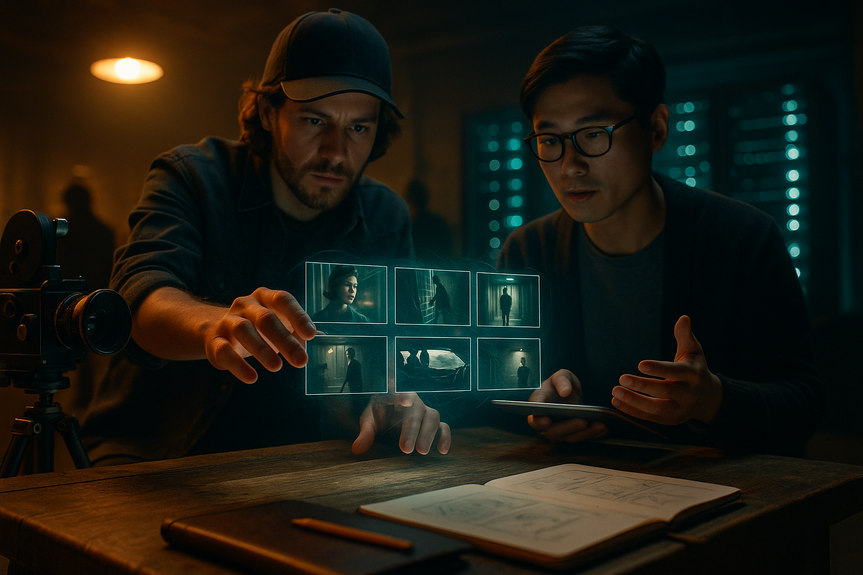
AI-assisted storyboards help directors and DPs try shot ideas in hours, not weeks.
Teams can align on tone, blocking, and lenses early, which cuts reshoots later.
Writers and producers can see how scene changes affect pacing and coverage before the shoot.
Production: smarter decisions on set
Continuity checks can flag mismatched props or eyelines before moving on.
Shot suggestions can surface alt angles that match the visual language of the scene.
Safety and logistics tools can map stunt setups and crowd flows to reduce risk.
Post-production: iterate without losing the look
Editors can preview cuts with quick temp comps that match chosen lenses and color space.
Look-dev tools keep the visual style consistent across pickups and VFX shots.
Sound and music teams can test stems against scenes to find beats that land.
Belsky says the tools should help creators take risks while keeping control. That means the director and department heads stay in the loop. The AI assists, but it does not decide. Prominent filmmakers have already explored AI-assisted storyboarding, which shows there is room to speed learning without flattening style.
Guardrails, rights, and trust
Data stays protected
No access to A24’s content library or production data for Google.
Clear separation between research infrastructure and creative assets.
Human credit and control
Directors, writers, artists, and craftspeople keep authorship over choices.
Studios should disclose when AI assists a workflow, especially in credits or press notes.
Audience concerns matter
About half of adults under 30 think AI may harm society, according to recent research.
A24’s fans skew young, so transparency will be key to keep trust.
The Google A24 AI filmmaking partnership can set a model: protect data, keep humans in charge, and show clear creative wins. If the tools feel like paintbrushes, not autopilot, the audience is more likely to accept them.
How this compares across Hollywood
Studios are testing many AI paths. Disney explored licensing deals while also suing AI firms over IP. Lionsgate partnered with Runway AI to build shows from franchises. Netflix bought Ben Affleck’s InterPositive to build filmmaker tools in-house. A24’s approach is notable for its research tie to DeepMind and for its strong stance on data access. It frames AI as a craft aid, not a replacement plan.
Early use cases to watch
Storyboard and previz pilots
Can directors get storyboard outputs that match their personal style and lensing rules?
Do these tools reduce reshoots without pushing crews to rush?
On-set continuity and coverage
Can real-time checks help script supervisors and editors without slowing the day?
Does the system learn each show’s style bible so notes stay accurate?
Post-production look consistency
Can tools preserve the show LUT, grain, and color pipeline across VFX vendors?
Do quick temp comps help executives give better notes with less guesswork?
Watch also for policy signals: how assets are stored, how opt-in datasets are built, and how union guidelines shape deployment. Clear rules on training data, credit, and consent will decide whether these tools scale beyond pilots.
Why this could help the next wave of auteurs
A24 has backed breakout films that balance bold vision with precise craft. If AI can cut busywork and make planning clearer, new voices can spend more time on story, performance, and visual language. Emerging directors can explore more options early, where changes are cheap, and commit on set with confidence. That is where technology can lift art without dulling it.
Still, the proof will be in the cuts. If the tools push films toward a single “AI look,” the project will fail. If they help teams test choices and then make braver ones, the upside is real. The industry will measure success by what ends up on screen—and by how supported crews feel using the tools.
In short, the Google A24 AI filmmaking partnership is a high-profile test of whether AI can serve artists first. If it protects data, credits humans, and delivers clearer, bolder images, filmmakers and audiences both win. If it does not, the market will say so quickly.
(Source: https://variety.com/2026/film/news/google-a24-ai-filmmaking-tools-1236787297/)
For more news: Click Here
FAQ
Q: What is the Google A24 AI filmmaking partnership?
A: The Google A24 AI filmmaking partnership is an AI research collaboration between independent studio A24 and Google’s DeepMind unit, backed by roughly $75 million in investment. The deal gives A24 access to DeepMind’s research and computing infrastructure while DeepMind researchers help build filmmaking tools, and it does not grant Google access to A24’s content library or production data.
Q: What kinds of AI tools will the partnership develop for filmmakers?
A: Under the Google A24 AI filmmaking partnership the teams aim to build practical tools across pre-production, production, and post, including AI-assisted storyboards, smarter workflows, on-set continuity checks, shot-suggestion tools, and safety or logistics mapping. Post-production tools highlighted include quick temp comps, look-development utilities to keep visual style consistent, and sound/music testing workflows.
Q: Will Google get access to A24’s films or production data?
A: No; the partnership does not give Google access to A24’s content library or production data. The companies say there will be a clear separation between DeepMind’s research infrastructure and A24’s creative assets to protect those materials.
Q: How will the partnership help filmmakers in pre-production and planning?
A: The Google A24 AI filmmaking partnership aims to speed vision and planning by using AI-assisted storyboards so directors and DPs can test shot ideas in hours rather than weeks. Teams can align on tone, blocking, and lenses early to reduce reshoots, and writers and producers can preview how scene changes affect pacing and coverage before shooting.
Q: Who retains artistic credit and control when AI is used through the partnership?
A: Directors, writers, artists, and craftspeople retain authorship over creative choices under the partnership, and the AI is intended to assist rather than decide. The article says studios should disclose when AI assists workflows, particularly in credits or press notes, to preserve human credit and control.
Q: What guardrails are being proposed to build audience trust?
A: The partnership emphasizes data protections, including denying Google access to A24’s content library and keeping a clear separation between research infrastructure and creative assets. Building trust also relies on disclosure when AI assists workflows, visible benefits for artists, and policy signals such as how assets are stored, how opt-in datasets are built, and how union guidelines shape deployment.
Q: How does A24’s approach differ from other Hollywood AI efforts?
A: The Google A24 AI filmmaking partnership is notable for its research-first tie to DeepMind and its strong stance on protecting A24’s data, framing AI as a craft aid rather than a replacement. Other studios have pursued different paths—Disney explored licensing while suing some AI firms, Lionsgate partnered with Runway AI, and Netflix bought InterPositive to build filmmaker tools in-house.
Q: What early use cases should filmmakers and audiences watch for?
A: Early use cases to watch include storyboard and previz pilots that match a director’s style, on-set continuity and coverage tools to help script supervisors and editors, and post-production look-consistency tools that preserve LUT, grain, and color pipelines across VFX vendors. Ultimately, the industry will judge success by what ends up on screen and by how supported crews feel using the tools.