Crypto
26 Jul 2026
Read 14 min
How to use whey protein e-waste gold extraction for profit *
whey protein e-waste gold extraction turns cheese waste into a low-cost method to recover gold now.
Cheesemaking waste can help recover gold from old electronics. The method, called whey protein e-waste gold extraction, uses a protein sponge to pull gold ions from dissolved circuit boards. It avoids cyanide and mercury, cuts energy and material costs, and can turn discarded gadgets into a new profit stream for recyclers and small businesses.
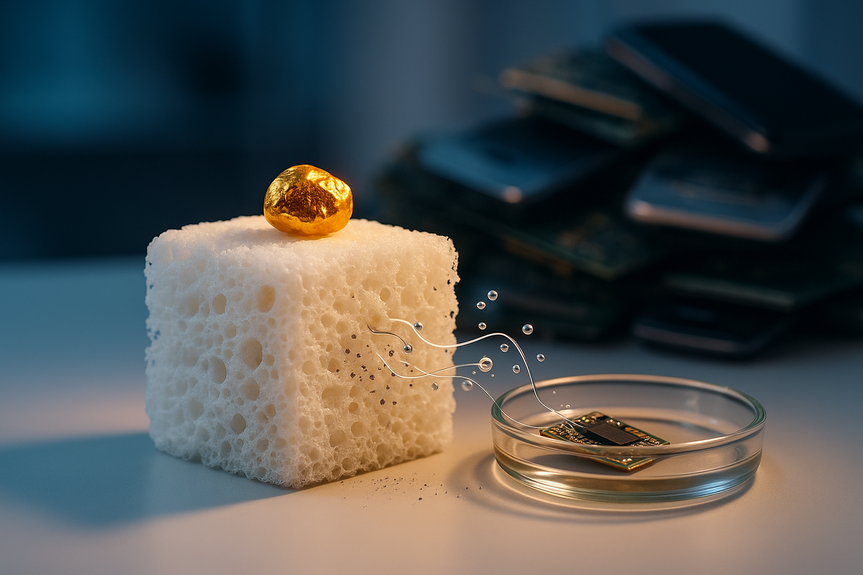
Gold hides in your junk drawer. Phones, laptops, and old motherboards carry small amounts of the metal in their connectors and traces. Researchers at ETH Zurich showed a new way to get it out. They used whey protein, a cheap byproduct of cheese, to make a porous sponge that grabs gold ions from a mixed metal solution. Their lab test pulled a 450-milligram nugget of 22-carat gold from 20 computer motherboards. This approach gives recyclers a clean, cost-aware path to value, and it puts whey protein e-waste gold extraction on the business map.
Identify reliable e-waste suppliers and wheyside partners like dairies or material startups that can produce the aerogel at scale.
Find licensed labs or processors for leaching and refining.
Engage environmental consultants early to meet all rules.
– Pilot and measure:
Run small, documented batches from known board lots.
Track capture rates, cycle times, and costs per gram recovered.
Get third-party assays for trust and financing.
– Design for scale:
Standardize sorting grades and pricing with suppliers.
Use modular adsorption units you can add as volume grows.
Negotiate better fees with processors as your monthly volume rises.
– Manage risk:
Hedge part of your gold output or set trigger prices for sales.
Carry environmental liability insurance.
Plan contingencies for supply dips and tech downtime.
– Watch the science:
Follow new data from ETH Zurich and others on adsorption capacity, regeneration, and selectivity.
Check for any patents, licenses, or material supply agreements you may need to operate at scale.
Why e-waste holds real money
Electronics use gold because gold conducts well and does not corrode. You find it on CPU pins, in memory modules, and on the edges of printed circuit boards. While each part has only a bit, the total adds up fast when you process many devices. – E-waste keeps growing. Reports put global e-waste at about 61.3 million tons in 2023. – Industry sources often say e-waste can have up to 100 times more gold per ton than typical mined ore. – This makes e-waste an “urban mine,” where collection and smart processing can beat digging rock. If you already collect scrap boards or run an IT asset recovery service, gold is likely your best single-metal revenue stream. The key is to capture it with low cost, low risk, and high selectivity.How the whey-based sponge works
A team led by Professor Raffaele Mezzenga at ETH Zurich, with senior scientist Mohammad Peydayesh and others, built a simple but powerful tool. They turned whey proteins into protein nanofibrils and formed an amyloid aerogel, which is a light, porous sponge. In an acid-dissolved metal mix, this sponge prefers gold ions over other metals. What the research showed: – The aerogel adsorbed up to 166.7 milligrams of gold per gram of sponge in tests. – One report described capture rates near 93%, and a loaded sponge reaching about 20% of its own weight in gold. – In a lab demo with parts from 20 motherboards, the team refined a 450-milligram nugget of 22-carat gold. – The method avoids cyanide and mercury, and the researchers said procurement and energy costs were about 50 times lower than the value of the gold recovered in their scenario. This early proof is not a factory run. But it shows a path: use cheap food waste to make a selective adsorbent, and then pull high-value metal from a messy mix.Whey protein e-waste gold extraction: paths to profit
If you want a business case, think in systems. The profit is not only in the sponge. It is in how you source, sort, and process material, then refine and sell the metal while staying safe and compliant.Sourcing: feed the funnel
Gold recovery only works if you have steady input. – Partner with IT asset disposition (ITAD) firms, electronics refurbishers, and municipal e-waste drives. – Focus on high-grade boards first: server boards, networking gear, telecom cards, and older desktop motherboards. – Pay based on weight and grade. Use transparent rules to build trust and secure steady supply.Preprocessing: sort and prepare
Do safe, basic steps to raise yield and cut cost later. – Remove batteries, screens, and obvious hazards. – Separate boards by grade. Keep gold-rich lots together. – Remove heat sinks and steel parts that add weight but no gold. Note: Use trained staff and proper personal protective equipment. Follow local regulations for handling e-waste and hazardous parts.Leaching: only with licensed facilities
Gold must be in ionic form for the sponge to catch it. This often involves acid leaching. This step is hazardous and regulated. It must run in a licensed lab or industrial plant with fume hoods, scrubbers, and trained chemists. – Do not try chemical leaching at home or in makeshift spaces. – Work with permitted processors that can produce a gold-bearing solution suitable for adsorption, and that manage all emissions and residues lawfully.Adsorption: put the sponge to work
Once you have a gold-bearing solution from a licensed partner, the whey-based aerogel can be used in batch tanks or packed columns. – Batch: soak the sponge in the solution, mix gently, test until gold levels fall near target, then remove and rinse. – Columns: run the solution through aerogel cartridges; monitor output for breakthrough. – Track loading. Replace or regenerate media based on capacity and performance. This step is where whey protein e-waste gold extraction adds value. The sponge’s selectivity for gold helps reduce downstream refining loads and chemical use.Refining and sale
After adsorption, gold can be recovered from the loaded aerogel by reduction and then melted into a small bullion piece. This step should also be done by qualified refiners. – Use accredited assay to confirm purity. – Sell to bullion buyers or industrial users, or use a refiner that pays based on spot minus fees.Waste and compliance
Every step creates byproducts. Work only with partners who: – Treat and neutralize waste streams. – Keep records for regulators. – Provide certificates of recycling and destruction when needed for client devices.Build versus partner
You can build capacity, partner with experts, or blend both. – Build: Higher control and potential margin; needs capital, permits, specialized staff, and time. – Partner: Faster start; pay processing fees; lower risk; good while you learn volumes and quality. – Blend: Do collection, sorting, and quality control in-house; outsource leaching and refining; manage adsorbent steps with contract lab support first. Start with pilots. Validate supply, yields, and costs before scaling.Estimate unit economics
Use simple inputs and clear checkpoints. Avoid guesswork; test samples with accredited labs. – Volume: How many kilograms of high-grade boards can you secure each month? – Yield: Lab-test representative lots to find average gold content per kilogram. – Recovery: Apply a realistic capture rate. The ETH Zurich work reported high capture, but confirm performance in your setting. – Costs: – Collection and logistics – Safe preprocessing – Contract leaching and refining – Adsorbent materials and handling – Compliance, assays, and overhead – Revenue: Gold ounces recovered × realized price (spot minus refining and selling fees). Run a break-even analysis. Stress test with lower yields and lower prices. Then make decisions.Sustainability and brand lift
Whey comes from cheese production. Turning it into a gold-capturing sponge gives value to a food byproduct and can cut toxic chemicals. This can help with ESG goals and marketing. – Lower reliance on cyanide and mercury compared to legacy methods. – Potential for grants or partnerships tied to circular economy goals. – Strong story for clients who must prove responsible device end-of-life.Practical next steps
– Map your local ecosystem:Risks you must respect
– Safety: Leaching is hazardous. Only use licensed facilities with trained staff and proper controls. – Selectivity: Real e-waste has many metals. Test to confirm the sponge’s performance on your specific feed. – Fouling and regeneration: Contaminants can reduce adsorbent life. Budget for replacement and maintenance. – Compliance: Regulations vary by country and state. Keep records and permits current. – Price swings: Gold prices move. Maintain cash buffers and flexible sales plans.The bottom line
Gold recovery from electronics is not new, but the whey-based sponge gives it a modern, cleaner edge. The ETH Zurich team showed strong capture and a real nugget from real boards. With solid sourcing, safe partners, and careful math, whey protein e-waste gold extraction can turn old devices into cash while cutting waste and toxic inputs. That is profit with purpose, and it is ready for serious pilots now.For more news: Click Here
FAQ
Q: What is whey protein e-waste gold extraction and how does it work?
A: Whey protein e-waste gold extraction uses a whey-protein amyloid aerogel, a porous protein sponge, to selectively adsorb gold ions from acid-dissolved electronic waste. Researchers denature whey proteins under acidic and high-temperature conditions to form protein nanofibrils, dry them into an aerogel, and expose that material to a gold-bearing solution to capture gold ions.
Q: How much gold did the ETH Zurich team recover in lab tests?
A: In a lab demonstration the ETH Zurich team recovered a 450-milligram nugget of 22-carat gold from metal parts taken from 20 old computer motherboards. The experiment was reported in work published in 2024 in Advanced Materials as a proof-of-concept recovery.
Q: Why is e-waste a good source of gold?
A: Electronics use gold because it conducts well and resists corrosion, and gold appears on CPU pins, memory modules, and printed circuit board edges where small amounts add up. Industry reporting has described e-waste as containing up to 100 times more gold per ton than mined ore, and global e-waste generation was estimated at about 61.3 million tons in 2023.
Q: Is the whey-based method safer or greener than traditional methods?
A: Whey protein e-waste gold extraction avoids cyanide and mercury and uses a food byproduct, reducing reliance on toxic chemicals compared with legacy approaches. ETH Zurich reported that procurement and energy costs were about 50 times lower than the value of the recovered gold in their scenario, indicating potential lower environmental and cost impact.
Q: Which steps in the whey protein process require licensed facilities or specialist partners?
A: Acid leaching to put gold into ionic form is hazardous and regulated, so it must be performed in licensed labs or industrial plants with fume hoods, scrubbers and trained chemists. Refining recovered gold should also be done by qualified refiners with accredited assays, while the adsorption step with the whey-based aerogel can be run in batch tanks or packed columns once a safe gold-bearing solution is available.
Q: How should recyclers and small businesses source and prepare boards for this method?
A: For whey protein e-waste gold extraction, collect feedstock through partnerships with IT asset disposition firms, refurbishers, and municipal e-waste drives, and prioritize high-grade boards like server, networking and older desktop motherboards. Preprocessing should remove batteries, screens, heat sinks and steel, separate boards by grade, and rely on trained staff and PPE to reduce hazards before leaching.
Q: What are the main technical limitations and maintenance issues to expect with the whey-based aerogel?
A: In lab tests the aerogel showed a reported adsorption capacity of 166.7 milligrams of gold per gram and industry reports described capture rates near 93%, but real e-waste contains many metals and contaminants that can foul media and reduce adsorbent life. Operators should test specific feedstocks and budget for media replacement or regeneration as part of process design.
Q: What are practical first steps to pilot whey protein e-waste gold extraction before scaling?
A: Map the local ecosystem for whey protein e-waste gold extraction by identifying reliable e-waste suppliers, whey or aerogel suppliers, and licensed leaching and refining partners, and engage environmental consultants to meet regulations. Run small, documented batches, track capture rates and costs, obtain third-party assays, and standardize sorting and modular adsorption units before scaling.
* The information provided on this website is based solely on my personal experience, research and technical knowledge. This content should not be construed as investment advice or a recommendation. Any investment decision must be made on the basis of your own independent judgement.
Contents