Crypto
10 Oct 2026
Read 13 min
Robinhood Chain priority gas auctions Discover how to profit *
Robinhood Chain priority gas auctions let traders pay for faster execution while lowering MEV fees.
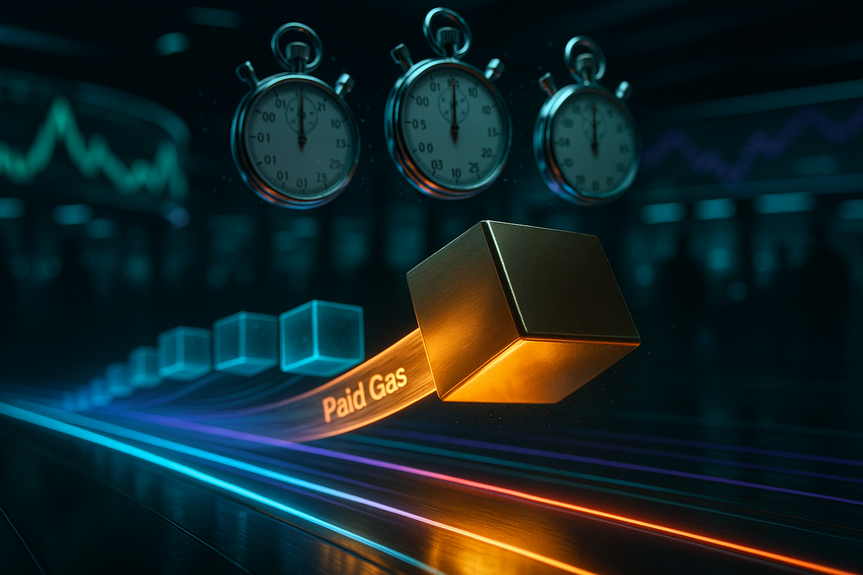
Robinhood Chain priority gas auctions could let traders pay more to move their transactions to the front of the line. The Arbitrum-built model replaces Timeboost and favors higher gas bids for single trades. If adopted, it may speed fills, cut some MEV risk, and reward smart fee strategy.
Robinhood’s new Layer-2 network has grown fast since its July launch. It focuses on tokenized stocks and other real-world assets that trade around the clock. Today, the chain uses a first-come, first-served queue for transactions. According to reporting, it is now evaluating Arbitrum’s newer ordering model called Priority Gas Auctions. This model ranks individual transactions by the fee a user agrees to pay. It replaces Arbitrum’s earlier Timeboost system, which gave a 200-millisecond head start to paid users. Robinhood has not committed to a change, but the market is watching closely.
What Priority Gas Auctions Are and Why They Matter
Priority Gas Auctions (PGA) are a way to decide which transactions enter the next block first. Users compete by bidding higher gas fees for a specific transaction. The higher the bid, the sooner the system tries to include that transaction. This is different from a flat queue where time of arrival decides order. PGA can help traders who chase fast-moving quotes or short-lived spreads. When a price gap appears for only a second, a small delay can kill a trade. By paying more for that one transaction, a trader may push it ahead and grab the opportunity. This turns “speed” into a clear price signal that anyone can use.From Timeboost to PGA
Arbitrum’s older Timeboost offered a small head start window to users who paid. It was a time-based perk. PGA is simpler: it is fee-based and per-transaction. Instead of buying a 200-millisecond advantage, you bid more gas for the specific trade you care about most. That shift matters because it makes the priority choice explicit at the moment of execution, not as a blanket speed pass.How Ordering Works on an L2
On an L2 like Arbitrum, a sequencer orders incoming transactions. With first-come, first-served, the sequencer adds them in the order they arrive. With PGA, the sequencer looks at the pool of pending transactions and ranks them by fee for inclusion. This makes the system more market-driven when there is congestion.Robinhood Chain’s Growth and the PGA Context
Since launch, the chain has moved into the top 10 by total value locked. It draws users who want 24/7 access to tokenized assets with simple rails. Robinhood’s brokerage arm is known for payment for order flow. But PGA is not that. It is not routing flow to a market maker. It is a direct, onchain fee signal that sets transaction order. For active traders, understanding Robinhood Chain priority gas auctions early could shape how they route trades on day one if the change happens.Trading Impact: Speed, Fairness, and MEV
PGA gives a clear way to buy speed for a single trade. That can narrow slippage and improve fill rates during volatile moves. It can also reduce some common frontrunning patterns, often grouped under MEV. When the ordering rule is “highest fee first,” and the bidding is open to all, there is less room for hidden queue-jumping tactics. That does not erase all MEV, but it can deter simple sandwich and insertion attacks that rely on predictable ordering.Who Wins and Who Might Lose
– Professional traders gain a clean lever to pay up for priority only when the expected edge exceeds the cost. – Retail traders may see steadier prices if PGA cuts noisy frontrunning, but they can face higher fees in bursts of demand. – Bots that relied on free speed may find it harder to win unless they outbid others or improve their models.Market Microstructure Effects
When many users bid for priority at once, short fee wars can happen. That can raise the cost of doing business in hot moments but can also clear backlogs quickly. Over time, the market may settle into norms for how much extra gas to pay for various trade types, similar to tip levels in other chains.How to Prepare for Robinhood Chain Priority Gas Auctions
If Robinhood Chain priority gas auctions go live, the edge will go to teams that plan their fee logic and order routing ahead of time. You can reduce guesswork by setting clear rules for when to pay up and by how much.Build a Priority Playbook
– Segment your orders: urgent arbitrage or risk-reducing exits get priority bids; routine rebalances use base fees. – Cap your spend: set a maximum extra gas per transaction based on expected edge and volatility. – Automate bids: use scripts or smart order routers that raise priority only when price moves or spreads cross set levels. – Protect fills: use limit prices and tight slippage controls so a fast fill does not become an expensive misfill. – Log results: track execution time, fill quality, and extra fees to tune your model over time.Optimize Across Venues
– Compare fills on Robinhood Chain against other L2s or CEXs during the same window. – Route to the venue that shows the best net result after fees, not just the headline price. – When spreads are thin, prefer base fees; when spreads are wide and fleeting, turn on priority.Risk Controls
– Use kill switches to pause priority spending during sharp volatility or outages. – Hedge exposure with small size until your model proves its edge. – Backtest with live shadow orders: simulate priority bids and compare outcomes before you commit real fees.Costs, Risks, and Trade-Offs
PGA is not free. The trade-off is a higher fee for a chance at better execution. In calm periods, the payoff may be small. In busy periods, fees can spike faster than your expected gain. Good discipline matters.Fee Wars and Budget Drain
Short bursts of bidding can burn a budget if you chase every move. Set daily or per-strategy caps. Review which trades really need priority. Many do not.Volatility and Slippage
Speed helps, but price can still run away. Use limits. Do not trust priority alone to manage risk. Combine it with sound trade sizing and stop-loss logic.Fairness and Access
PGA is open to all who can pay, which is more transparent than private queue access. Yet, it can still favor larger traders during rush hours. Watch how wallets and interfaces present fee options so retail users are not confused into overpaying.Technical and Governance Considerations
Any change like this depends on the chain’s sequencer and governance. Follow official posts for implementation details, testing phases, and any safeguards against abuse. Clarity on defaults and fee ranges will help everyone plan.Signals to Watch Before You Act
– Official announcements from Robinhood and Offchain Labs on timelines, testing, and parameters. – Wallet and SDK updates that expose new fee fields or presets for priority bidding. – Changes to mempool or sequencer status dashboards that show bid dispersion and inclusion times. – Shifts in market maker quotes or wider spreads around news events, which may hint at more PGA use. – Onchain metrics: average time to inclusion, variance in gas bids, and transaction failure rates during peaks.Actionable Example: When to Pay for Priority
Consider a tokenized stock that tracks a major earnings print. Prices can gap for seconds. If your model shows a 25 bps edge that decays in under a second, paying a few dollars more for gas could net a better fill than waiting. In contrast, a routine rebalance with wide time windows should avoid extra fees. The key is to link priority spending to a clear, tested edge.The Bottom Line
PGA turns transaction order into a simple market signal. It gives you the choice to pay more when speed truly matters. It may also curb some forms of MEV by removing hidden queue games. But it demands discipline, data, and a budget. If you plan ahead, you can use priority only when it pays. As Robinhood evaluates its next steps, teams can prepare playbooks, refine routing, and set guardrails. If and when Robinhood Chain priority gas auctions arrive, the traders who already understand the knobs—when to bid, how much to bid, and why—will be the first to capture the edge.For more news: Click Here
FAQ
Q: What are Robinhood Chain priority gas auctions and how do they work?
A: Robinhood Chain priority gas auctions let users bid higher gas fees for a specific transaction so the sequencer ranks pending transactions by fee rather than arrival time. On an L2 this means the higher-fee transactions are more likely to be included in the next block when there is congestion.
Q: How are Priority Gas Auctions different from Arbitrum’s old Timeboost system?
A: Timeboost gave paid users a 200-millisecond head start as a blanket time-based perk, while Priority Gas Auctions are fee-based and apply per individual transaction. In other words, Robinhood Chain priority gas auctions make priority an explicit fee signal at execution rather than a purchased speed pass.
Q: What potential benefits do priority gas auctions bring to traders?
A: Robinhood Chain priority gas auctions can speed fills and narrow slippage for traders chasing fast-moving quotes, turning speed into a clear price signal. They can also reduce some forms of MEV and common frontrunning tactics by making ordering transparent and fee-driven.
Q: Who stands to gain or lose if Robinhood Chain adopts priority gas auctions?
A: Professional traders could benefit because they can pay for priority only when the expected edge exceeds the cost, while retail users may see steadier prices but face higher fees during bursts of demand. Bots that relied on free speed may find it harder to win unless they outbid others or improve their models.
Q: How should trading teams prepare if Robinhood Chain implements PGA?
A: If Robinhood Chain priority gas auctions arrive, teams should build a priority playbook that segments urgent orders from routine ones, caps extra gas per transaction, and automates bids tied to price moves. They should also protect fills with limits, log execution results to tune models, and backtest strategies before committing real fees.
Q: What are the main risks and trade-offs of using priority gas auctions?
A: The main trade-off is paying higher fees for a chance at better execution, which can be uneconomic in calm markets and can quickly drain budgets during short fee wars. Priority bidding also does not eliminate all MEV or slippage risk, and it can favor larger traders during rush hours unless governance or UI safeguards are clear.
Q: How does ordering work on an L2 sequencer under PGA compared to first-come, first-served?
A: Under first-come, first-served the sequencer adds transactions in the order they arrive, but with PGA the sequencer examines pending transactions and ranks them by fee for inclusion. This makes ordering more market-driven during congestion and prioritizes higher-fee bids.
Q: What signals should traders watch before using priority bidding on Robinhood Chain?
A: Before using Robinhood Chain priority gas auctions, watch for official announcements from Robinhood and Offchain Labs, wallet or SDK updates that expose new fee fields, and changes in mempool or sequencer dashboards. Also monitor market-maker quotes, onchain metrics like average time to inclusion and gas-bid dispersion, and test in shadow mode before committing real fees.
* The information provided on this website is based solely on my personal experience, research and technical knowledge. This content should not be construed as investment advice or a recommendation. Any investment decision must be made on the basis of your own independent judgement.
Contents