Crypto
12 Aug 2026
Read 10 min
Chainlink price forecast 2030 How to spot $200 upside *
Chainlink price forecast 2030 shows how to identify institutional signals that could unlock big gains.
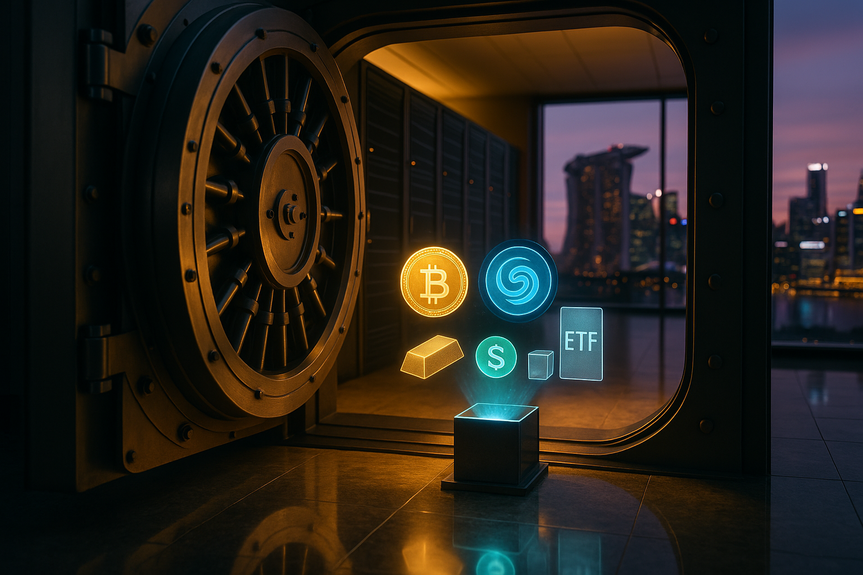
Chainlink price forecast 2030 calls for a bold path to $200, driven by the rise of tokenized stocks, funds, and real-world assets. Standard Chartered says Chainlink could be the standard link between banks, blockchains, and data. The path depends on higher fees, strong institutional use, and steady growth in tokenized markets.
The big idea is simple. If banks and asset managers move more assets onto blockchains, someone must move trusted data between systems and help them talk to each other. Chainlink already does this job at scale. The network powers most DeFi price feeds and now pushes into interoperability and compliance tools. Standard Chartered believes this position can support a long climb in value by 2030, even though LINK has fallen from highs this year.
Chainlink price forecast 2030: Why $200 is on the table
What Standard Chartered projects
Standard Chartered started formal coverage of Chainlink and set a $200 target for the end of 2030. That implies about a 25x gain from around $8 today. The bank’s analyst, Geoff Kendrick, links that goal to a surge in tokenized assets. He sees tokenized markets reaching about $4 trillion by the end of 2028, up from around $340 billion today. Why Chainlink? The network already secures a large share of DeFi activity and has helped enable more than $32 trillion in transaction value. It is used by major finance brands that need secure data and cross-network messaging. Reported users include Swift, DTCC, JPMorgan, Mastercard, UBS, SBI Holdings, Fidelity, WisdomTree, and S&P Global. As these firms test and launch tokenization pilots, they need reliable data feeds, proof-of-reserves checks, and safe messaging between chains and bank systems. That is the niche Chainlink aims to dominate.Why tokenization matters
Tokenization turns real assets, like stocks, funds, bonds, or money market shares, into blockchain tokens. This can cut settlement times, improve transparency, and enable 24/7 markets. But tokenization is only useful if data is correct, if different networks can talk, and if compliance rules are met. This is where Chainlink’s role becomes clear. It began with price feeds (oracles) that bring accurate, tamper-resistant data on-chain. It then added tools to move messages and value between chains, along with privacy-preserving and compliance features. As tokenized assets spread across many chains and private ledgers, institutions will likely favor a shared, neutral layer that already works across ecosystems. Standard Chartered argues Chainlink is that layer today.How Chainlink earns and scales
If tokenization grows, demand for Chainlink’s services should grow too. The network earns through fees tied to the use of its data feeds, automation, proof-of-reserves checks, and cross-chain messaging. In simple terms, more transactions and more assets using these services can lead to more network revenue. As institutions integrate, they may start small and scale over time, which can create steady, compounding usage.From data oracles to full-stack infrastructure
Chainlink is moving from a single feature to a full platform:- Data layer: Price feeds and data streams that secure DeFi markets.
- Assurance layer: Proof-of-reserves and related checks for tokenized assets.
- Interoperability: Cross-chain messaging to move data and value between networks.
- Compliance and privacy: Tools to share only what is needed and keep sensitive data safe.
Metrics that can validate the path to $200
Investors tracking the Chainlink price forecast 2030 should watch for real signals that adoption and monetization are working:- Protocol fees and annualized revenue: Are fees rising as usage grows?
- Institutional integrations: Are more banks, custodians, and market utilities going live?
- Tokenized assets supported: How much of the tokenized market uses Chainlink services?
- Cross-chain volume: Is messaging and value transfer between chains increasing?
- Proof-of-reserves coverage: Are more tokenized funds and stable assets using on-chain attestations?
- Active oracle networks: Is the number of feeds and data streams expanding?
- Reliability metrics: Uptime, latency, and security track record across volatile markets.
Risks that could break the thesis
No forecast is certain. The main risks are clear:- Slower adoption: Banks may delay tokenization due to regulation, budgets, or internal priorities.
- Monetization gaps: Usage may grow, but fees may not scale as expected.
- Competition: Specialist networks like Pyth (data) or Wormhole (interoperability) could win slices of the market.
- Market cycles: Crypto downturns can reduce activity, funding, and developer momentum.
- Security or reliability issues: Any major incident could erode trust with institutions.
How to approach the opportunity
A bold target does not mean you rush in. Build a plan, test it against the data, and size risk with care.- Define your thesis: Tokenization grows, and Chainlink captures key infrastructure and fees.
- Track leading indicators: Fees, integrations, cross-chain volume, and proof-of-reserves adoption.
- Use a time horizon: The forecast points to 2030. Short-term swings will happen.
- Size positions modestly: Only risk what you can handle in a volatile asset.
- Consider a staged approach: Dollar-cost averaging can reduce timing risk.
- Diversify: Avoid single-asset exposure in a young market.
- Review quarterly: Adjust if adoption or fees miss your targets.
For more news: Click Here
FAQ
Q: What is Standard Chartered’s Chainlink price forecast 2030 target?
A: Standard Chartered set a $200 target for the end of 2030, implying about a 25x gain from around $8 today. The bank ties this view to an expected rise in tokenized assets to about $4 trillion by the end of 2028.
Q: Why does Standard Chartered believe Chainlink could reach $200 by 2030?
A: The bank argues that tokenization of stocks and other real assets will increase demand for trusted data, interoperability, and compliance, services Chainlink already provides at scale. The forecast depends on higher fees, strong institutional use, and steady growth in tokenized markets.
Q: What core services does Chainlink offer that support the price outlook?
A: Chainlink offers data feeds (oracles), proof-of-reserves assurance, cross-chain messaging for interoperability, and compliance and privacy tools. These layers aim to support the full lifecycle of tokenized assets across DeFi and TradFi.
Q: Which traditional finance firms are mentioned as using Chainlink in the article?
A: Reported users include Swift, the DTCC, JPMorgan, Mastercard, UBS, SBI Holdings, Fidelity, WisdomTree, and S&P Global. The article presents these integrations as evidence of increasing TradFi interest in Chainlink’s infrastructure.
Q: What metrics should investors monitor to track the Chainlink price forecast 2030 thesis?
A: Investors should watch protocol fees and annualized revenue, institutional integrations, tokenized assets supported, cross-chain volume, proof-of-reserves coverage, active oracle networks, and reliability metrics such as uptime and latency. If these indicators trend upward, Standard Chartered says the case for higher valuation becomes stronger.
Q: What are the main risks that could prevent Chainlink from reaching the $200 target?
A: Main risks include slower institutional adoption, weaker-than-expected monetization or fee growth, competition from specialist providers like Pyth or Wormhole, crypto market downturns, and security or reliability incidents. If several of these risks occur, the $200 view becomes harder to justify.
Q: How does tokenization itself create demand for Chainlink’s services?
A: Tokenization converts real assets into blockchain tokens and requires accurate data, interoperability between networks, and compliance tools to be useful. Chainlink’s oracles, messaging, and assurance features are positioned to meet those needs as tokenized markets expand.
Q: How does the article recommend investors approach the Chainlink opportunity to 2030?
A: The article suggests defining a clear thesis that tokenization grows and Chainlink captures infrastructure fees, tracking leading indicators, using a 2030 time horizon, sizing positions modestly, and considering dollar-cost averaging and diversification. It also recommends reviewing progress regularly and adjusting if adoption or fees miss expectations.
* The information provided on this website is based solely on my personal experience, research and technical knowledge. This content should not be construed as investment advice or a recommendation. Any investment decision must be made on the basis of your own independent judgement.
Contents