Crypto
11 May 2026
Read 11 min
Australian darknet marketplace bitcoin seizure revealed *
Australian darknet marketplace bitcoin seizure helps police seize millions and disrupt online crime.
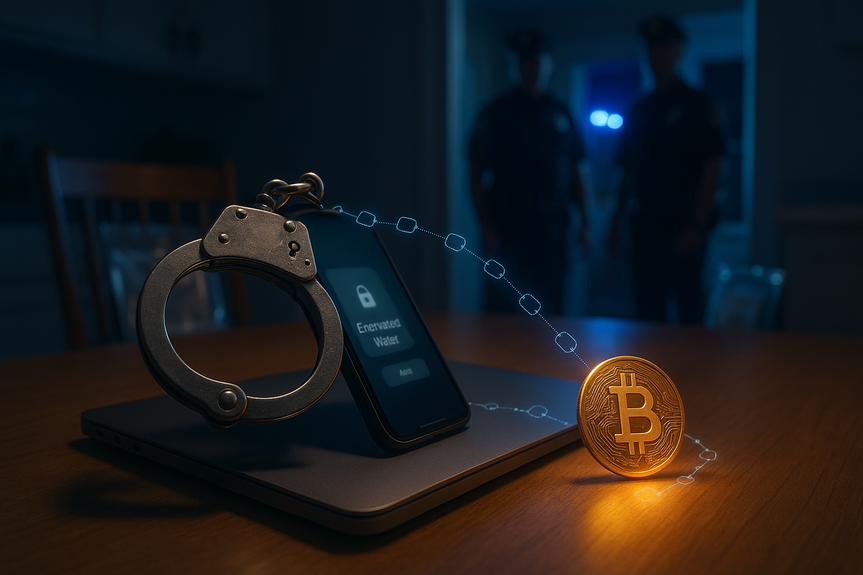
NSW Police seized 52.3 Bitcoin—about $4.2 million—during May 4 raids in Ingleburn after tracking funds tied to darknet activity. This Australian darknet marketplace bitcoin seizure led to charges against two men and showed how investigators can follow blockchain trails, examine devices, and claw back suspected proceeds of crime.
New South Wales Police say the operation began months earlier, when the Cybercrime Squad spotted a wallet with large Bitcoin holdings they linked to darknet trade. The case grew into Strike Force Andalusia and led to coordinated search warrants, digital forensics, and arrests. Officers called the seizure one of the largest cryptocurrency hauls in Australia to date, and they say it sends a clear message to criminals who think crypto is untraceable.
How the case unfolded
From wallet discovery to search warrants
Detectives first flagged a wallet in September 2024. They suspected it held funds from darknet marketplaces. Officers then executed an early search at a Surfside home, where they seized electronic devices and a small amount of cocaine. Forensic work on those devices uncovered more cryptocurrency clues. That evidence helped police map flows and link people to the funds. The trail led to Ingleburn. On May 4, officers executed search warrants, seized 52.3 BTC, and took suspects into custody. Investigators say the Australian darknet marketplace bitcoin seizure capped a steady push to trace coins across addresses and across time.Arrests and charges
– A 39-year-old man faced charges for failing to comply with a digital evidence access order. Police also accused him of money laundering and drug supply offenses. – A 41-year-old man faced charges for dealing with property proceeds of crime over $100,000, tied to alleged cryptocurrency transfers. A digital evidence access order requires a suspect to unlock devices or provide access when the court authorizes it. Police say the 39-year-old refused, which added to his legal trouble.Why the Australian darknet marketplace bitcoin seizure matters
The myth of perfect anonymity is fading
Many criminals still think blockchain means invisibility. But Bitcoin is transparent by design. Every transaction is public. Investigators can cluster addresses, track flows, and match movement with exchange records and network patterns. When police also seize phones or laptops and gain chat logs or seed phrases, they can link names to wallets. In this case, police highlighted how teamwork between cybercrime units and forensic teams produced results. They used blockchain tracing to follow the money. They used device forensics to fill in identity gaps. They coordinated warrants to seize funds before they could move again.Key facts from the case
– 52.3 BTC seized, worth more than $4.2 million at the time. – Strike Force Andalusia formed in September 2024 to pursue suspected darknet proceeds. – Early search at Surfside produced devices and 7.2 grams of cocaine. – A 39-year-old allegedly refused device access, leading to extra charges. – A 41-year-old allegedly helped transfer funds and faces proceeds-of-crime charges.How blockchain tracing helped
Bitcoin uses a public ledger. Each coin sits in addresses that hold “unspent outputs.” When someone spends coins, they create a new chain of outputs. Investigators can: – Follow this chain from one address to the next. – Spot mixing patterns or big jumps that mark laundering steps. – Cross-check with known exchange addresses and time stamps. – Tie movements to suspect devices or accounts seized during raids. This approach does not reveal a name by itself. But it narrows the field. Combined with KYC data from exchanges, phone records, and device images, it builds a strong picture of who controls the funds.What we know about the suspects and evidence
Alleged roles and recovered items
Police say the 39-year-old man held or managed crypto linked to darknet trade. When arrested, he did not provide access codes, which police say broke a court order. The 41-year-old allegedly moved funds and now faces a serious proceeds-of-crime charge. From the Surfside search, officers collected devices and a small amount of cocaine. From Ingleburn, they secured control of the Bitcoin and other evidence. Forensic teams can pull wallet files, seed backups, chat logs, or exchange credentials from seized devices. Even metadata—like timestamps and IP logs—can help link a human to a blockchain trail.What happens to the seized Bitcoin
Seized assets usually sit in secure custody until a court resolves the case. If a court declares the funds as proceeds of crime, the state can confiscate them under proceeds-of-crime laws. The exact process depends on the jurisdiction and the court’s orders. The important point is that police can now freeze and hold crypto in a way that was rare just a few years ago.What this means for crypto crime and compliance
Police tools and skills keep improving
This case shows how far law enforcement has come. State units and the Australian Federal Police now: – Use commercial and custom blockchain analytics tools. – Run trained cyber teams that understand wallet behavior. – Coordinate device forensics with financial tracing. – Share intelligence across cases and agencies. The Australian darknet marketplace bitcoin seizure is not an isolated success. It fits a broader pattern of multi-million dollar crypto recoveries and charges that stress both tracing skill and fast action.Lessons for exchanges and service providers
Companies that touch crypto should expect more scrutiny. Clear controls reduce risk: – Strong KYC at onboarding, plus ongoing monitoring for high-risk behavior. – Real-time blockchain screening to flag tainted coins or darknet links. – Fast incident response plans when law enforcement sends a request. – Detailed logs that preserve IP data, device fingerprints, and transaction notes. For policy teams, the case reinforces why record-keeping matters. When investigators bring a lawful request, accurate logs can resolve questions quickly and avoid wider disruption.What users should know
Most crypto users follow the law. But everyone should understand how transparency works: – Bitcoin is traceable. Your history stays on-chain forever. – Mixed coins are not “clean.” They often raise more flags. – Devices hold clues. Backups, screenshots, and chats can link you to wallets. – Exchanges comply with law. They freeze funds when required by court orders.Global context and future outlook
Part of a worldwide shift
Countries worldwide are improving their crypto investigations. Public ledgers, powerful analytics, and better training let police press cases they once could not. Darknet sellers and money launderers now face more risk during every step: earning coins, mixing them, cashing out, or holding them long-term.What comes next
Expect more joint operations that move fast once a target wallet is identified. Expect more pressure on mixers, privacy wallets, and no-KYC services. Also expect more education for judges and juries, with clear charts that explain how the money moved. Clear stories beat complex jargon. When cases are simple to follow, they are stronger in court.Bottom line on Australia’s crypto crackdown
Police in New South Wales used blockchain tracing and device forensics to pull in 52.3 BTC and file serious charges. The Australian darknet marketplace bitcoin seizure shows that crypto crime leaves footprints and that officers now know how to follow them. As tools and training improve, the window to hide on-chain keeps closing.(Source: https://decrypt.co/367363/australian-police-seize-millions-bitcoin-darknet-marketplace-operator)
For more news: Click Here
FAQ
Q: What happened in the Australian darknet marketplace bitcoin seizure?
A: The Australian darknet marketplace bitcoin seizure saw New South Wales Police seize 52.3 Bitcoin—about $4.2 million—during May 4 raids in Ingleburn after tracing funds tied to darknet activity. The operation led to charges against two men and was described by a senior officer as one of the biggest cryptocurrency seizures in the nation’s history.
Q: How did investigators trace the cryptocurrency involved in the Australian darknet marketplace bitcoin seizure?
A: Investigators first flagged a wallet in September 2024 and launched Strike Force Andalusia after NSW Police’s Cybercrime Squad linked its holdings to darknet marketplaces. They used blockchain tracing, device forensics from seized phones and computers, and exchange records to map transaction flows and identify suspects.
Q: What charges did the two men arrested in connection with the seizure face?
A: A 39-year-old man was charged with failing to comply with a digital evidence access order and allegedly faces money laundering and drug supply allegations. A 41-year-old man was charged with dealing with property proceeds of crime over $100,000 for allegedly transferring the cryptocurrency.
Q: What did the earlier Surfside search uncover during the investigation?
A: An earlier search at a Surfside residence recovered electronic devices and approximately 7.2 grams of cocaine. Forensic examination of those devices uncovered additional cryptocurrency clues that helped investigators trace funds to other addresses.
Q: What happens to the seized Bitcoin while the legal case proceeds?
A: Seized Bitcoin is held in secure custody while courts determine its status, and police can freeze and control crypto to prevent it from moving. If a court declares the funds proceed of crime, the state can confiscate them under proceeds-of-crime laws, with the exact process depending on jurisdiction and court orders.
Q: Why does the Australian darknet marketplace bitcoin seizure matter for the view that cryptocurrency is anonymous?
A: The Australian darknet marketplace bitcoin seizure illustrates that Bitcoin’s public ledger is traceable and that blockchain analysis can link transactions across addresses. When combined with KYC records and device forensics, investigators can build strong links between on-chain activity and real-world identities.
Q: How do police use blockchain tracing and device forensics together in cases like this?
A: Police follow transaction chains on Bitcoin’s public ledger, spotting patterns like mixing or large jumps and cross-checking addresses and timestamps with known exchange records. They then combine those blockchain traces with device forensics—wallet files, seed backups, chat logs, and metadata—to link wallets to suspects.
Q: What lessons should exchanges and ordinary users take from the case?
A: The Australian darknet marketplace bitcoin seizure underscores that exchanges should maintain strong KYC, real-time blockchain screening, detailed logs, and fast incident response to comply with lawful requests. Ordinary users should know Bitcoin is traceable, that mixed coins often raise flags, and that device backups or chats can link them to wallets.
* The information provided on this website is based solely on my personal experience, research and technical knowledge. This content should not be construed as investment advice or a recommendation. Any investment decision must be made on the basis of your own independent judgement.
Contents