Crypto
23 Dec 2025
Read 11 min
Bitcoin vs Dogecoin long-term investment How to pick winner *
Bitcoin vs Dogecoin long-term investment helps you choose the crypto with clear scarcity and liquidity.
Debating Bitcoin vs Dogecoin long-term investment? This guide compares supply, adoption, volatility, and portfolio fit so you can decide with confidence. Bitcoin’s fixed cap and growing institutional use support durable demand. Dogecoin’s unlimited supply and meme-driven cycles can swing fast. Learn how each asset may perform over a full market cycle and beyond.
Most investors ask the same core question: what will hold value and grow over time? Bitcoin and Dogecoin share some crypto DNA, yet they behave very differently. Bitcoin uses a hard cap and slow issuance. Dogecoin has no fixed limit and issues new coins every year. That design gap drives very different outcomes. Add investor trust, liquidity, and regulation pressure, and you start to see which has the stronger base for the next five to ten years.
Bitcoin vs Dogecoin long-term investment: what really drives returns
Supply and inflation math
- Bitcoin has a fixed maximum supply of 21 million. New issuance halves about every four years. Scarcity grows with time.
- Dogecoin has no hard cap. It issues a set number of new coins each year. The inflation rate shrinks as supply grows, but coins still increase forever.
- Fixed supply can support price when demand rises. Ongoing issuance can dilute holders unless demand outpaces new supply by a wide margin.
Network effects and liquidity
- Bitcoin commands the most liquidity in crypto. Large buyers can enter and exit with less slippage.
- Liquidity attracts more participants, which builds deeper markets and stronger price discovery.
- Dogecoin’s liquidity is broad but thinner. Price can move more on news and social media, which raises volatility.
Adoption and utility
Bitcoin’s role as a digital store of value
- Institutions, asset managers, and some corporations now hold or provide exposure to Bitcoin. This expands the buyer base.
- Spot Bitcoin ETFs in major markets lowered the friction for mainstream investors to participate.
- Global brand recognition and a conservative design help Bitcoin serve as a long-term savings asset for many holders.
Dogecoin’s use and culture
- Dogecoin began as a joke. Its culture centers on fun, tipping, and online community support.
- It has moments of viral attention that can lift price fast. These bursts rarely last without deeper utility and steady demand.
- Developer activity and payments integration exist but trail larger networks. That makes sustained adoption harder.
Volatility, cycles, and risk
What history suggests
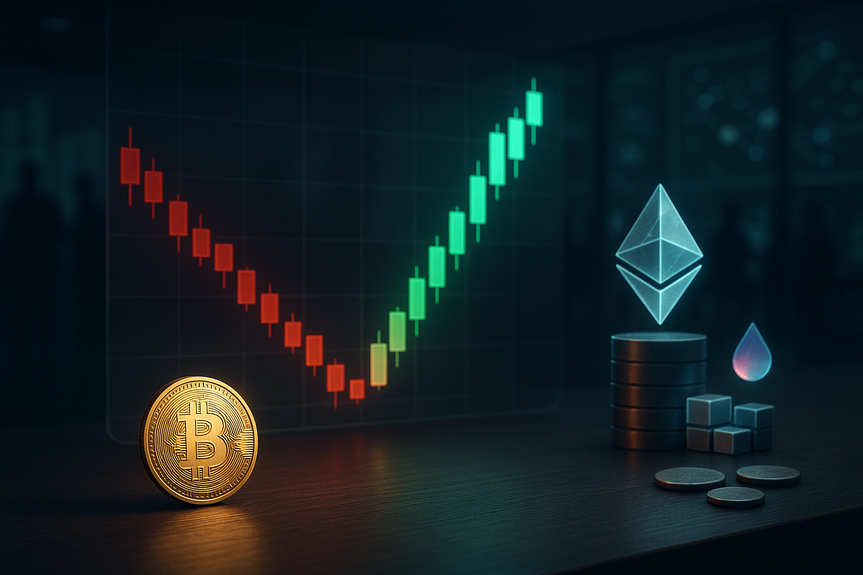
- Bitcoin has endured several deep drawdowns, yet over multiple cycles it has set fresh highs.
- Dogecoin has delivered huge gains in short windows, but it has also spent long stretches far below its peak.
- Both are volatile. Bitcoin’s larger market and deeper liquidity tend to dampen swings compared to meme tokens.
Key risks to watch
- Regulation: New rules can change access, custody, taxes, or corporate use.
- Market structure: Exchange failures or poor risk controls can spill into prices.
- Concentration: Large holders can move markets, especially in thinner assets.
- Narrative risk: For Dogecoin, sentiment fades fast when the meme cools.
How to analyze price and build a plan
Simple valuation lenses
- Supply schedule: For Bitcoin, halving reduces new supply pressure. For Dogecoin, ongoing issuance sets a hurdle for demand.
- Network activity: Watch active addresses, transactions, and transfer value as broad signs of use.
- Liquidity and flows: Monitor ETF inflows, exchange volumes, and stablecoin liquidity. These show if fresh capital enters.
- Realized metrics: On-chain cost basis tools can hint at where long-term holders break even or add more.
Portfolio construction
- Size prudently. Many long-term investors cap total crypto at 1% to 10% of their portfolio, based on risk tolerance.
- Favor dollar-cost averaging. Small, regular buys reduce timing mistakes.
- Pick core and satellite. Use Bitcoin as the core. If you want higher risk, keep Dogecoin as a small satellite position.
- Plan custody and security. Use reputable platforms or hardware wallets. Back up keys. Enable strong authentication.
- Track fees and taxes. ETF fees, exchange spreads, and tax events can erode returns over time.
When Dogecoin could still win
Scenarios that favor DOGE
- Major platform integration: Broad, easy payments support could lift daily utility.
- Cultural waves: A new meme boom can pull in retail demand quickly.
- Low-cost transfer niche: If fees stay low and UX improves, casual tipping and micro-payments could expand.
What sets Bitcoin apart
Scarcity plus credibility
- Hard cap and predictable issuance anchor the investment case.
- Wider institutional acceptance and regulated vehicles expand the buyer base.
- Global liquidity and brand trust support price discovery and resilience during downturns.
Why time in the market matters
- Bitcoin’s cycles reward patience. New highs have followed past bear markets as adoption grew.
- Consistent accumulation during weak periods has often beaten market timing.
- A rules-based plan reduces stress and emotional trades during volatility.
Action steps to decide
Define goals and match the asset
- If you want a long-term store of value with the broadest adoption in crypto, Bitcoin fits best.
- If you want a high-volatility bet with meme power and are ready for deep drawdowns, a small Dogecoin position can be fine.
- Revisit your thesis twice a year. Check if adoption, liquidity, and supply dynamics still support your view.
Checklist before you buy
- Confirm your risk budget and position size.
- Choose your access path: ETF, exchange, or self-custody.
- Set an averaging schedule and rebalancing rule.
- Write exit rules for extreme moves, both up and down.
Verdict on Bitcoin vs Dogecoin long-term investment
Bitcoin likely offers the stronger long-term setup. The fixed 21 million cap, deeper liquidity, and rising institutional adoption build a base for steady compounding over many cycles. Dogecoin can still spike and may reward small, speculative bets, but its unlimited supply and meme-driven demand make durable gains harder to hold. If you want a core crypto position, choose Bitcoin for most of your allocation and limit Dogecoin to a modest satellite. That way, your Bitcoin vs Dogecoin long-term investment plan balances resilience with upside and keeps you focused on results that last.(Source: https://www.nasdaq.com/articles/bitcoin-vs-dogecoin-whats-better-long-term-play)
For more news: Click Here
FAQ
Q: What is the main supply difference between Bitcoin and Dogecoin?
A: When comparing Bitcoin vs Dogecoin long-term investment, the primary supply difference is that Bitcoin has a fixed maximum supply of 21 million and new issuance halves about every four years. Dogecoin has no hard cap and issues a set number of new coins each year, which can dilute existing holders over time.
Q: Why is Bitcoin often viewed as a stronger long-term store of value?
A: Bitcoin’s hard cap, deeper liquidity, and rising institutional adoption expand the buyer base and support price discovery. Its large market presence and the arrival of spot Bitcoin ETFs have lowered friction for mainstream investors to participate.
Q: How does Dogecoin’s meme-driven culture affect its performance over time?
A: Dogecoin’s meme-driven culture can create rapid, large rallies driven by viral attention, but those bursts rarely persist without deeper utility or steady demand. That reliance on sentiment makes durable, compounding gains harder to sustain compared with assets supported by institutional use.
Q: How should investors size Bitcoin and Dogecoin within a diversified portfolio?
A: Many long-term investors limit total crypto exposure to between 1% and 10% of their portfolio and use dollar-cost averaging to reduce timing mistakes. A common approach is to hold Bitcoin as the core position for stability and keep Dogecoin as a small satellite for speculative upside.
Q: What key risks should I monitor when choosing between Bitcoin and Dogecoin?
A: Key risks include regulatory changes, exchange failures or market-structure problems, and concentration from large holders that can move prices, especially in thinner markets. For Dogecoin in particular, narrative risk is important because sentiment can fade quickly, and both assets can suffer deep drawdowns.
Q: Which on-chain and market metrics are useful for evaluating these cryptocurrencies?
A: Useful lenses include the supply schedule (Bitcoin halvings versus Dogecoin’s ongoing issuance), network activity like active addresses and transaction value, and liquidity measures such as ETF inflows and exchange volumes. Realized on-chain metrics can also indicate where long-term holders break even and help distinguish hype from real demand.
Q: Under what scenarios could Dogecoin outperform Bitcoin over the long term?
A: Dogecoin could outperform if it secures broad platform integration for payments, if a sustained cultural wave brings persistent retail demand, or if it establishes a low-cost transfer niche that expands casual use. Each of these paths requires sustained execution and steady demand despite continuous new coin issuance.
Q: What practical steps should I take before buying Bitcoin or Dogecoin?
A: Define your risk budget and position size, choose an access path (ETF, exchange, or self-custody), and set a dollar-cost averaging schedule with rebalancing and exit rules. Also plan custody and security measures, and track fees and tax implications that can erode long-term returns.
* The information provided on this website is based solely on my personal experience, research and technical knowledge. This content should not be construed as investment advice or a recommendation. Any investment decision must be made on the basis of your own independent judgement.
Contents