Crypto
09 Sep 2026
Read 11 min
Discover Why Zcash rallied to $1,000 near the beginning *
Why Zcash rallied to $1,000 reveals how whale buys and ETF inflows can guide smarter crypto timing.
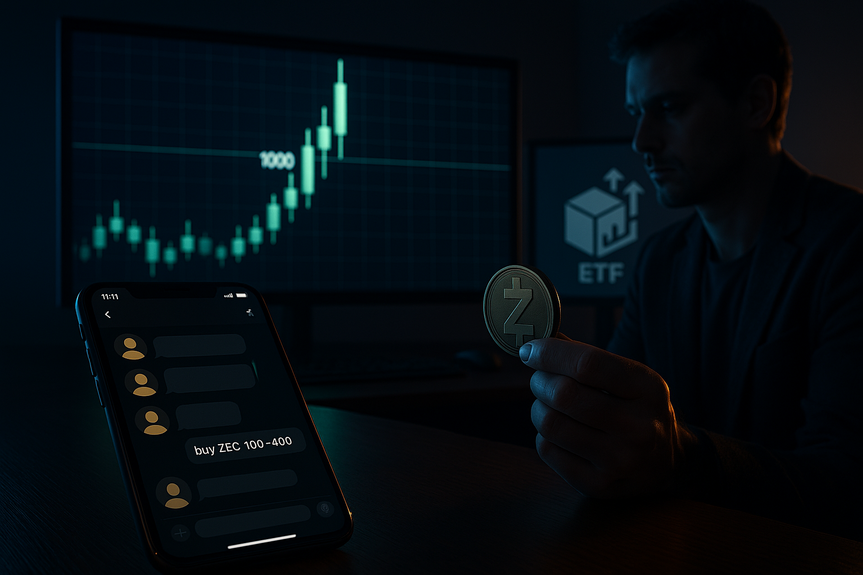
Why Zcash rallied to $1,000 comes down to whale rotation, growing fund inflows, and a rapid short squeeze. Veteran Bitcoin investors urged peers to buy ZEC between $100 and $400, then demand rose as Grayscale’s ZCSH fund saw inflows. Price momentum flipped sentiment and pushed ZEC past $1,000 for the first time in years.
Zcash just cleared a level it had not seen since its early days. This move did not happen in a vacuum. According to early Bitcoin investor Dan Held, some of the oldest whales messaged him for months to buy ZEC. They cut a slice of their long-term Bitcoin stacks to fund the trade. As these bids met growing fund demand and thin liquidity, price raced higher. At the same time, shorts scrambled to cover. This article explains the main forces, the skeptic view, and what to watch next, so you can see Why Zcash rallied to $1,000 with a clear lens.
Net inflows or outflows into Grayscale’s ZCSH fund over weeks, not days
Spot trading volume on major exchanges versus perpetual swap volume
Funding rates and open interest for signs of crowded long or short positioning
Order book depth to judge how much size the market can absorb without slipping
Shielded transaction share and active address trends
Client updates, audits, and security disclosures
Developer activity and grants that support long-term utility
Exchange listings, custody support, and settlement rails for institutions
Use small position sizes when volatility jumps
Scale in and out instead of going all-in at one price
Set invalidation points before you click buy
Respect liquidity; thin books can move against you fast
Focus on durable drivers like flows, builders, and policy—then align with the chart
Why Zcash rallied to $1,000: Five forces behind the breakout
1) Whale rotation from Bitcoin into ZEC
Dan Held says seasoned Bitcoin holders with eight- and nine-figure net worths urged him to buy ZEC over a three to six month window. Many trimmed about one-eighth to one-fifth of their Bitcoin to do it. These are patient, price-insensitive buyers. When they rotate into a lower-liquidity asset, their orders can lift the book fast. To understand Why Zcash rallied to $1,000, start with what the whales did: they accumulated ahead of the crowd and tightened supply.2) Rising inflows into Grayscale’s ZCSH fund
Capital also flowed into Grayscale’s ZCSH product, adding steady demand. Fund inflows often act like a repeated buy program. They can lock up coins and reduce what is available on exchanges. That supply pinch, stacked on whale buying, can push price higher with less effort. As the price ticks up, performance screens pull in more interest, which can reinforce the trend. This feedback loop is a key part of Why Zcash rallied to $1,000.3) Narrative ignition and momentum reflex
In crypto, price often moves first and the story shows up later. Held himself is skeptical for that reason. But once a coin breaks out, a new narrative can form fast: privacy is back, ZEC is scarce, funds are accumulating. Media coverage grows, social chatter expands, and momentum traders pile in. Each new buyer validates the last move, even if the story arrived after the chart. That momentum reflex helped speed the run once ZEC cleared major levels.4) Short squeeze pressure
Some traders bet against ZEC and got trapped. When price rose hard, short sellers had to buy back to close. That buying is not optional. It can turn a slow climb into a sharp spike. You could see it in the tone shift: early doubts turned into shock as shorts exited. This squeeze effect, layered on whale rotation and fund demand, explains another slice of Why Zcash rallied to $1,000 in such a burst.What the skeptics say
Auditability trade-offs and the gold standard
Held highlights a basic split between Bitcoin and Zcash. Bitcoin has a fixed 21 million cap with broad, simple auditability. Zcash aims for strong privacy, which makes full supply checks harder. He points to a past episode when confusion over a possible exploit blurred how much ZEC was in circulation. For a “digital gold” story, any doubt about supply can be a problem. This is why some Bitcoin purists hesitate, even after a big move.Buying what the market already loves
Held also warns against chasing heat. His best investments, like early Bitcoin and SpaceX, came when most people were not interested. ZEC is now on many watchlists after its pop. If the crowd already loves the trade, risk can rise while edge can fall. A simple story about Why Zcash rallied to $1,000 sounds good, but the next leg depends on fresh buyers, fresh flows, and clean execution from the project and its ecosystem. That is not guaranteed.Signals to watch after the surge
Fund flows, liquidity, and positioning
Price pops can fade if the key drivers slow. Keep an eye on:On-chain and ecosystem health
Beyond price, look for signals of real use and builder momentum:Regulatory and macro context
Privacy coins face extra scrutiny in some regions. Watch how rules, exchange policies, and enforcement shift. Also track the broader crypto cycle. When Bitcoin dominance falls, alts can catch a bid. When risk appetite fades, they can lag. These forces will shape whether the breakout holds or retraces.Rotation lessons from this move
Each crypto cycle features a rotation story. Early on, capital crowds into Bitcoin. As gains build, some holders look for higher beta trades. They move a slice into assets with smaller floats, fresh catalysts, or neglected narratives. That is what seems to have happened here: a group of veteran investors rotated early, fund flows joined, shorts got squeezed, and the chart did the rest. It is a blueprint you see across cycles, but timing it well is hard. Often, a full market cycle is needed to judge if the early buyers were right.Practical takeaways for traders and investors
Plan, size, and pace matter
You do not need to predict every move to manage risk. Basic habits help:Separate story from signal
Narratives are powerful, but they can chase price. Treat headlines and social buzz as lagging signals. Validate them with harder data: sustained fund inflows, on-chain use, and broad market health. When those align, the setup is stronger. When they do not, wait for better odds. The latest surge shows how quickly crypto can reprice when whales, funds, and shorts push in the same direction. If you are asking Why Zcash rallied to $1,000, the short answer is: early accumulation met steady fund demand, momentum turned the crowd, and a squeeze finished the job. The longer answer depends on what the flows, builders, and rules say next.(Source: https://finance.yahoo.com/markets/crypto/articles/bitcoin-whales-were-urging-friends-013312121.html)
For more news: Click Here
FAQ
Q: Why Zcash rallied to $1,000?
A: Early whale rotation into ZEC, rising inflows into Grayscale’s ZCSH fund, and a rapid short squeeze combined to push the price past $1,000. Momentum and narrative amplification then drew additional buyers, accelerating the move higher.
Q: Who encouraged purchases of Zcash before the rally?
A: Dan Held said some of Bitcoin’s oldest whales—investors with eight- and nine-figure net worths who have traded since 2013—messaged him for months to buy ZEC. Many of those investors funded the trades by trimming about one-eighth to one-fifth of their long-term Bitcoin holdings.
Q: How did Grayscale’s ZCSH fund affect the rally?
A: Rising inflows into Grayscale’s ZCSH product added steady demand and helped lock up coins, reducing available supply on exchanges. That supply pinch, stacked on whale buying, made it easier for price momentum to build and attract more interest.
Q: What is the momentum reflex described in the article?
A: The article explains that crypto narratives often form after price moves, and once a coin breaks out media coverage and momentum traders pile in. That reflex validates prior buying and can accelerate a rally even if the story arrived after the initial move.
Q: What happened with short sellers during the surge?
A: Some Zcash short sellers were squeezed as the price rose, forcing them to buy back positions to close and adding upward pressure. This forced buying can turn a gradual climb into a sharp spike, reinforcing the rally.
Q: Why do skeptics like Dan Held question the breakout?
A: Held is skeptical because he believes narratives usually follow price and he highlights Zcash’s tradeoff between privacy and supply auditability versus Bitcoin’s fixed 21 million cap. He also pointed to a past episode when confusion over a possible exploit briefly obscured how much ZEC was in circulation.
Q: What signals should investors monitor after ZEC’s rally?
A: The article advises watching net inflows into Grayscale’s ZCSH over weeks, spot versus perpetual trading volumes, funding rates and open interest, and order book depth to assess liquidity and positioning. It also recommends tracking on-chain measures like shielded transaction share, active addresses, developer activity, and regulatory shifts that affect privacy coins.
Q: What practical risk-management lessons does the article offer for traders?
A: Recommended habits include using small position sizes when volatility jumps, scaling in and out, setting invalidation points, and respecting liquidity because thin order books can move against you quickly. The piece also urges separating story from signal and validating narratives with durable drivers such as sustained fund inflows, on-chain use, and broader market health.
* The information provided on this website is based solely on my personal experience, research and technical knowledge. This content should not be construed as investment advice or a recommendation. Any investment decision must be made on the basis of your own independent judgement.
Contents