Crypto
15 Dec 2025
Read 12 min
Do Kwon 15-year sentence 2025: What investors must know *
Do Kwon 15-year sentence 2025 alerts investors to vet projects closely and avoid risky stablecoins.
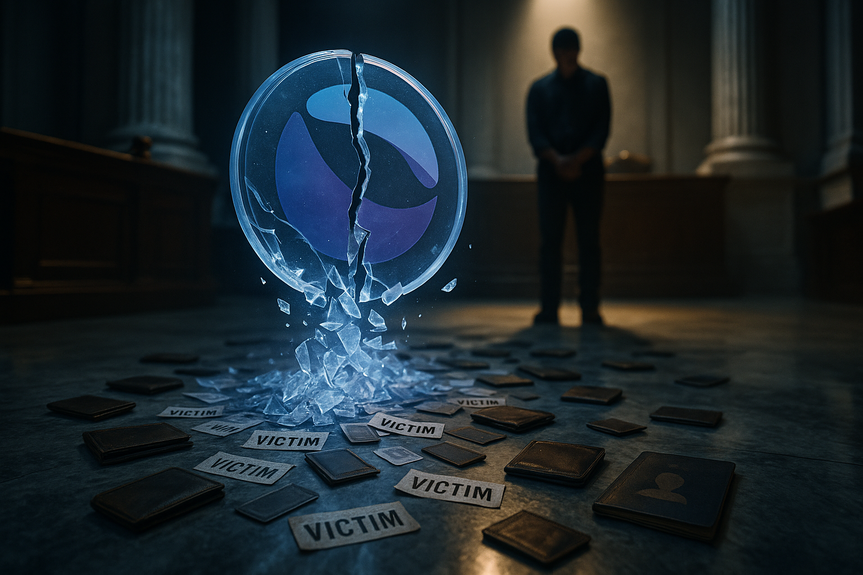
Do Kwon 15-year sentence 2025 signals a hard line on crypto fraud and a turning point for investor protection. A U.S. judge called Terra’s rise and crash an “epic fraud” that erased $40 billion. Victims told painful stories of lost savings, broken families, and halted charity work. Here’s what smart investors must learn now.
The court’s decision came after years of hype, a DeFi boom, and a fast collapse. Terra’s UST stablecoin promised a $1 peg without cash reserves. Its value sat on LUNA, a token that could be created or destroyed to hold the peg. Anchor, a lending app on Terra, offered nearly 20% yearly returns on UST. Billions poured in. When markets turned, the peg broke. LUNA hyperinflated. The system failed in days. Retail holders took the worst hits while large players got out early.
Do Kwon 15-year sentence 2025: why it matters now
A New York federal judge sentenced Do Kwon to 15 years in prison and called Terraform Labs’s work a fraud at a generational scale. Victims addressed the court with letters and live testimony. The case shows how fast risk can hide inside trendy products, big promises, and social-media trust. It also shows that consequences are real, even for crypto founders who run.How Terra and UST were built
Algorithmic peg, not cash reserves
Terra launched in 2018 with stablecoins tied to fiat currencies. The star product became UST, meant to hold $1 without dollars in a bank. It used code to balance supply and demand: – If UST fell below $1, the system could burn UST and mint LUNA to push the price up. – If UST rose above $1, it could mint UST and burn LUNA to bring it down. This design hinged on market faith in LUNA. As UST grew, LUNA’s market value soared. But when faith faded, the feedback loop ran in reverse.Anchor’s 20% yield pulled in billions
Anchor offered almost 20% annual returns for UST deposits. Many users treated that number like a savings rate. It was not. That yield relied on subsidies and inflows, not steady, real-world income. When outflows started, the returns could not hold. By early 2022, UST ranked third among stablecoins, but the base was fragile.The unravelling: from depeg to collapse
When crypto markets fell, UST slipped from $1. Traders and funds raced to exit. The system printed vast amounts of LUNA to try to fix the peg. That crushed LUNA’s price and confidence. In about a week, roughly $40 billion in value disappeared across UST, LUNA, and related assets.The human cost told in court
Victims gave stark accounts: – A nonprofit founder said he lost $1 million and had to pause projects, like solar installs in rural Africa. He said he asked for help after a “steady lads” tweet but got useful advice too late. – One investor said he put in $190,000 after seeing “safe” 20% returns online. He lost his savings and his marriage. – A 58-year-old woman sold an apartment to buy UST. She said her $81,000 fell to almost nothing. She faced homelessness and illness after years of depression. In total, the judge received 315 letters. Some investors said they could not feed their children. Some said they thought of suicide. The pain was global and personal.Legal fallout and the courtroom voices
Do Kwon was arrested in Montenegro in 2023 and later faced U.S. fraud charges. At sentencing, he said he believed in Terra’s promise. The judge said the damage was real either way. The Do Kwon 15-year sentence 2025 stands as a warning that marketing, memes, and yield promises do not protect builders from law or investors from loss.What investors must know and do next
The Terra story is not just about one founder. It is a playbook for avoiding the next blow-up. Use these rules to protect yourself.Spot danger in “risk-free” returns
If a crypto product offers high, steady yields, ask where the money comes from. If the answer is “emissions,” “subsidies,” or vague “protocol revenue,” be careful. Real yield comes from real activity with fees and cash flow.Understand what backs your “stable” asset
Not all stablecoins are the same: – Some hold cash and T-bills in regulated accounts. – Some hold crypto collateral and use on-chain rules. – Some, like UST, use algorithms and a linked token. Each design has trade-offs. Algorithmic pegs can unwind fast when trust breaks.Size your positions for survival
Never put life savings into one token, platform, or chain. Diversify across: – Assets (stablecoins, BTC, ETH, cash) – Platforms (exchanges, self-custody, multiple wallets) – Strategies (not just yield; hold, DCA, or sit in cash)Use red flags to decide “no” quickly
– “Guaranteed” or near-guaranteed double-digit yields – Founder taunts on social media instead of sober risk notes – System health depends on more deposits, not real demand – Lack of clear, audited reserve reports – Pressure to act now or miss outPlan for bank-run speed
Crypto moves 24/7. When a peg slips, exits happen in minutes. Pre-plan your moves: – Decide a peg-loss threshold to sell (for example, $0.995) – Keep some funds on a liquid venue – Use alerts on price and on-chain metrics – Practice small test withdrawals so you know the stepsKnow the difference between innovation and roulette
New designs can fail even with smart teams. Test ideas with small amounts. If the design breaks in stress tests, assume it can break again.Broader crypto lessons after Terra and FTX
Terra’s fall helped trigger a wider deleveraging that later exposed other weak giants, including FTX. The pattern repeats: – Cheap money and hype fuel growth. – Big yields hide fragility. – A shock hits. Liquidity dries up. Weak links snap. – Retail holders pay the highest price. To break the cycle, investors need simple rules and patience. Builders need transparency, audits, and less reliance on subsidies. Regulators will push for all three. The Do Kwon 15-year sentence 2025 gives regulators cover to demand clearer reserves, honest yield labeling, and faster action when pegs slip.Reading social proof without getting burned
A crowd can be wrong. Social feeds can reward swagger over safety. Before you trust a thread or a chart: – Check who profits if you act. – Look for dissenting views and read them fully. – Verify data with original sources, not screenshots. – Ask yourself if you would buy the same asset without the promised yield.If you already hold a risky position
Do not freeze. Map options and act. – Cut size to sleep at night. Selling part is not failure; it is risk control. – Swap into higher-quality assets or cash. – If you stay, write a clear thesis and a stop. If the peg or narrative breaks, exit without debate. – Track on-chain flows. Large, sustained outflows can signal trouble.How to evaluate a stablecoin next time
Use a quick checklist: – Reserves: Are they cash and T-bills, or volatile tokens? – Disclosures: Are there regular, independent attestations or audits? – Mechanism: Does stability rely on faith in another token? – Use cases: Is demand organic (payments, settlement), or mostly yield farming? – Liquidity: Are there deep markets across several venues?What this means for the next cycle
Innovation will continue. Some ideas will work. Many will not. The best defense is clear thinking, small tests, and humility. When you see “can’t fail” designs, remember UST. When you see 20% yields in a low-rate world, remember Anchor. When you see a charismatic founder, remember the letters to the judge. The Do Kwon 15-year sentence 2025 is not just a headline. It is a lesson plan. Respect risk. Question yield. Diversify. Write rules before you click buy. If you do that, you give yourself a chance to survive the next storm and stay in the game long enough to benefit from the parts of crypto that endure.For more news: Click Here
FAQ
Q: What is the Do Kwon 15-year sentence 2025?
A: The Do Kwon 15-year sentence 2025 refers to a New York federal judge sentencing Do Kwon to 15 years in prison for fraud tied to the Terra UST and LUNA collapse that erased about $40 billion. He had faced fraud charges in multiple countries and was arrested in Montenegro in 2023.
Q: How did Terra’s UST stablecoin try to maintain its $1 peg?
A: UST was an algorithmic stablecoin that relied on LUNA to balance supply and demand by burning UST and minting LUNA when the price fell and minting UST and burning LUNA when the price rose. The design depended on market faith in LUNA rather than cash reserves.
Q: What role did the Anchor protocol and its yields play in the collapse?
A: Anchor offered nearly 20% annual returns on UST deposits and attracted billions in capital, which many users treated like a savings rate. Those yields were not sustainable because they relied on subsidies and inflows, and when outflows began the returns could not be maintained, contributing to the rapid failure.
Q: How quickly did the Terra ecosystem lose value and who was hit hardest?
A: The collapse erased about $40 billion in value within roughly a week across UST, LUNA, and related assets. Retail depositors were hit hardest while more sophisticated players had been able to exit earlier.
Q: What human impacts did victims describe at sentencing?
A: Victims described lost savings, broken families, halted charity projects, and severe hardship, including a nonprofit founder who said he lost $1 million, an investor who lost $190,000 and later divorced, and a woman whose $81,000 stake fell to almost nothing and who later faced homelessness and illness. The judge also received 315 letters from global investors reporting losses that left some unable to feed their children or contemplating suicide.
Q: What practical rules does the article recommend for investors now?
A: The article advises distrusting “risk-free” high yields, understanding what actually backs a stablecoin, diversifying across assets and platforms, and sizing positions so you can survive stress events. It also recommends pre-planning exits, keeping some funds liquid, testing withdrawals, and using clear red flags to decide “no” quickly.
Q: How should investors evaluate stablecoins going forward?
A: Use a checklist that looks at reserves (cash and T-bills versus volatile tokens), regular independent attestations or audits, the stability mechanism (algorithmic versus collateralized), real use cases for demand, and liquidity across venues. These factors help distinguish stablecoins that rely on real cash flow from those dependent on faith or continual inflows.
Q: What broader impact might the sentencing have on regulation and industry practices?
A: The Do Kwon 15-year sentence 2025 signals a harder line on crypto fraud and gives regulators cover to demand clearer reserves, honest yield labeling, faster action when pegs slip, and greater transparency and audits from builders. It also serves as a reminder that marketing, memes, and bold yields do not shield founders from legal consequences or investors from loss.
* The information provided on this website is based solely on my personal experience, research and technical knowledge. This content should not be construed as investment advice or a recommendation. Any investment decision must be made on the basis of your own independent judgement.
Contents