Crypto
22 Dec 2025
Read 12 min
Dogecoin price prediction 2026 How to survive the crash *
Dogecoin price prediction 2026 urges investors to cut losses now and shield capital from a steep crash
Dogecoin price prediction 2026: A sub-penny drop is on the table as hype fades, supply keeps inflating, and valuations converge with rival meme coins. Expect sharp swings. Survive by sizing positions small, setting exits, diversifying, avoiding leverage, and using staged orders and stablecoins for liquidity.
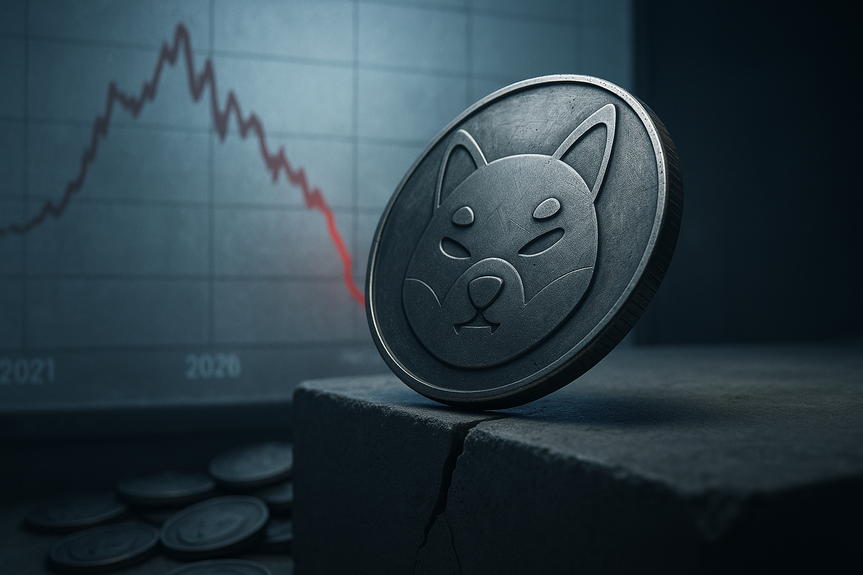
Dogecoin had a rough 2025. The top meme coin fell hard after years of hype and fast rallies. It once peaked near $0.74 in 2021, but momentum has weakened since. Media buzz tied to Elon Musk and policy headlines did not spark a lasting rebound. Many holders now want a clear plan for 2026. Below, we break down the risk math, walk through practical steps to protect your money, and map key scenarios. We also share a grounded Dogecoin price prediction 2026 that focuses on survival first.
Shiba Inu has a market cap near $4.5 billion. If Dogecoin were valued the same way, and you divide that by roughly 152 billion coins, you get a price near $0.03.
Bonk, another popular dog coin, sits closer to $715 million. At that value, Dogecoin’s implied price would be around $0.004.
This does not guarantee a drop. But it shows how a shift in market mood can push prices much lower. If investors start to value Dogecoin like a second- or third-tier meme coin, a print under one cent is very possible. My Dogecoin price prediction 2026 leans toward a deep drawdown if the market keeps repricing meme coins for lower growth and less utility.
Keep any single meme coin to a small slice of your portfolio (for example, 1%–5%).
Use your total risk budget, not your total cash, to decide position sizes.
Plan a ladder of sell orders at predefined prices. For example, scale out in steps as price rises.
Use stop or alert levels to limit deep losses. If your broker or exchange does not support stops, set price alerts on your phone and react with limit orders.
Leverage turns normal dips into account blowups.
If you must trade, keep no leverage. Volatility is already high.
Keep a portion of funds in a stablecoin like USDC for flexibility.
Use it to rebalance or buy panic wicks if your plan calls for it.
Spread holdings across exchanges you trust. Consider self-custody if you know how to do it safely.
Do not concentrate in one meme coin or one theme.
Pick a schedule (monthly or quarterly) to trim winners and add to cash.
This keeps small risks from becoming big ones as prices move.
If you are down, ask a tax professional about tax-loss harvesting rules in your country.
Do not let tax issues drive bad trades, but do plan for them.
Price versus Bitcoin: If DOGE keeps falling against BTC, risk appetite is weak.
Volume: Big drops on rising volume can signal urgency to exit.
Social buzz: If interest and search trends fade, rallies may stall faster.
Decide your maximum portfolio weight and stick to it.
Set auto-sells for a portion of holdings at key levels to lock wins during spikes.
Consider a “core and trade” approach: hold a small core, trade a separate small slice around it.
Trade levels, not feelings. Use limit orders and alerts.
Respect liquidity. Avoid market orders during thin hours.
Keep a trading journal with entry, exit, and reason. Review weekly.
Start small. Learn how the asset moves before adding more.
Use dollar-cost averaging only if you have strict risk caps and a clear exit plan.
Focus on process, not predictions. Your plan should work across outcomes.
Dogecoin price prediction 2026: why a sub-penny slide is possible
History shows hype fades fast
Dogecoin launched in 2013 as a joke. It stayed below one cent for years. It finally moved above a penny in early 2021 during a wild meme wave. It then rocketed to an all-time high in May 2021. But since then, the chart has trended lower. By late 2025, Dogecoin traded more than 80% below its peak. Even big headlines could not create a durable bounce. That is how fragile hype-driven assets can be once the crowd moves on.Inflation and no hard cap create constant pressure
Dogecoin does not have a maximum supply. New coins enter circulation each year. The circulating supply sits around 152 billion coins and grows over time. When supply rises and demand is flat or falling, price tends to drop. This is basic supply and demand. Without a hard cap or a steady rise in real use, inflation can weigh on price for long stretches.Relative value math points to sub-penny risk
One simple way to frame risk is to compare Dogecoin’s value to other dog-themed meme coins:Key risks and potential catalysts to watch
Utility gap versus narrative strength
Dogecoin built its brand on fun and community. But it lacks wide utility compared with networks built for smart contracts or advanced payments. If developers ship useful features, or if a major platform adds seamless DOGE payments, sentiment could improve. If not, the story remains about vibes more than use.Regulation and liquidity
Rules can change fast. Favorable policy might help crypto as a whole, but meme coins are often the first to suffer in risk-off moves. Liquidity can dry up quickly in a sell-off. Thin order books can turn a dip into a slide.Macro and Bitcoin dominance
When Bitcoin rises and risk appetite is strong, meme coins can run. When Bitcoin stalls or falls, meme coins tend to lag harder. Watch Bitcoin dominance, rates, and broad market fear. These can hint at money flowing in or out of high-risk corners of crypto.How to survive a crash: a simple plan
Rule 1: Treat it as speculation
Only put money you can afford to lose into meme coins. This is not a judgment; it is a risk rule. Any Dogecoin price prediction 2026 should start with defense.Rule 2: Size positions small
Rule 3: Set exits before you need them
Rule 4: Avoid leverage
Rule 5: Hold dry powder in stablecoins
Rule 6: Diversify your risk
Rule 7: Use time-based rebalancing
Rule 8: Capture tax benefits
Rule 9: Watch simple signals
Scenario map for 2026
No one knows the future, but scenario planning can help you react without panic. Any Dogecoin price prediction 2026 should weigh these paths:Bear case: Sub-penny repricing
If the market values DOGE closer to smaller meme coins and supply keeps growing, a range of $0.003 to $0.009 is plausible. This could happen if liquidity falls, hype wanes, and no new use cases appear.Base case: Sideways with sharp swings
If sentiment stabilizes and crypto remains mixed, price could chop between $0.01 and $0.03. In this band, rallies fade near resistance, and dips find buyers but with less force than in past cycles.Bull case: Utility or platform catalyst
A major payment integration, strong merchant adoption, or a broad crypto melt-up could drive a spike toward $0.10 to $0.20. This needs real catalysts and strong risk-on flows, so treat it as a low-probability event unless data changes. This is not financial advice. It is a plan to keep emotions in check.A clearer plan for holders and traders
For long-term holders
For active traders
For new buyers
Bottom line
The numbers show a real chance that Dogecoin could trade under a penny in the next year if supply growth, weak utility, and relative valuation pressures persist. A careful Dogecoin price prediction 2026 respects that risk. Build small positions, use rules-based exits, and keep cash ready. If a crash comes, your plan—not the headlines—will guide you.(Source: https://www.fool.com/investing/2025/12/19/prediction-dogecoin-will-plunge-under-a-penny-2026/)
For more news: Click Here
FAQ
Q: What is the article’s Dogecoin price prediction for 2026?
A: The article’s Dogecoin price prediction 2026 leans toward a deep drawdown and says a sub-penny print is possible, with a bear-case range around $0.003 to $0.009. It also outlines a base case of $0.01–$0.03 and a low-probability bull case up to $0.10–$0.20.
Q: Why could Dogecoin fall below one cent in 2026?
A: The article points to fading hype, persistent supply inflation with no hard cap, and a shift in relative valuations toward smaller dog-themed coins as key reasons a sub-penny drop could occur. Valuing DOGE like Shiba Inu implies roughly $0.03 per coin and valuing it like Bonk implies about $0.004 given a circulating supply near 152 billion.
Q: How does Dogecoin’s supply situation affect its outlook?
A: Dogecoin has no maximum supply and adds new coins each year, with a circulating supply around 152 billion, so rising supply with flat or falling demand tends to put downward pressure on price. The article emphasizes that if supply increases materially past current levels, simple supply-and-demand dynamics could push prices much lower.
Q: What scenarios does the article map for Dogecoin in 2026?
A: The author maps three scenarios: a bear case with a sub-penny repricing near $0.003–$0.009, a base case chopping between $0.01 and $0.03 with sharp swings, and a bull case driven by major catalysts toward $0.10–$0.20. He recommends using scenario planning to react without panic and to design defensive rules.
Q: What practical rules does the article recommend to survive a crash?
A: The article recommends treating DOGE as speculation, sizing positions small (for example 1%–5% of a portfolio), setting predefined sell orders and stop levels, avoiding leverage, and holding dry powder in stablecoins. It also advises diversifying across exchanges or custody methods, using time-based rebalancing, and considering tax-loss harvesting where appropriate.
Q: Which market signals should traders watch to know when to reduce exposure?
A: Traders should watch DOGE versus Bitcoin performance, trading volume—especially large drops on rising volume—and social buzz or search interest as indicators of weakening risk appetite. The article also warns that liquidity drying up and thin order books can turn a dip into a slide.
Q: What catalysts could prevent the predicted decline?
A: Utility improvements such as developer-led features, major payment integrations, or strong merchant adoption could improve sentiment and avert the worst-case scenario. Favorable policy or a broad crypto melt-up could also lift meme coins, but the article treats those outcomes as lower-probability compared with the downside risks.
Q: What should long-term holders and new buyers do according to the article’s plan?
A: Long-term holders should decide a maximum portfolio weight, consider auto-sells or a core-and-trade approach, and set predefined exit levels to lock gains during spikes. New buyers are advised to start small, use dollar-cost averaging only with strict risk caps and an exit plan, and focus on process rather than chasing predictions mentioned in the Dogecoin price prediction 2026 discussion.
* The information provided on this website is based solely on my personal experience, research and technical knowledge. This content should not be construed as investment advice or a recommendation. Any investment decision must be made on the basis of your own independent judgement.
Contents