Crypto
18 Jul 2026
Read 13 min
FBI Steam malware investigation 2026 How to protect wallets *
FBI Steam malware investigation 2026 exposes tactics and offers steps to secure crypto wallets today
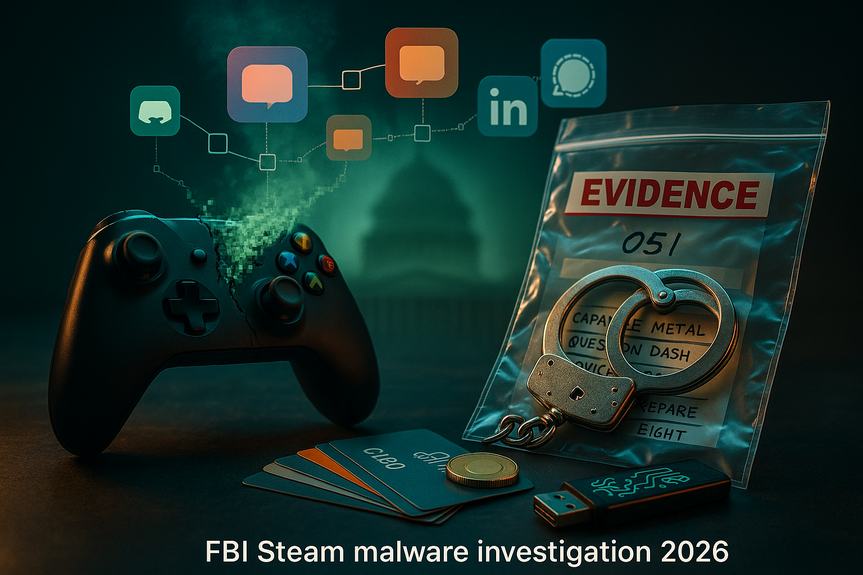
Federal agents say a small group hid crypto-stealing code inside PC games and pushed them to gamers. The FBI Steam malware investigation 2026 began after players reported drained wallets and strange apps on their machines. One arrest shows how the scheme worked, and what every gamer should do to keep funds and devices safe.
Federal agents arrested a 21-year-old from North Lauderdale, Florida, in a case that ties malicious Steam-style game releases to stolen cryptocurrency. According to a federal complaint, the group published multiple titles, used social media hype to drive downloads, and infected thousands of devices. Investigators say they traced gift card buys and delivery records back to the suspect after following Bitcoin from a wallet used in the scheme. The charge—conspiracy to obtain information by computer for private financial gain—carries up to 10 years in prison.
Scanning for saved browser credentials and cookies
Searching for wallet files and extension data
Collecting seed phrases stored in plain text or screenshots
Phoning home with tokens and session keys
With that data, the attackers logged in, reset passwords, or tricked users into signing malicious approvals. Some messages appear to have framed it as a “performance fix” or “link wallet to claim rewards.” After approval, funds left accounts in seconds.
Install only from official stores and verified publishers. Check the studio website, domain age, and developer history.
Read recent reviews carefully. Look for warnings about antivirus flags, odd permissions, or post-install pop-ups.
Avoid DMs with download links or “beta keys.” Go find the store page yourself and compare checksums if the developer provides them.
Use a trusted antivirus and enable real-time protection. Keep your OS and drivers updated.
Use a hardware wallet for meaningful funds. Keep daily-spend amounts in a separate hot wallet.
Disable blind signing on hardware wallets. Read every approval. Watch for “setApprovalForAll,” “permit,” or unlimited approvals.
Segment risk: one browser profile just for crypto, another for daily browsing and games.
Never store seed phrases in screenshots, notes apps, or cloud docs. Write them on paper and store offline.
Turn on phishing warnings in wallet apps and use transaction simulators when possible.
Use a password manager with unique, long passwords for email, exchanges, and social accounts.
Enable phishing-resistant MFA (hardware security keys or app-based codes). Avoid SMS where possible.
Lock down Discord and Telegram privacy. Disable DMs from non-friends and server members.
Use a separate, low-permission PC profile for gaming to limit malware access to admin functions.
It asks you to “connect wallet” before you even play.
It requires odd Windows permissions or admin rights with no clear reason.
The store page has generic art, inconsistent publisher names, or copy-paste descriptions.
It pushes urgent claims: “limited-time airdrop,” “boost FPS by enabling wallet,” or “verify ownership to unlock graphics pack.”
The file is huge but the game feels barebones; updates arrive fast with vague patch notes.
Assume compromise. Create a brand-new wallet on a clean device and move funds immediately.
Revoke token approvals using trusted tools tied to your chain (for example, Etherscan’s Token Approvals, Solscan links, or reputable revocation dApps). Then move assets again.
Rotate exchange API keys and reset passwords on email and crypto services. Enable stronger MFA.
Disconnect from the internet. Back up essential files only (no wallet data or secrets).
Scan with multiple reputable tools. If credentials or wallets were at risk, do a full OS reinstall or factory reset.
Change all important passwords from a separate, clean device after the wipe.
File a report with the FBI’s Internet Crime Complaint Center (IC3) and include wallet addresses, transaction IDs, and the game link.
Contact the platform’s support and provide proof of purchase, logs, or screenshots.
If funds touched an exchange, open a ticket immediately with transaction hashes and timestamps.
Strengthen pre-listing malware scans and behavior analysis, not just file signatures.
Require verified developer identities and public audit trails for updates.
Add wallet-approval warnings if a game tries to launch browser wallet prompts.
Fast-track delisting and auto-notify all downloaders when a title is flagged.
Sign builds, publish checksums, and maintain changelogs users can verify.
Avoid bundling updaters that request admin rights without transparent reasons.
Engage with community moderators to quickly surface tampering reports.
Test new games on a burner PC or VM. Never connect a main wallet live.
Educate audiences about approvals and show how to verify transactions before signing.
Share indicators of compromise so others can act faster.
FBI Steam malware investigation 2026: why it matters to gamers and crypto users
The FBI went public asking victims to come forward after a wave of games with embedded info-stealers appeared on a major PC gaming store. The agency linked several indie-style titles—like PirateFi, BlockBlasters, Dashverse, and Lunara—to infections. Agents say the group reached roughly 8,000 devices, accessed about 80 wallets, and took at least $220,000 between May 2024 and February 2026. The case is being prosecuted near the headquarters of the platform owner. This is a warning for anyone who clicks “Install” without checking the source or the permissions. The titles looked real, had store pages, and even built small communities. But once installed, they scraped credentials, scanned for browser wallet data, and set up ways to hijack funds. The FBI Steam malware investigation 2026 highlights how clean branding and official storefronts can still hide a threat.How the game malware stole crypto
Social engineering set the trap
The group allegedly promoted games across Discord, Telegram, X, and LinkedIn. Bots targeted users who showed public signs of holding crypto—like NFT collections, wallet flexes, or trading posts. DMs nudged those users with early access keys, giveaways, and “free-to-play” claims.Install, harvest, and drain
Once a victim installed the game, hidden code began:Following the money
Investigators say they traced Bitcoin from the operation to Bitrefill, where the funds paid for over 150 gift cards, many used for food deliveries. Subpoenas then connected the cards to delivery addresses linked to the suspect. Agents also seized devices and found multiple wallet seed phrases, including one for a privacy coin often used to reduce traceability. A review suggested hundreds of thousands of dollars flowed through his wallets over time.Why gamers were easy targets
Games feel safe—even when they are not
Gamers trust big platforms. If a title is on a well-known store and shows decent reviews, many assume a baseline of safety. Attackers abused that trust, wrapping info-stealers in real game shells and passing basic checks.Crypto wallets live on gaming PCs
Many players trade NFTs, stake tokens, or mint assets on the same PC they use to game. That means wallet extensions and keys may be only a few clicks away. If malware grabs browser data or session cookies, it can jump into crypto accounts fast.Live streams can amplify the harm
One high-profile victim was a streamer who lost funds on air. Public losses can create panic and copycat attempts by other criminals. The FBI Steam malware investigation 2026 aims to stop that cycle by pushing awareness and collecting victim reports.How to protect your wallets and your PC
Download habits that cut risk
Wallet hygiene that stops drains
Network and account safety
Red flags that a “game” is a trap
What to do if you installed a suspect title
Secure your funds first
Clean the machine
Tell the right people
What platforms and the community can do now
For storefronts
For developers
For creators and streamers
The bottom line
The FBI Steam malware investigation 2026 shows that polished store pages and viral hype can hide real danger. One arrest will not end this trend, but it gives clear lessons. Treat every download as a risk, keep your main funds in cold storage, and read every on-chain approval. If you think something is off, stop and verify before you click. With smart habits and quick action when things go wrong, you can enjoy new games without putting your crypto at risk—and stay ahead of threats highlighted by the FBI Steam malware investigation 2026. (Source: https://decrypt.co/373631/feds-arrest-florida-man-over-video-game-malware-that-stole-220k-in-crypto) For more news: Click HereFAQ
Q: What was uncovered in the FBI Steam malware investigation 2026?
A: Federal agents found a scheme that smuggled crypto-stealing malware into PC games on a major digital storefront, infecting roughly 8,000 devices and accessing about 80 crypto wallets while stealing at least $220,000. The probe prompted public outreach to victims and led to an arrest in Florida.
Q: Who was arrested and what charges does he face?
A: Zyaire Dontaevious Zamarion Wilkins, 21, of North Lauderdale, Florida, was arrested and charged with conspiracy to obtain information by computer for private financial gain, a count that carries up to 10 years in prison. Investigators tied him to the handle “Sibel.eth” and the case is being prosecuted in Seattle near Valve’s Bellevue headquarters.
Q: How did the attackers get victims to download the malicious games?
A: The group published malware-laced indie-style titles on a popular PC store and promoted them across Discord, Telegram, X and LinkedIn, using bots to single out users who publicly displayed crypto holdings. The FBI Steam malware investigation 2026 says they lured targets with early-access keys, giveaways and free-to-play claims.
Q: What did the malware do once installed on a victim’s PC?
A: Once installed, the hidden code scanned for saved browser credentials and cookies, searched for wallet files and extension data, collected seed phrases in plaintext or screenshots, and exfiltrated tokens and session keys. Attackers then used that data to log in, reset passwords, or trick victims into approving transactions that drained funds.
Q: What warning signs should gamers look for to avoid these malicious titles?
A: Red flags include a game asking you to “connect wallet” before play, requesting odd Windows permissions or admin rights, generic art or inconsistent publisher names, urgent airdrop claims, and large files that deliver barebones gameplay or frequent vague updates. The FBI Steam malware investigation 2026 highlighted those indicators after multiple flagged titles appeared on the storefront.
Q: If I suspect a game infected my PC and my wallet is at risk, what should I do first?
A: Assume compromise: create a brand-new wallet on a clean device and move funds immediately, then revoke token approvals using trusted revocation tools and rotate any exchange API keys or passwords. Disconnect the infected machine, back up only essential non-wallet files, run multiple reputable scans or perform a full OS reinstall, and report the incident to the FBI IC3 and the platform’s support team.
Q: How can gamers better protect their wallets and gaming PCs going forward?
A: Install only from official stores and verified publishers, read recent reviews for antivirus warnings, avoid DMs with download links, use a trusted antivirus and keep your OS updated. For crypto safety, use a hardware wallet for meaningful funds, disable blind signing, segment a separate browser profile for crypto, never store seed phrases digitally, and enable phishing-resistant MFA.
Q: How did investigators trace stolen funds and link them to the suspect in the FBI Steam malware investigation 2026?
A: Investigators followed Bitcoin from the operation’s wallet to Bitrefill, where it was spent on more than 150 gift cards largely used for food deliveries, and subpoenas tied those cards to delivery addresses linked to the suspect. Agents also seized multiple devices and three wallet seed phrases and found roughly $382,000 moving in and out of his crypto history.
* The information provided on this website is based solely on my personal experience, research and technical knowledge. This content should not be construed as investment advice or a recommendation. Any investment decision must be made on the basis of your own independent judgement.
Contents