AI News
11 Jan 2026
Read 10 min
How AI for sensitive site exploitation speeds analysis
AI for sensitive site exploitation speeds up operator data analysis to yield actionable intelligence.
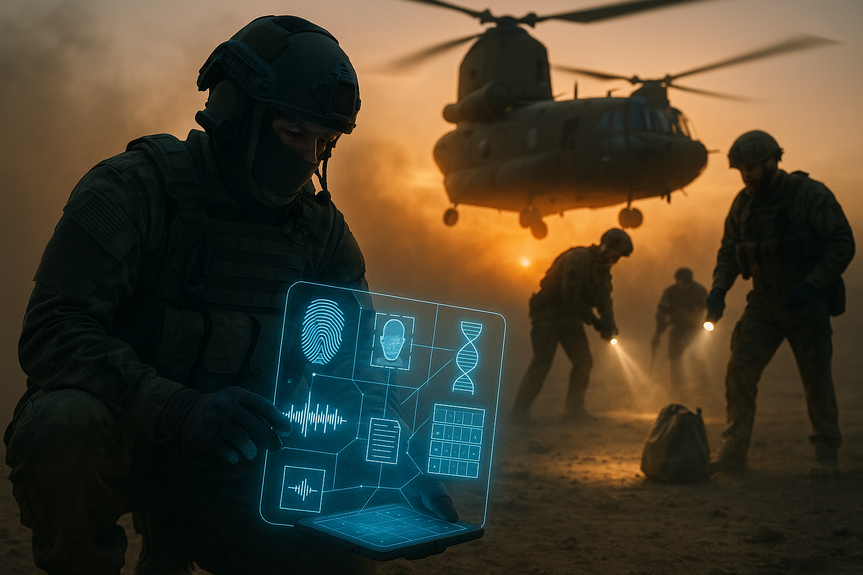
U.S. Special Operations Command is testing how AI for sensitive site exploitation can turn piles of photos, voices, and DNA into fast leads. The goal is to triage data on the spot, verify matches across trusted databases, and cut decision time from days to hours while humans stay in charge.
When special operators enter a target location, they leave with more than a name or a device. They gather faces, voices, documents, and device data. The command now wants AI to help sort that haul. The focus is simple: speed up triage, reduce errors, and surface the right clues at the right time.
Real-time facial recognition up to about 100 meters, across low light, glare, and cluttered backgrounds
Speaker identification that works with noisy, mixed audio from one or more talkers
Rapid DNA profiling that can be compared with trusted databases, helping inform hold-or-release choices within 24 hours
Automated triage of open-source intelligence, cellular and document exploitation, and data from unmanned systems
Integration with existing intelligence repositories and audit trails for chain-of-custody
Features that highlight intelligence gaps and flag risks that adversaries might use to identify friendly operators
Capture: Pull faces from bodycams, drones, and phones; record short voice clips; collect lawful DNA samples.
Triage: Use on-device or edge AI to rank likely matches and sort items by importance.
Decide: Send the best hits to human analysts for quick review before the team departs.
Fuse signals: Link faces, voices, and DNA with device contents and call patterns to build a fuller picture.
De-duplicate: Remove repeats and look-alikes to cut noise and reduce false alerts.
Cross-check: Compare matches against multiple databases with clear confidence scores and reasons.
Faster leads: Turn hours of manual sorting into minutes of AI-supported screening.
Better records: Maintain logs, evidence tags, and chain-of-custody information for legal use.
Human control: Keep analysts in the loop to validate matches before any action.
Human-in-the-loop at all decision points
Multi-source confirmation (face plus voice plus device link)
Clear confidence scores and explainable outputs
Auditing and red-teaming to spot bias and failure modes
Strict privacy and data protection aligned with law and policy
Domestically, facial recognition and other biometric tools raise privacy concerns. Errors can hurt people. The safer path is to treat AI as a smart filter that speeds checks against trusted data, while humans approve any action.
Edge AI that runs on small, rugged devices
Better speaker identification in noisy settings
Faster, portable DNA kits with reliable comparisons
Smarter fusion of open-source, cellular, and document data
Vendors that can integrate with existing databases, explain their models, and prove performance in hard conditions will stand out.
The payoff is clear. Hours of sorting can become minutes of focused review. Operators can act faster with more confidence. Analysts can spend time on judgment, not drudgery. Used well, AI for sensitive site exploitation can tighten the loop from capture to decision while keeping humans firmly in control.
(Source: https://defensescoop.com/2026/01/08/special-operations-ai-data-collection-site-exploitation-socom/)
For more news: Click Here
Why AI for sensitive site exploitation is rising
Sensitive site exploitation (SSE) turns raw finds into useful intelligence. In the past, this took time and many people. Today, data volume is bigger, and missions move faster. AI can scan images, audio, and files in seconds, then compare results to existing databases. It is not about removing humans. It is about giving teams a sharper, faster first pass, so analysts can focus on high-value leads.From rooms to databases
Operators now collect more than paper and laptops. They capture faces from cameras, voices from radios, and DNA swabs. These sources can connect to watchlists, law enforcement records, and military files. With AI for sensitive site exploitation, units can check a face, voice, or DNA sample against verified data and get a confidence score before they leave the scene.What SOCOM is asking for
The command’s request to industry calls for tools that can handle multiple inputs and work in tough conditions. Key asks include:How it changes the workflow
On target
Back at the command post
For analysts and prosecutors
Performance that matters in the field
Speed and accuracy are not nice-to-haves. They save time and reduce risk. Tools must work in dust, heat, wind, and low light. They need to handle partial faces, masked speakers, and crowded scenes. For DNA, rapid collection and matching helps avoid long delays and supports lawful, time-bound decisions. With AI for sensitive site exploitation, the first 10 minutes can unlock the next mission.Risks, limits, and guardrails
AI can make mistakes, and bias can creep in. That is why the focus is on verification, not autonomous targeting. Best practices include:Adversary learning and operator protection
SOCOM also wants to know what off-the-shelf tools others could use. If commercial systems can match a voice from social media or a face from a crowd, friendly forces must plan for that. AI can help reveal these risks, suggest countermeasures, and guide training to reduce exposure.What to watch next
The request outlines briefings, loaned devices, and training over several months. Industry will show prototypes and help teams test them. Expect progress in:FAQ
Q: What is SOCOM testing with AI for sensitive site exploitation?
A: SOCOM is testing how AI for sensitive site exploitation can turn photos, voice clips, and DNA samples into fast, actionable leads by triaging data on the spot and verifying matches against trusted databases. The command’s request for information specifically seeks tools to process biometrics, documents, open-source intelligence and communications-exploitation outputs.
Q: What is sensitive site exploitation (SSE) and how does AI fit into it?
A: SSE is the on-scene process where operators collect faces, voices, documents and device data to build intelligence packets for future missions or to support criminal prosecutions. AI for sensitive site exploitation is meant to provide a faster, initial pass that scans images, audio and files in seconds so human analysts can focus on high-value leads and verification.
Q: What specific capabilities is SOCOM asking industry to provide?
A: SOCOM’s request calls for AI for sensitive site exploitation tools including real-time facial recognition to identify people up to about 100 meters across varied lighting and backgrounds, speaker identification that works with noisy, mixed audio, and rapid DNA profiling that can be compared with existing databases to inform hold-or-release decisions within 24 hours. It also seeks automated triage of open-source, cellular and document exploitation data, fusion with unmanned-system outputs, integration with standing intelligence repositories, and audit trails to preserve chain of custody and flag intelligence gaps.
Q: How would AI change the workflow on target and at the command post?
A: AI for sensitive site exploitation would let operators capture faces, short voice clips and DNA and use on-device or edge models to rank likely matches and prioritize items for analyst review before the team departs. Back at the command post, systems would fuse faces, voices and device contents, de-duplicate repeats, and cross-check matches against multiple databases with clear confidence scores and audit logs for verification.
Q: What performance and environmental requirements must these tools meet?
A: Tools must operate reliably in dust, heat, wind and low light and handle partial faces, masked speakers and crowded scenes. Edge AI that runs on small, rugged devices and faster, portable DNA kits with reliable database comparisons were highlighted as priorities to reduce delays and risk.
Q: What safeguards and limits should govern use of AI for sensitive site exploitation?
A: Safeguards include human-in-the-loop decision points, multi-source confirmation such as face-plus-voice or device links, clear confidence scores and explainable outputs, plus auditing and red-teaming to spot bias and failure modes. The article stresses strict privacy and data protection aligned with law and policy and that AI for sensitive site exploitation should be used for verification and triage rather than autonomous targeting.
Q: How could adversaries’ use of similar technologies affect operator protection?
A: SOCOM is asking whether commercial systems could match a voice from social media or a face from a crowd, which could expose friendly operators if left unaddressed. AI for sensitive site exploitation can help reveal those intelligence gaps, suggest countermeasures and guide training to reduce exposure.
Q: What are the next steps and timeline for testing these AI capabilities?
A: SOCOM laid out an almost eight-month timeline of industry briefings, on-loan device deliveries and vendor-led training so teams can test prototypes and devices in realistic conditions. The evaluations will focus on proving edge AI on rugged devices, improved speaker identification in noisy settings, faster portable DNA kits and smarter fusion of open-source, cellular and document data.
Contents