AI News
17 May 2026
Read 9 min
How Claude Cowork legal AI tools streamline law firm work
Claude Cowork legal AI tools let firms automate rich legal research and speed up contract workflows.
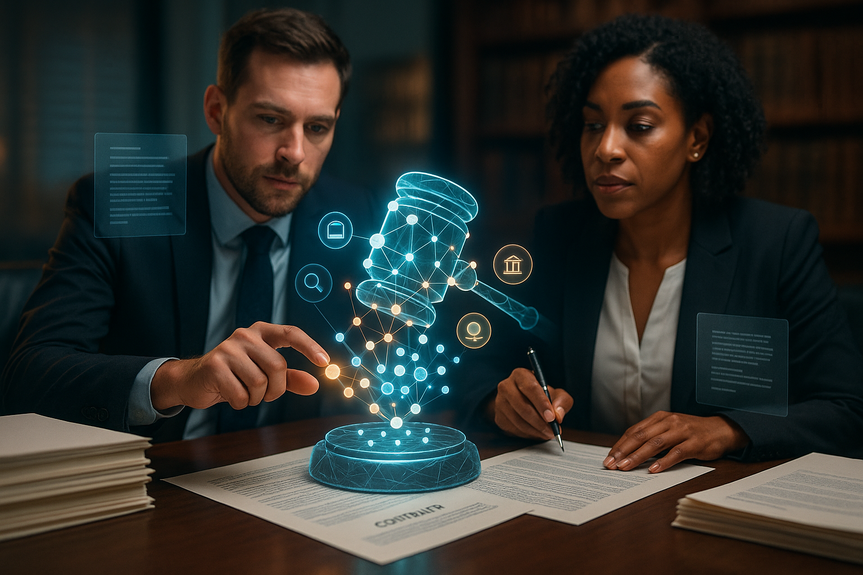
Anthropic’s Claude Cowork legal AI tools connect to popular law software so firms can search case law, manage contracts, and draft faster. The update adds integrations, prebuilt skills for areas like employment and privacy, and smoother workflows. It aims to cut routine hours while keeping lawyers in control.
Anthropic is pushing deeper into legal work by letting its AI plug into the software lawyers use every day. In February, a smaller launch drew big attention and even investor worries about a “SaaSpocalypse.” Now the company is expanding its reach so firms can automate more tasks without changing their core systems. With the latest Claude Cowork legal AI tools, the focus is speed, accuracy, and easy adoption.
CourtListener for open case law and docket data
Definely for contract review and clause navigation
Thomson Reuters’ Westlaw for premium legal research
Courtroom5 for litigation support
Box for secure document storage and sharing
Harvey, the OpenAI-backed legal platform
Anthropic also ships prebuilt skills for common practice needs:
Employment, privacy, and product law drafting and review
Clinic and law student support, such as memo drafting and issue spotting
Anthropic says giving an AI access to the tools lawyers use helps it act more like a trained operator. The result moves from a general helper to a purpose-built legal partner.
Connect accounts: Link Westlaw, Box, and other tools inside Cowork.
Set the matter: Provide client, jurisdiction, and goals.
Pull sources: Ask for cases, statutes, and prior work product.
Draft and compare: Generate memos, briefs, or contract redlines, then compare against clauses in Definely or files in Box.
Cite and verify: Check sources, pin cites, and reasoning before filing or sending.
Research memo: Query Westlaw and CourtListener for controlling cases, summarize splits, propose arguments, and surface citations with links.
Contract review: Import an NDA from Box, run clause checks with Definely, flag risk, and suggest edits that match firm playbooks.
Litigation prep: Build a timeline from dockets, label key events, and draft a status report for the client.
Privacy check: Map data flows against policy, list gaps, and draft notices or addenda.
Clinic support: Triage intake forms, spot issues, and draft first-pass letters under faculty review.
Over 20,000 people signed up for an Anthropic legal webinar, showing strong demand for AI in law.
Startups like Harvey and rival Legora reached multi‑billion valuations, while veterans Thomson Reuters and RELX ship their own AI features.
Anthropic aims to be the connective tissue in this ecosystem as its models improve.
For vendors, integration means stickier products and new use cases. For firms, it means fewer data silos and faster handoffs between research, drafting, and review.
Always verify citations, quotes, and jurisdiction relevance.
Log sources and prompt history for audit and privilege.
Control access to client data in Box and other stores.
Use red-teaming: test the model on past matters to spot weak spots.
Train teams on when to escalate from AI output to senior review.
Firms should define “AI-okay” tasks, like first drafts and clause comparisons, and “attorney-only” actions, like final filings and novel arguments.
Standard research memos with linked citations and jurisdiction filters
NDA and DPA reviews against a clause library
Deposition prep packets with case extracts and timelines
Client updates that summarize docket moves and risks
Hours saved per matter type and per associate level
Citation accuracy rate and correction time
Draft-to-final cycles and turnaround time
User adoption across practice groups
Start small, measure, and expand to higher-value matters as confidence grows.
The bottom line: Claude Cowork legal AI tools bring law-grade sources, contract utilities, and team workflows into one AI-driven desk. Used with care, they cut routine hours, raise consistency, and keep lawyers focused on judgment and strategy. For firms that move now, the gains should arrive fast—and compound.
What the Claude Cowork legal AI tools add now
Anthropic’s update centers on integrations and ready-to-use skills. The model can pull from trusted databases, draft with context, and organize work across teams. It now connects with tools lawyers already know, which lowers training time and reduces copy-paste steps. Key integrations include:How firms can put the update to work
Plug in, set context, and supervise
Getting value follows a simple pattern:Sample workflows
Why this matters for legal ops and vendors
The update hints at a shift from single-purpose apps to an AI layer that coordinates them. In February, investors feared that new AI features could weaken traditional software demand. This release shows a different path: connect to leading tools and let AI handle the glue work across them. Signals of momentum:Quality, risk, and guardrails
AI can speed work, but lawyers must stay in charge. Good safeguards include:Beyond law: a playbook for industry AI
The approach—connect an AI model to core industry systems, add skills, and orchestrate workflows—could spread to finance and healthcare. If it works in legal, expect similar bundles for claims, KYC, payments, EHRs, and imaging. The value comes from meeting experts inside the tools they already use.What this means for your firm today
Quick wins to target in 30 days
Metrics to track
(Source: https://www.businessinsider.com/anthropic-expands-legal-ai-tools-claude-cowork-2026-5)
For more news: Click Here
FAQ
Q: What are Claude Cowork legal AI tools?
A: Claude Cowork legal AI tools are Anthropic’s AI features that connect to popular law software so firms can search case law, manage contracts, and draft documents faster. The update adds integrations and prebuilt skills for practice areas like employment, privacy, and product law to automate routine tasks while keeping lawyers in control.
Q: Which legal platforms and databases does Claude Cowork integrate with?
A: Claude Cowork legal AI tools integrate with CourtListener, Definely, Thomson Reuters’ Westlaw, Courtroom5, Box, and the OpenAI-backed startup Harvey. These connections let the model pull case law and dockets, run clause checks, and access stored documents for research and drafting.
Q: What types of legal work can Claude Cowork help automate?
A: The Claude Cowork legal AI tools can handle research memos with linked citations, contract review and clause comparisons, litigation preparation like timelines and status reports, and privacy checks or drafting addenda. Firms can also use it for clinic and law‑student support such as memo drafting and issue spotting, while attorneys retain final oversight.
Q: How do firms implement Claude Cowork into their existing workflows?
A: Firms typically connect accounts for Westlaw, Box, and other tools inside Cowork, set the matter context with jurisdiction and goals, then pull sources and ask the model to draft and compare documents. The recommended workflow ends with citing and verifying sources and supervising outputs to ensure accuracy.
Q: What quality controls and guardrails should lawyers use with Claude Cowork?
A: Lawyers should always verify citations, quotes, and jurisdiction relevance, log sources and prompt history for audit and privilege, and control access to client data in connected stores like Box. Firms are advised to run red‑teaming tests, train teams on escalation, and define which tasks are “AI‑okay” versus “attorney‑only.”
Q: What quick wins can firms target in the first 30 days with Claude Cowork?
A: Quick wins include standard research memos with linked citations, NDA and DPA reviews against a clause library, deposition prep packets with case extracts and timelines, and client updates that summarize docket moves and risks. Tracking hours saved, citation accuracy, draft‑to‑final cycles, and user adoption can help measure impact.
Q: How does this release differ from Anthropic’s February launch?
A: The February launch acted as a general legal aid, while the new release bundles integrations and prebuilt skills so the AI behaves more like a custom‑tailored legal partner. The earlier launch also prompted investor concerns about AI’s impact on software, and the current update focuses on connecting to established legal tools and workflows.
Q: What does Claude Cowork mean for legal vendors and other industries?
A: Claude Cowork legal AI tools suggest a model where an AI layer coordinates existing industry systems, which can make vendor products stickier and reduce data silos for firms. If successful in law, Anthropic and others could apply the same playbook to industries like finance and healthcare to orchestrate workflows across specialist tools.
Contents