AI News
08 Dec 2025
Read 9 min
How comedians use AI tools to create viral comedy
how comedians use AI tools to produce viral sketches faster while keeping timing and creative control.
Curious about how comedians use AI tools to go viral? Comics like Jon Lajoie and King Willonius draft jokes themselves, then use chatbots, voice cloning, and video generators to animate ideas fast. AI speeds production and reach, while human timing, point of view, and edge still drive the laughs.
AI comedy looks new, but the core stays the same: people write jokes, machines help package them. Recent viral clips — a bass-voiced “talking baby,” fast-food parody songs, and oddball interviews — show how comics turn small ideas into finished bits in hours, not weeks. The result: more experiments, more posts, and more chances to hit.
Start with your angle: The comedian picks a topic and writes a short premise in their own words.
Refine with a chatbot: They test setups and structure, but keep their voice. Bots suggest lines; the human decides.
Prompt the visuals and audio: Image and video generators create scenes; voice tools deliver characters and narration.
Iterate: They tweak prompts, regenerate assets, and cut the best takes together.
Edit for timing: The comic trims beats and pauses, which still make or break the joke.
This is how comedians use AI tools without handing over the punch line. King Willonius uses prompts to build music, visuals, and voices for his parodies, but he begins with his own take. Jon Lajoie uses AI to animate ideas he wouldn’t film otherwise. Both treat AI as a studio, not a writer’s room.
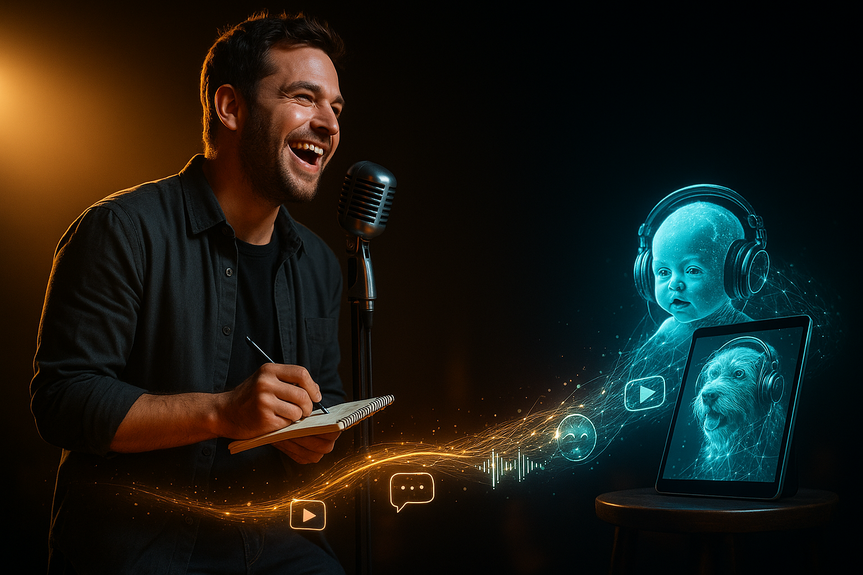
A baby host and a household dog in a studio riff.
Birds wearing jeans as a visual gag.
Jesus interviewing an Easter Bunny who has no clue who he is.
These are quick to produce, easy to post across platforms, and built to test audience reaction. If viewers laugh, the creator doubles down; if not, they move on the same day.
Copyright: Authors and performers have sued major AI firms, saying models used their work without consent.
Deepfakes: Families of famous comics object to AI clones that puppeteer a dead artist’s voice or face.
Satire of the tools: Shows like South Park mock the rise of fake videos and the chaos they cause.
Comedians who work with AI stress consent, credit, and care. They avoid cloning living or deceased artists without permission and aim for original characters or clear parody.
Write your premise first. Don’t ask a bot for jokes. Ask for structures, tags, or alternate wordings.
Use AI to prototype: storyboards, character art, temp voices, rough cuts.
Iterate small. Change one variable per pass: prompt, shot, pacing, or line read.
Edit beats by hand. Your timing is the joke.
Avoid voice cloning without consent. Build your own characters and styles.
Document prompts and sources. Protect your process and credibility.
Test with a small audience. Keep what lands; scrap what drags.
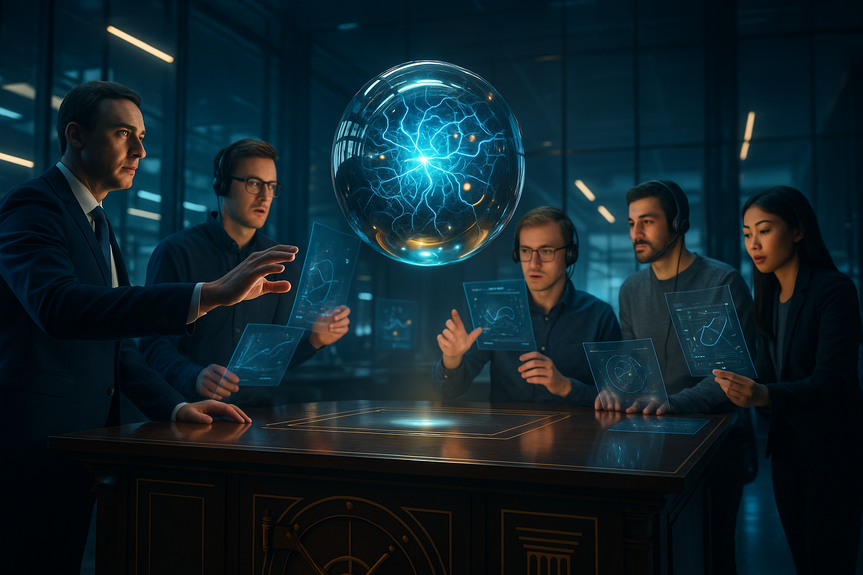
The future of AI comedy will likely be collaborative. Tools will get better at production. People will still handle taste, timing, and truth. The biggest wins will come from creators who know how comedians use AI tools to boost output while guarding the human spark.
In short, AI can frame, color, and project your bit, but you still aim the spotlight. When you understand how comedians use AI tools as helpers — not headliners — your voice stays sharp, your workflow gets faster, and your chances of going viral rise.
How comedians use AI tools today
A simple workflow that keeps the human in charge
Why bots aren’t funny on their own
Many chatbots can mimic joke formats, but they often miss the spark. Scholars note the results feel safe or “off,” because great humor needs risk, timing, and context. Comedians say bots help brainstorm or outline, yet they rarely deliver a fresh angle. The human point of view still sets the target and tone.Fast experiments lead to fresh sketches
AI lowers cost and time, so comics can try wild ideas:Ethical lines and legal fights
As tools improve, questions grow louder:Money, gatekeepers, and new stages
AI changed the path into show business. During the 2023 strikes, some comics turned to these tools, built audiences, and bypassed old pipelines. Venture firms now showcase AI-made sketches to highlight startups. Supporters say it’s like early CGI: scary at first, then standard. Others see a “Napster phase,” where rules lag behind use. Most comedians land in the middle: make cool things, respect artists, and keep the human leading.Practical tips to stay funny with AI
Keep the point of view, outsource the polish
For more news: Click Here
FAQ
Q: What is the basic workflow comedians follow when creating AI-assisted sketches?
A: A common workflow starts with a comedian writing a premise or angle, then refining it with a chatbot and using prompts to generate imagery, video, music and voices. This is how comedians use AI tools to prototype assets, iterate on prompts, and edit beats by hand so the human controls timing and delivery.
Q: Can AI write jokes on its own?
A: Comedians and scholars in the article say AI is not inherently funny and often misses the nuance, edge and context that make jokes land, with Jon Lajoie saying “it can’t write comedy.” Chatbots may suggest structures or alternate wordings, but this shows how comedians use AI tools as assistants rather than the source of punch lines.
Q: What kinds of AI features are typically used in these comedy workflows?
A: Creators commonly use chatbots to refine wording, image and video generators to create scenes, and music and voice tools to produce characters and narration. The article notes examples like Jon Lajoie testing ideas with ChatGPT and concerns about deepfakes from OpenAI’s Sora and voice cloning in cases such as the George Carlin dispute.
Q: How do comedians address legal and ethical concerns when using AI?
A: Many comedians stress consent, credit and care, avoiding cloning living or deceased artists without permission and documenting sources. Lawsuits and objections mentioned in the article — including Sarah Silverman joining authors suing chatbot makers and the George Carlin estate settling over a cloned-voice special — illustrate the legal risks.
Q: How does AI change the time and cost of producing comedic content?
A: AI lowers cost and speeds production, letting creators turn small ideas into finished clips in hours instead of weeks. That faster, cheaper workflow is a clear example of how comedians use AI tools to experiment quickly across platforms and test what lands.
Q: Will AI replace standup comedians or live performances?
A: The article suggests AI is unlikely to replace comedians anytime soon. Comics still control delivery, timing and point of view, and Jon Lajoie emphasized that editing and performance keep humans in charge of the jokes.
Q: What practical tips does the article offer for staying funny while using AI?
A: Write your premise first and use bots for structure, alternate wordings or prototyping rather than asking them to craft punch lines, then iterate one variable at a time and edit beats by hand because timing is crucial. Also avoid voice cloning without consent, document prompts and sources, and test sketches with a small audience before wider release.
Q: How can emerging comedians use AI to build an audience or bypass gatekeepers?
A: Some creators used AI during the 2023 strikes to cultivate audiences and produce viral parodies, with King Willonius learning tools to build an audience. Venture firms now showcase AI-made sketches and AI can help bypass traditional pipelines, though most comedians balance experimentation with respect for artists and legal limits.
Contents