Crypto
15 Jul 2026
Read 13 min
How crypto billionaires influence democracy and your vote *
how crypto billionaires influence democracy and what voters can do now to protect their vote today
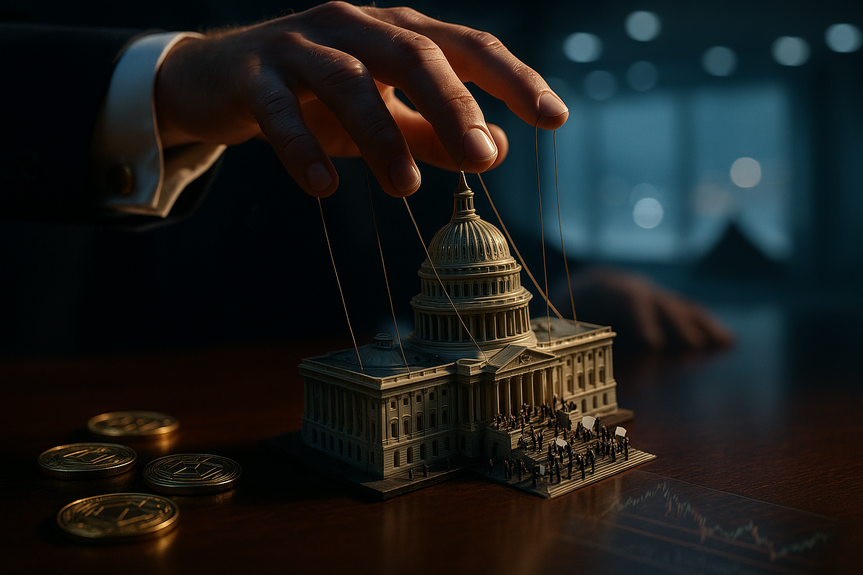
Here’s how crypto billionaires influence democracy: they convert digital wealth into political power through donations, media reach, and parallel “microstates.” A new BBC documentary follows their lobbying, conference circuits, and experiments like Liberland, showing why rules bend for the rich and how that tilt risks your vote.
A recent documentary profiles a new kind of political player: tech moguls who made fast money in crypto and now want a bigger say over laws, leaders, and even land. It opens on two facts that frame the stakes. A tiny group of the richest people hold wealth equal to half the planet. And in recent U.S. election cycles, crypto money has surged to the top tier of political giving. The film shows how crypto billionaires influence democracy in public, on stages and screens, and also in the shadows, through structures most voters never see.
How crypto billionaires influence democracy: money, media, and microstates
The first lever is money. Large, fast, and often harder to trace. Big donors do not cast more ballots than you do. But their checks shape which candidates run, which messages flood the air, and which bills advance. When a sector that promises “freedom” but resists oversight becomes the biggest donor in town, the rules of the game can shift toward light-touch regulation that helps the donors first. The second lever is media reach. Owning platforms, sponsoring news-like content, and headlining mega-conferences let these figures set the agenda. When an industry underwrites the loudest microphones, it can define what “innovation,” “liberty,” and “growth” mean—and what they do not. The third lever is law-by-design. If you cannot change a rule, you route around it. One path is financial engineering. The film follows a crypto founder who shows how a reverse merger can place a brand on a stock exchange without the usual scrutiny of a full listing. Another path is geography. A muddy corner of Europe becomes the stage for a “micronation” that promises no taxes, token-based voting, and hands-off regulation. It looks scrappy now. But the goal is clear: prove that private wealth can claim sovereignty and write rules from scratch. Understanding how crypto billionaires influence democracy starts with this mix of money power, message power, and jurisdiction shopping. The sum is greater than the parts.From lobbying to land grabs: the playbook in motion
Buying the megaphone
At giant crypto conferences, sponsorship buys more than booth space. It buys legitimacy. It buys a friendly crowd. It buys stage time for big names who can blend investing advice with political talking points. When the keynote is a political heir selling a family-branded token company, the line between policy and product blurs. Reporters ask who profits when investors also seek favors from the state. Some subjects wave off the questions. The show moves on. The message sticks.Writing the rules
Crypto advocates often argue that slow lawmakers do not “get” technology. That can be true. But “you do not get it” often masks a push for rules that help the already-helped. When a cash-rich sector funds campaigns and policy shops, it can steer debates toward self-certification, sandboxes with few teeth, or carve-outs that leave watchdogs toothless. Voters see “innovation.” Insiders see margin.Dodging the rules
When lobbying hits walls, some actors try to exit the system. Enter the “micronation” idea. In the film, a self-declared state promises a future city with no taxes and token-weighted votes. Buy more “merits,” gain more say. Police from a neighboring country raid the camp because the land is not theirs to claim. Yet the story matters because it reveals intent: create zones where private code, not public law, sets the limits.The ideology behind the push
This movement sells a simple story: CEOs are efficient. Democracy is messy. So let leaders run countries like companies. Some writers even argue for “monarch CEOs” who can issue orders and skip elections. The pitch is alluring to people who made fortunes by moving fast and breaking norms. It also ignores the basics that keep societies alive: bridges that do not fall, clean water, schools, and hospitals that serve everyone, not just token holders. Crypto campuses and bootcamps cheer this ethos with pep rallies and slogans about “freedom.” But who defines freedom? If freedom means no taxes, who funds the fire truck? If freedom means token votes, who counts as a citizen? The documentary’s travelogue—through boardrooms, tents, and bright expo halls—puts faces on these questions.What this means for your vote
Your ballot still counts the same as a billionaire’s. But your information feed does not. Your choices swim in currents pushed by money and media power. Here is where the tilt shows up:- Agenda-setting: If you only hear “regulation kills innovation,” you may not hear about consumers left with no recourse after hacks or rug pulls.
- Candidate filtering: Big donors can make or break primaries long before you see a general election ballot.
- Legal gray zones: If key players operate through offshore entities, shell firms, or reverse mergers, public oversight lags behind private gain.
- Conflict fog: When investors in political families’ ventures later receive favorable rulings, even if all legal, the pattern erodes trust. Denials may be issued. Doubt still grows.
- Tokenized voting schemes: Experiments that weigh votes by wallet size normalize the idea that money should buy more say.
How crypto billionaires influence democracy online
The web makes messaging cheap, fast, and precise. That helps honest debate. It also helps deep pockets flood the zone.- Influencer networks promote coins and candidates in the same breath, often without clear disclosures.
- Astroturf campaigns make a few funders look like a mass movement.
- Algorithmic amplification rewards outrage over evidence, turning policy into spectacle.
The human stakes beyond the screen
The documentary reminds us that democracy is not only about ballots. It is about the rule of law that applies to rich and poor alike. When a sector prides itself on “code is law,” it can forget that real people live outside the code. Workers need health care. Roads need repairs. Small investors need recourse after fraud. If a “micronation” lets only the rich vote, it is not a model for the world. It is a mirror for plutocracy. The wealth gap matters here. If a dozen people hold as much as half of humanity, then even small legal bends toward the top have huge effects. A tax break here. A policy nudge there. Over time, public trust drains out. People tune out. That vacuum is where conspiracy talk thrives, and where the loudest bidder can buy the room.Practical guardrails that protect voters and markets
Democracy does not need to fear technology. It needs to update the guardrails so fair rules win and good ideas flourish.- Real-time transparency: Disclose large crypto donations and Super PAC spending in near real time, with machine-readable data.
- Conflict checks: Require clear, public recusal and divestment rules for officeholders and families tied to crypto ventures.
- Audit trails: Mandate independent audits for major token issuers and exchanges that lobby lawmakers.
- Ad disclosures: Label paid political content across influencer networks, with penalties for hiding sponsors.
- Jurisdiction clarity: Close loopholes that let offshore shells steer policy at home without equal accountability.
- Public-interest funding: Invest in civic media and digital literacy so voters can spot hype and verify claims.
For more news: Click Here
FAQ
Q: What is the documentary “The Tech Billionaire Takeover” about?
A: The documentary follows tech billionaires who used crypto wealth to seek greater political influence and experiments in jurisdiction, and the reviewer describes it as more entertaining than terrifying. It shows how crypto billionaires influence democracy through donations, media reach, and projects such as micronations and conference lobbying.
Q: How do crypto billionaires use money to shape politics?
A: Large, fast, and often harder-to-trace crypto donations have surged to the top tier of political giving and can determine which candidates get support and which bills advance. The article explains that those checks shape the messages voters hear and push for lighter-touch regulation that benefits donors.
Q: How do media ownership and conferences amplify their influence?
A: Owning platforms, sponsoring news-like content and headlining conferences buys stage time and legitimacy, letting figures set agendas and blur lines between product promotion and policy. The film points to events like Token 2049 and sponsorships where keynote speakers and investor-backed booths shape public narratives.
Q: What is Liberland and why does it matter to this story?
A: Liberland is a self-declared micronation on a muddy Danube peninsula promoted by crypto advocates as a tax-free, lightly regulated experiment that currently consists of tents and legal disputes with Croatian police. The documentary uses Liberland to illustrate jurisdiction shopping and token-weighted voting schemes that aim to test whether private wealth can claim sovereignty.
Q: What financial tactics are shown to dodge regulation?
A: The film shows financial engineering such as reverse mergers, illustrated by Justin Sun getting Tron listed on Nasdaq by buying a listed company and renaming it, which can sidestep usual scrutiny. It also highlights offshore entities, shell firms and other structures that slow public oversight.
Q: How does this activity affect ordinary voters and elections?
A: Your ballot still counts the same as a billionaire’s, but voters’ information feeds and the agenda-setting power of money and media can skew which issues and candidates dominate. The documentary warns this gradual capture filters candidates, creates legal grey zones and erodes public trust over time.
Q: What ideology motivates attempts to replace democratic norms?
A: The documentary describes an ideology that celebrates CEOs as efficient decision-makers and views democracy as messy, with some writers advocating “monarch CEOs” or corporate-style rule. That pitch, often cheered at crypto campuses and bootcamps, ignores public goods like infrastructure and health care that sustain societies.
Q: What guardrails does the article recommend to protect voters and markets?
A: Suggested measures include real-time transparency for large crypto donations, clear conflict-of-interest and recusal rules for officeholders, independent audits for major token issuers and exchanges, and stronger ad disclosures across influencer networks. It also recommends closing offshore loopholes and investing in civic media and digital literacy so voters can spot hype and verify claims.
* The information provided on this website is based solely on my personal experience, research and technical knowledge. This content should not be construed as investment advice or a recommendation. Any investment decision must be made on the basis of your own independent judgement.
Contents