AI News
13 May 2026
Read 7 min
How FDA HALO AI data platform accelerates FOIA processing
FDA HALO AI data platform cuts FOIA processing time, boosting efficiency by 85% for 12,000 requests
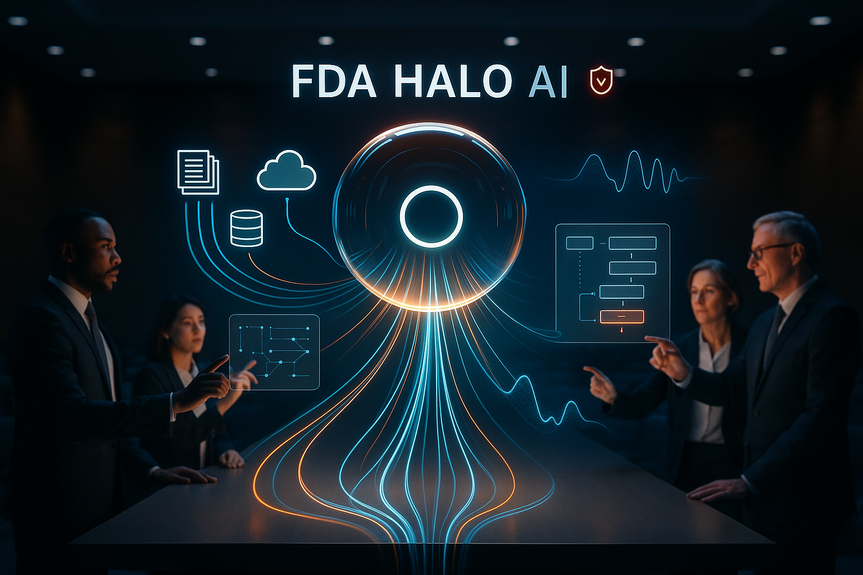
The FDA HALO AI data platform connects more than 40 agency data sources and links with Elsa 4.0 to cut manual work, unify records, and speed Freedom of Information Act (FOIA) responses. Officials said it has improved FOIA processing efficiency by about 85% while keeping strict security and center-level data controls.
FDA leaders revealed a big step in data modernization. They launched a single platform that pulls together applications, submission data, and portals across all centers. Staff can now query documents and build workflows without uploading files for each chat. The plan aims to meet fast-rising FOIA demand and support smarter oversight.
Centralizes request intake and indexing so staff see the full scope right away.
Classifies topics and identifies likely custodians to reduce back-and-forth.
Searches across centers to find responsive records quickly.
Flags sensitive data and supports AI-assisted redaction with human review.
Routes tasks to the right owners and tracks status to prevent delays.
Builds response packets and logs decisions to support appeals and consistency.
With the FDA HALO AI data platform in place, the agency reports about an 85% gain in FOIA processing efficiency versus manual methods. That matters as annual requests reach roughly 12,000 and grow about 20% each year. The result should be faster, more consistent responses to the public.
Faster transparency: Quicker FOIA turnarounds improve access to records.
Better consistency: Central data and tracked workflows reduce variation.
Smarter oversight: Risk signals support targeted actions that protect health.
Less friction: Fewer duplicate uploads and smoother collaboration inside FDA.
Stronger protection: Segmented access and robust redaction guard sensitive data.
Unifies more than 40 FDA systems into one secure, segmented platform.
Integrates with Elsa 4.0 to enable chat-driven queries and workflows.
Delivers about an 85% FOIA processing efficiency boost, per officials.
Enhances risk detection for imports and potential adulteration.
Supports clearer summaries and cross-center visibility for faster decisions.
The FDA HALO AI data platform signals a practical shift: unify data, keep it secure, and use AI to cut manual steps. Paired with Elsa 4.0, it is already reshaping FOIA processing and setting the stage for smarter, faster oversight that benefits patients, industry, and the public.
(Source: https://www.raps.org/resource/fda-officials-discuss-new-ai-tool-halo-other-applications-of-ai.html)
For more news: Click Here
Inside the FDA HALO AI data platform
Unified data foundation
FDA built one data backbone for the whole agency. It aggregates records from more than 40 systems. It brings submissions, reviews, and operational data into one place. Teams gain a shared view while each center keeps control of its own materials.Security by design
The platform enforces the highest security standards, according to agency officials. Data is compartmentalized and segmented by center. Role-based access and audit trails help protect sensitive information, including trade secrets and personal data.Linked with Elsa 4.0
HALO now works with the latest Elsa release. Staff can ask questions across sources, trigger workflows, and keep context. They no longer need to upload the same files to each chat. This saves time and reduces errors during document handling.Why it speeds up FOIA responses
From intake to release, faster and safer
Beyond FOIA: early wins across the agency
Finding risk signals in trade and imports
Leaders said AI helps spot unusual patterns in import data and can point to fraud or economically motivated adulteration. This supports smarter targeting and faster interventions.Sharper briefings and decisions
Teams can distill long records into clear summaries and dashboards. AI can surface connections that might be hard for people to see. This can make reviews and policy decisions more evidence-driven.Inspections, with care
Officials noted AI is not yet a live tool for inspectors in the field. However, it can inform planning and risk prioritization before and after inspections.What this means for industry and the public
Key takeaways on the FDA HALO AI data platform
FAQ
Q: What is the FDA HALO AI data platform and what does it do?
A: The FDA HALO AI data platform is a unified data backbone that aggregates records from more than 40 FDA systems to bring submissions, reviews, and operational data into one place. It allows staff to query documents, build workflows, and avoid manually uploading the same files for each chat.
Q: How does the FDA HALO AI data platform speed up FOIA processing?
A: By centralizing request intake and indexing, classifying topics to identify likely custodians, searching across centers for responsive records, and flagging sensitive data for AI-assisted redaction with human review, the FDA HALO AI data platform reduces back-and-forth and speeds record retrieval. Officials report about an 85% gain in FOIA processing efficiency compared with manual methods.
Q: What security measures protect data within the FDA HALO AI data platform?
A: Officials said the platform enforces the highest level of security with data compartmentalized and segmented by center. Role-based access controls and audit trails are used to protect sensitive information, including trade secrets and personal data.
Q: How does the HALO platform work with Elsa 4.0 and why is that integration important?
A: The FDA HALO AI data platform is integrated with Elsa 4.0 so staff can ask questions across consolidated sources, trigger workflows, and keep context without re-uploading documents for each chat. That linkage reduces duplicate document handling and preserves context across queries.
Q: What measurable improvements has the FDA reported since deploying HALO for FOIA requests?
A: Agency officials reported about an 85% improvement in FOIA processing efficiency compared with manual processes. They also noted the platform addresses roughly 12,000 annual FOIA requests that are increasing about 20% per year.
Q: Can inspectors use the FDA HALO AI data platform during on-site inspections?
A: Officials said HALO is not yet used as a live tool during on-site inspections because it would be difficult for an inspector to integrate the information during an inspection. They added the platform can inform inspection planning and help detect anomalous patterns before or after inspections.
Q: How does the FDA HALO AI data platform help detect risks like economically motivated adulteration?
A: By aggregating import and submission data across centers, the FDA HALO AI data platform helps spot anomalous patterns that can indicate fraud or economically motivated adulteration. FDA leaders said these risk signals support smarter targeting and faster interventions.
Q: What benefits does the FDA HALO AI data platform offer to the public and industry?
A: The platform enables faster transparency through quicker FOIA turnarounds, better consistency from centralized data and tracked workflows, and smarter oversight via improved risk detection and clearer summaries. Officials also said it reduces duplicate uploads and strengthens protections around sensitive data.
Contents