AI News
02 Feb 2026
Read 15 min
How implementing AI in national education systems saves time
Implementing AI in national education systems cuts grading time, tailors instruction, freeing staff.
Implementing AI in national education systems saves teachers and students hours each week by automating routine work, speeding feedback, and personalizing practice. Countries that do this well start with teacher-focused rollouts, set up strong training and safety, and track time-to-task metrics. The result: more teaching, less paperwork, and better learning outcomes.
Schools do not only need new tools. They need time. As AI grows more capable, a gap appears between what models can do and what busy classrooms can use. Education can close this “capability overhang.” By implementing AI in national education systems, ministries turn potential into daily benefits: faster planning, quicker grading, and timely support for every learner.
The shift is already underway. OpenAI’s Education for Countries works with governments and university consortia to embed research, training, and safe tools across public systems. Early deployments in places like Estonia show how national scale can deliver time savings, better feedback, and stronger equity when teachers lead the change and students get guided access.
Draft newsletters and parent updates in the right tone
Summarize attendance or behavior notes into short briefs
Create meeting agendas and follow-up actions
Turn ministry guidance into simple checklists for schools
Generate scope-and-sequence plans with learning goals
Adapt the same lesson for multiple reading levels
Create practice sets with step-by-step hints
Produce rubrics and model answers for common tasks
Rubric-aligned comment suggestions for writing
Automated checks for short-answer accuracy
Personalized hints for math and science problems
Quick re-teach prompts for common errors
Adaptive practice sets that match each student’s level
Explain-again prompts in clear, simple language
Multi-language supports for new arrivals
Study plans that blend quizzes, notes, and goals
Create simple “first 10 prompts” playbooks
Offer weekly clinics for real class workflows
Capture and share teacher-created prompt libraries
Introduce AI literacy lessons early in the term
Use honor statements and process logs for assignments
Design tasks that require explanation and revision, not copy-paste
Age-appropriate behavior settings and topic filters
Student-facing tips on safe prompts and reporting concerns
Teacher guides for AI literacy and digital citizenship
Define allowed uses and data retention policies
Require single sign-on and role-based permissions
Log prompts and outputs for audits and support
Publish a transparent model of responsibilities
Micro-sessions on prompts that cut planning time
Real rubrics and student work in practice activities
Coaching cycles that turn wins into shared norms
Lessons on verifying facts and spotting errors
Process logs that show drafts, prompts, and changes
Reflection prompts: What did AI add? What did you decide?
Set a clear goal: save time for teaching and improve feedback speed.
Pick priority workflows: planning, feedback, parent communication.
Start with teachers: accounts, short training, quick wins.
Draft simple policy: allowed uses, data rules, student norms.
Launch pilots in secondary schools with AI literacy built in.
Provide model prompts and assignment templates for common subjects.
Measure time saved and feedback turnaround, not just usage stats.
Share success stories across regions to spread good practice.
Invest in certifications to build system-wide capacity.
Review safety, privacy, and equity every term and refine.
Use step-by-step tasks and think-aloud checks
Combine in-class work with at-home revision
Assess reasoning and evidence, not just final answers
Require citation and cross-checking
Use rubrics that reward source quality
Set class norms for verifying facts
Limit AI use on certain stages of an assignment
Ask students to compare their answer with AI’s and justify choices
Include low-tech tasks that test core fluency
Offer device lending and after-school access
Use readable, low-jargon guides for parents
Monitor adoption across regions and close gaps
Teacher time saved on planning, grading, and admin
Feedback turnaround time and revision rates
Student engagement and completion rates
Learning gains on formative and summative assessments
Equity indicators: access, usage, outcomes by region and group
Cost per student and cost per hour saved
Use simple dashboards. Report wins and gaps. Adjust policy and training every term. Share open research results to help other systems improve.
Implementing AI in national education systems: where time gets saved
Administration and paperwork
Teachers spend many hours on forms, emails, and data entry. AI can draft messages to parents, outline meeting notes, and summarize student records for quick review. Staff can generate schedules, trip plans, and policy summaries in minutes. Leaders can digest long reports and pull action points without reading every line.Lesson planning and content creation
Planning takes time. AI helps teachers design unit outlines, daily objectives, and activities aligned to standards. It produces examples, starter problems, rubrics, and reading passages at different levels. When standards change, AI can update lesson maps and suggest fresh resources without starting from scratch.Assessment and feedback
Feedback speed shapes learning. AI can draft comments on essays, provide hints on coding tasks, and auto-check short answers. Teachers still approve the final grade and feedback, but they start from a strong draft. Students get quicker guidance and can revise sooner, which improves learning cycles.Student support and personalization
Students learn at different speeds. AI can suggest practice based on recent performance, explain a concept in simpler words, or translate steps into a learner’s first language. Study modes encourage spaced practice, retrieval, and reflection. This frees teachers to focus on coaching and small-group help.A phased rollout that respects classrooms
Large systems need a staged plan. National rollouts work best when they start with teachers and expand carefully to students. In higher education, students can access campus-wide tools. In high schools, small pilots help align with local curricula and safety needs before scale-up.Start with educators
Teachers lead culture. Give them accounts, training, and office hours first. Provide model prompts for planning, assessment, and parent communication. Share short videos and practice tasks they can try in 10 minutes. Let early adopters mentor peers.Expand to students with guardrails
Student access should grow from pilot groups to full grades. Work with local leaders to ensure fit with curriculum and exams. Set clear norms: students can use AI to brainstorm, outline, and check reasoning, but they must show their steps and reflect on changes.Protect young people and uphold safety
Safety improves when design, guidance, and partnership come together. Systems can use age-appropriate model behavior, content filters, and educator resources. Partnerships with groups like Common Sense Media help schools teach safe and responsible use in plain language.Governance, privacy, and procurement
Strong governance saves time later. Ministries can set standards for data protection, identity management, accessibility, and audit logs. Procurement checklists help districts pick tools that meet national rules and reduce integration headaches.Evidence and early outcomes from national pilots
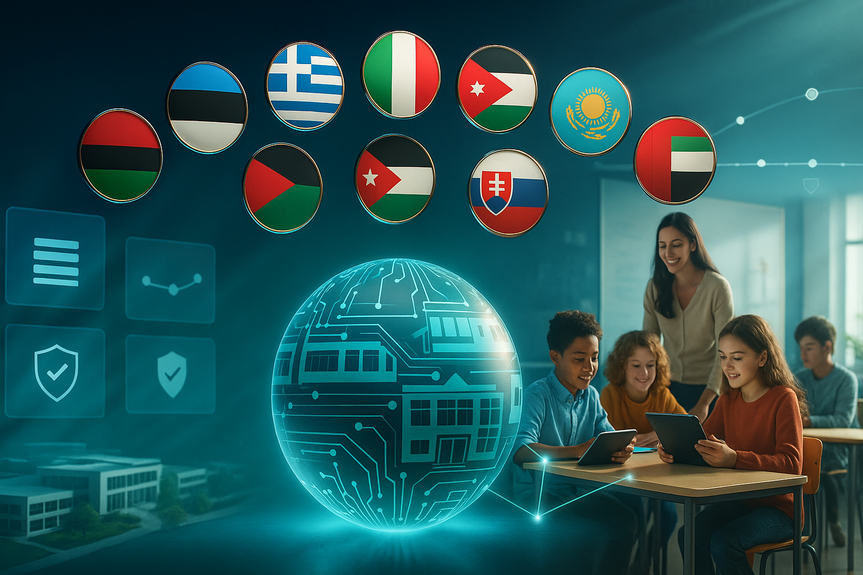
Countries are testing at scale. The first cohort in OpenAI’s Education for Countries includes Estonia, Greece, Italy’s Conference of University Rectors (CRUI), Jordan, Kazakhstan, Slovakia, Trinidad & Tobago, and the United Arab Emirates. These partners aim to study real-world gains: teacher productivity, student outcomes, and equitable access. Estonia deployed ChatGPT Edu across public universities and secondary schools. In the first year, it reached tens of thousands of students, educators, and researchers. A multi-year study with the University of Tartu and Stanford follows learners over time to see how AI shapes learning outcomes. This mix of practice and research helps leaders make better policy and design smarter programs. National pilots also show the value of a clear sequence. Systems that start with professional development see smoother adoption. Teachers who use AI weekly for planning are more likely to try AI for feedback next. Student pilots that include AI literacy reduce misconduct and improve the quality of drafts and reflections.Building capacity: certifications, training, and literacy
Time savings stick when people gain skills. Training should be simple, practical, and tied to daily tasks. OpenAI Academy and ChatGPT-based certifications give educators and students a way to learn core AI skills and show proof of ability to employers and schools.Teacher professional learning
Focus on workflows, not features. Teachers want to save hours and improve clarity. Training should mirror the school calendar and major tasks: planning units in August, feedback strategies in October, exam reviews in April. Short, job-embedded sessions work best.Student AI literacy
Students should learn how to ask good questions, check outputs, and cite use. Teach the limits of models and the value of human judgment. Show students how to turn AI hints into improved drafts, not replacements for thinking.University and workforce links
Higher education can align AI skills with job needs. Certifications signal readiness to use AI at work. This helps close skills gaps as studies project that many core skills will change by 2030, driven by AI advances. Universities can connect research on learning with practice in classrooms.A practical playbook for ministries and university consortia
Risks and how to manage them
Academic integrity
Copy-paste is a risk. Redesign tasks to value process and explanation. Ask for drafts, notes, and reflection. Make class time include creation, peer review, and oral defense.Bias and accuracy
Models can miss context or reflect bias. Teach verification. Encourage multiple sources. Keep a human in the loop for grading and sensitive decisions.Over-reliance and skill atrophy
Students may lean on AI too much. Set guardrails. Use AI for brainstorming and hints, but require original steps and personal voice. Celebrate draft-to-draft growth.Equity and access
Access must be fair. Provide school-based devices and connectivity. Use simple interfaces. Train families on safe use. Translate guidance into community languages.Measuring impact: KPIs that matter
Time savings are the headline, but they must link to learning. Track both process and outcomes.What success looks like in five years
Teachers spend most of their time on teaching, not paperwork. Students get fast, clear feedback and practice at the right level. Leaders can see what works and scale it quickly. National partners share tools, prompts, and research across borders. Programs like NextGenAI, ChatGPT Edu, and study modes help universities and schools build a shared base of evidence. Partnerships with teacher unions and education groups support teacher-led adoption. Countries in the first cohort show practical paths that others can follow. The big picture remains simple. When schools save time, learning improves. When teachers get support, they try new ideas. When students receive faster feedback, they grow. With clear governance and strong training, implementing AI in national education systems turns a powerful technology into daily gains that every classroom can feel.(Source: https://openai.com/index/edu-for-countries/)
For more news: Click Here
FAQ
Q: What are the main time-saving benefits of implementing AI in national education systems?
A: Implementing AI in national education systems saves teachers and students hours each week by automating routine work, speeding feedback, and personalizing practice. The result is more teaching time, less paperwork, and faster support for learners.
Q: How should countries start rolling out AI in classrooms to support teachers and students?
A: Rollouts typically begin by equipping educators with accounts, training, and short practice tasks so teachers lead adoption. Student access then expands through small, curriculum-aligned pilots with safety guardrails and local collaboration.
Q: Which classroom tasks can AI automate to reduce teacher workload?
A: AI can automate administrative tasks like drafting parent messages, summarizing records, creating meeting agendas, and generating schedules, freeing time for teaching. It also supports lesson planning, creating differentiated practice sets, and producing rubrics and model answers that teachers can refine.
Q: How does AI change assessment and feedback processes in schools?
A: AI accelerates feedback by drafting rubric-aligned comments, auto-checking short answers, and providing personalized hints so students can revise sooner. Teachers still approve final grades and use AI drafts as a starting point to increase feedback frequency and improve learning cycles.
Q: How can ministries measure the impact of implementing AI in national education systems?
A: Ministries should track KPIs such as teacher time saved on planning and grading, feedback turnaround time, student engagement and completion rates, and learning gains on formative and summative assessments. Equity indicators, cost per student, and simple dashboards to report wins and gaps help leaders adjust policy and training each term.
Q: What governance and privacy measures are important when adopting AI in education?
A: Strong governance includes clear data protection and retention policies, identity management, single sign-on, role-based permissions, and audit logs for prompts and outputs. Procurement checklists and published responsibilities reduce integration headaches and help districts choose compliant tools.
Q: How do pilots and research inform safe, effective scaling of AI in education?
A: National pilots and longitudinal research partnerships—such as studies with universities—measure teacher productivity, student outcomes, and equitable access as AI is introduced. Early results show systems that start with professional development and include AI literacy in student pilots see smoother adoption and improved draft quality.
Q: What training and certification options support sustained use after implementing AI in national education systems?
A: Training should be practical, tied to daily workflows, and delivered in short, job-embedded sessions timed to the school calendar, with micro-sessions on prompt design and coaching cycles. Programs like OpenAI Academy and ChatGPT-based certifications provide structured paths for educators and students to build skills aligned with workforce priorities.
Contents