Crypto
05 Dec 2025
Read 13 min
How to Detect Malaysia crypto mining electricity theft 2025 *
Malaysia crypto mining electricity theft 2025 helps teams to detect meter tampering and shut off rigs.
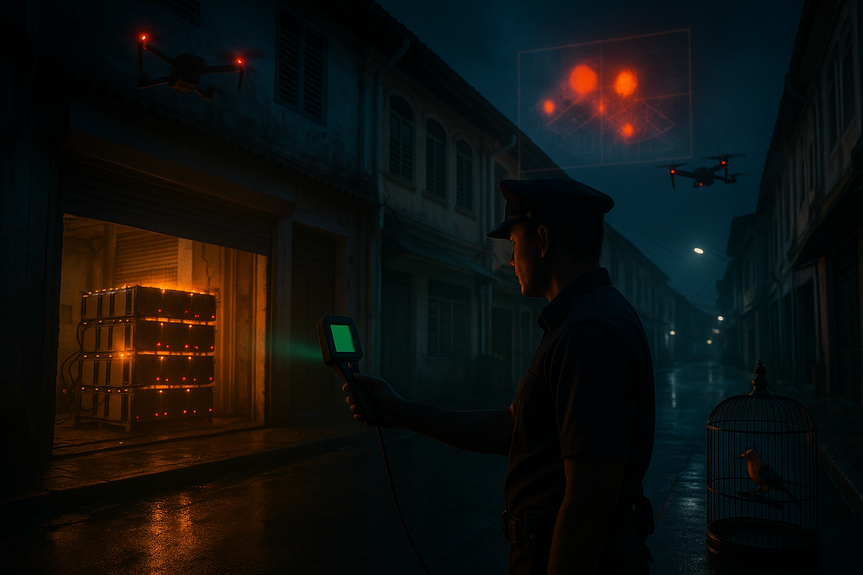
Authorities use drones, smart meters, and data analytics to spot Malaysia crypto mining electricity theft 2025. Look for unexplained load spikes, hot roofs on thermal scans, and tampered meters. This guide shows homeowners, businesses, and utilities how to detect, verify, and report illegal mining while staying safe.
Illegal crypto mining gangs are stealing power at scale and putting neighborhoods at risk. In Malaysia, officials say losses have reached massive sums as hidden farms overload lines, spark fires, and damage transformers. This guide explains how detection works from the sky down to the street, what red flags to watch for, and how to report suspicious sites without taking personal risks.
Fly at night or pre-dawn to reduce false signals from sun-warmed roofs.
Compare each block’s average roof temperature and flag outliers.
Match hot spots with power feeder maps to plan ground checks.
Tip: Pair thermal images with visible light photos. Look for covered windows, odd ventilation holes, and large external fans.
Spot sudden load jumps at night that do not match normal usage patterns.
Track long, flat demand curves that stay high for 20–24 hours per day.
Measure technical versus non-technical losses on each feeder. Rising losses with no known cause signal theft.
Look for transformer temperature drift and frequent fuses blowing.
A simple rule: big, steady loads with no business reason deserve a closer look.
Inspect meters for bypass wires, magnets, broken seals, and double feeds.
Listen for constant fan noise or a low mechanical hum behind doors.
Smell for hot plastic or ozone, which can mean overheated cables.
Look for heavy-gauge wires entering through side walls or roofs.
Important: Do not touch any live equipment. Only licensed officers should open panels or pull fuses.
Windows always closed, blinds down, AC units running in cool weather.
Continuous fan noise day and night, sometimes masked by music or nature sounds.
Delivery of large boxes, especially computer gear or racks, at odd hours.
Heat shimmer coming from vents or rooftops at night.
Lights rarely switch on and off, but the building still seems active.
Frequent trips by technicians carrying cables or tools, not the usual tenants.
Never confront occupants. Your safety comes first. Share time, location, and what you observed.
Rank feeders by losses, outages, and complaints.
Overlay drone coverage grids on the top 10% risk zones.
Create a hotline and a simple web form for anonymous tips.
Run night drone flights over high-risk blocks and industrial parks.
Use smart meter data to score addresses by abnormal usage shape.
Send inspection teams with law enforcement to verify tampering.
Cut illegal connections, seize rigs when the law allows, and document evidence.
Publicize arrests and penalties to raise the cost of theft.
Install anti-tamper meters and hardened service drops in hot zones.
Fighting Malaysia crypto mining electricity theft 2025 requires both speed and consistency. Quick action shrinks the window for thieves. Consistent follow-up prevents repeat offenses.
Steady 24/7 draw: ASIC rigs pull near-constant power.
Step-wise changes: power jumps when multiple rigs start or stop in blocks.
Night bias: operations often push more load after dark to avoid attention.
Localized hot spots under roofs and along exhaust paths.
Multiple vents pushing warm air at consistent temperature.
Monotone fan roar, 60–70 dB at close range, little variation.
Masking sounds outside: recordings of birds, rain, or white noise.
Transformers run hot and fail sooner, causing outages and sparks.
Cables can melt and arc, igniting nearby materials.
Improvised cooling can leak water onto live equipment.
Fast detection protects lives, not just revenue. Clear procedures and trained teams are essential.
Harsher penalties for meter bypass and commercial theft.
Mandatory anti-tamper seals and remote disconnect meters in hot zones.
Streamlined warrants for suspected high-load theft addresses.
Public dashboards that show outages and loss reductions to build trust.
Energy programs that channel legitimate miners into regulated, paid supply with clear tariffs and demand limits.
When legitimate options exist, more operators choose the legal path. When enforcement is certain and visible, fewer risk theft.
Screen tenants and verify business activity matches power use.
Require access to meter rooms and conduct monthly walkthroughs.
Install sub-metering and alerts for abnormal after-hours spikes.
Include explicit clauses banning unapproved high-load equipment.
Report suspicious modifications to wiring or ventilation.
Rank new leads by risk and plan inspections.
Update maps after each raid or disconnection.
Share patterns so analysts refine models and crews adjust tactics.
Clear, simple reporting routes keep communities engaged and safe. Transparent updates build public support.
In short, the methods are proven: see the heat, read the data, verify on the ground, and act fast. To investigate Malaysia crypto mining electricity theft 2025, authorities and utilities should blend technology with steady enforcement and strong communication.
Illegal crypto mining will keep evolving, but so will detection. With smart tools, safe reporting, and firm penalties, the grid can stay reliable and fair. To curb Malaysia crypto mining electricity theft 2025, everyone—utilities, businesses, and neighbors—has a role: observe, verify, and report without taking risks.
(Source: https://www.bloomberg.com/news/articles/2025-12-03/bitcoin-btc-miners-hunted-after-stealing-1-billion-power-from-malaysia-grid)
For more news: Click Here
Why illegal mining grows—and why it is dangerous
Bitcoin mining rigs need cheap electricity and steady cooling. When miners do not want to pay for power, they tap into the grid illegally. They hide rigs in shop lots, warehouses, and empty homes. They run them at night to avoid attention. Some even play nature sounds outside to cover the constant fan noise inside. This theft hurts everyone. It raises network losses, increases the chance of blackouts, and can cause fires. It also shifts costs onto honest users. In Malaysia, officials have documented widespread theft by rogue farms. The scale of Malaysia crypto mining electricity theft 2025 shocked many, and it has pushed authorities to adopt high-tech tools and faster response.Detection playbook for Malaysia crypto mining electricity theft 2025
Fighting power theft is a cat-and-mouse game. The best results come from combining sensors, data, field checks, and safe reporting. Here is a clear playbook that works at city scale and at the neighborhood level.Thermal drone sweeps
Drones detect heat that the human eye cannot see. Mining rigs turn power into heat 24/7. Roofs and walls above a hidden farm glow hotter than similar buildings nearby.Smart meter and feeder analytics
If you have smart meters, use them. If not, use feeder-level data and transformer readings. Illegal sites often bypass the meter, but the grid still “feels” the load.Ground verification: what officers check
After a drone or data flag, a careful on-site check confirms risk. Trained teams use handheld sensors to sniff unusual current flow and heat near service lines, meters, and panels.Neighborhood red flags you can see (and safely report)
You do not need special tools to notice warning signs. If several signs appear at one address, report them to your utility or local authorities.Utility action plan: 90 days to impact
Here is a practical plan for power companies seeking quick wins and lasting deterrence.Phase 1: Map and prioritize (Weeks 1–3)
Phase 2: Detect and verify (Weeks 4–8)
Phase 3: Enforce and deter (Weeks 9–12)
Technical clues that set crypto mines apart
Even when miners try to hide, their rigs leave a footprint. These signals help analysts and inspectors focus efforts.Load signature
Thermal pattern
Sound profile
Safety risks and why fast response matters
Illegal wiring can turn deadly. Overloaded circuits and poor ventilation raise fire risk. Hidden mines share walls with homes, shops, and schools.Policy levers that reduce repeat offenses
Enforcement alone is not enough. A balanced policy lowers incentives and makes it harder to hide.How businesses can protect their sites
Landlords and business owners can lose equipment or face fire risk if tenants run secret mines. Simple checks reduce exposure.A coordinated model that works
The most effective programs tie together drones, data, field teams, and public tips. Weekly cross-team reviews help:FAQ
Q: How do authorities detect illegal crypto mining operations?
A: Authorities combine thermal drone sweeps to find unexpectedly hot roofs, smart meter and feeder analytics to spot unexplained load spikes and long flat demand, and trained ground teams with handheld sensors to verify tampering. They pair thermal images with visible photos and match hotspots to feeder maps before sending inspection teams. These combined techniques are central to detecting Malaysia crypto mining electricity theft 2025.
Q: What neighborhood signs should residents watch for to spot hidden mining farms?
A: Windows always closed with blinds down, AC units running in cool weather, continuous fan noise day and night (sometimes masked by recorded nature sounds), frequent delivery of large boxes at odd hours, and heat shimmer from vents or rooftops at night are common red flags. If several signs appear, note the time and location and report them to your utility or local authorities and do not confront occupants.
Q: What steps should utilities take in the first 90 days to reduce power theft?
A: In weeks 1–3 utilities should map and prioritize feeders by losses, outages and complaints, overlay drone coverage on top risk zones, and set up a hotline or web form for anonymous tips. Weeks 4–8 focus on night drone flights, smart meter scoring of abnormal addresses, and verified inspections with law enforcement, while weeks 9–12 emphasize cutting illegal connections, seizing rigs where lawful, publicizing enforcement, and installing anti-tamper meters to deter repeat offenses. These phased actions help utilities respond quickly to Malaysia crypto mining electricity theft 2025.
Q: How does illegal crypto mining threaten grid reliability and public safety?
A: Hidden mining farms overload lines, damage transformers, increase network losses, can trigger blackouts, and raise the risk of fires from overheated cables or equipment. Fast detection and safe response protect lives and limit the damage caused by Malaysia crypto mining electricity theft 2025.
Q: What technical clues help analysts distinguish mining loads from normal usage?
A: Analysts look for a near-constant 24/7 draw with step-wise changes when rigs start or stop, a night bias with flat demand curves, and rising technical versus non-technical losses on a feeder. Thermal hotspots under roofs and along exhaust paths, multiple vents pushing warm air, and a monotone fan roar often masked by recorded nature sounds also point to mining operations.
Q: How should landlords and businesses protect their properties from being used for illegal mining?
A: Screen tenants and verify that declared business activity matches power use, require access to meter rooms, install sub-metering and alerts for abnormal after-hours spikes, and include clauses banning unapproved high-load equipment. Report suspicious modifications to wiring or ventilation to your utility and conduct regular walkthroughs to reduce exposure.
Q: What should a resident do if they suspect a hidden mining operation nearby?
A: Do not confront occupants; instead record the time, location, and specific observations such as constant fan noise, unusual deliveries, or heat shimmer, and report them to the utility or police using a hotline or web form. Let trained inspectors and law enforcement handle on-site verification to avoid electrical hazards.
Q: Which policy measures can deter repeat offenders and channel miners into legal options?
A: Effective measures include harsher penalties for meter bypass, mandatory anti-tamper seals and remote-disconnect meters in hot zones, streamlined warrants for suspected high-load addresses, and public dashboards that show outages and loss reductions. Energy programs offering regulated supply, clear tariffs and demand limits give legitimate miners lawful alternatives and help curb Malaysia crypto mining electricity theft 2025.
* The information provided on this website is based solely on my personal experience, research and technical knowledge. This content should not be construed as investment advice or a recommendation. Any investment decision must be made on the basis of your own independent judgement.
Contents