Crypto
28 Apr 2026
Read 13 min
How to protect BTC from eCash hard fork Satoshi coins *
eCash hard fork Satoshi coins threat: learn to protect BTC holdings from reallocation to investors.
The eCash hard fork Satoshi coins controversy puts Bitcoin holders on alert. To stay safe, keep your BTC in self-custody, pause non-urgent transactions around the split, wait for audited coin-splitting tools, and use fresh wallets and addresses. Run or follow a Bitcoin node you trust, and beware of phishing or “claim” scams that ask for your seed.
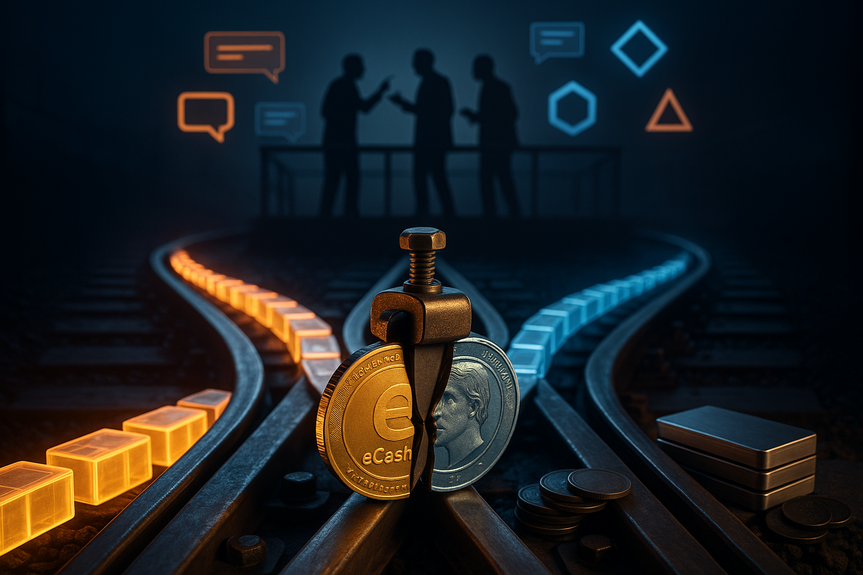
A veteran Bitcoin developer proposes a new chain that copies Bitcoin’s history, adds Drivechains, and gives every BTC holder matching coins on the forked network. The plan sparks anger because it reallocates coins that would mirror Satoshi Nakamoto’s holdings on the new chain to early investors. Whether you support it or not, the right move is to protect your BTC first, then decide what to do with any forked assets later.
You will hold the same number of units on both chains at the snapshot if you self-custody your keys.
The developer says a coin-splitter tool will help separate BTC from the new coins after the fork.
The plan to pre-assign part of the new chain’s Satoshi-mirror coins to investors is the flashpoint.
In short: A fork does not move your BTC. It only creates a second ledger that recognizes your pre-split balance.
Use a hardware wallet or a well-reviewed software wallet where you hold the seed phrase.
Back up your seed phrase and any passphrase. Store backups offline in two separate safe places.
Update wallet firmware and software from official sources only. Verify signatures where possible.
If your BTC sits on an exchange, ask about their fork policy. Some exchanges may not credit forked coins or may delay withdrawals. Self-custody gives you the choice.
Around the split, avoid non-urgent sends until there is clear, chain-level replay protection or an audited splitter.
After the fork, use a coin-splitter from a trusted, open-source team with peer review. Wait for security reports, not marketing.
Test with a tiny amount first. Confirm on a block explorer for each chain that the coins are split before you move larger funds.
Use fresh receive addresses and enable coin control, so you can choose which outputs you spend and avoid mixing split and unsplit coins.
After a clean split, move BTC to a brand-new wallet to isolate it from any tool you used to interact with the fork.
Never type your main BTC seed into a new or untrusted wallet. That is the fastest way to lose funds.
Before you interact with any fork, move your BTC to a fresh wallet you control. Only then consider using the old wallet, with zero BTC left in it, to claim the forked coins.
Use open-source tools with reproducible builds and wide code review. Check the official maintainers, signatures, and release hashes.
Expect fees, delays, and scams. Be patient. Scammers will rush you with “limited-time” claims.
Do nothing at all. Your BTC stays on Bitcoin under your control.
Avoid transacting during the early, messy period after the split to reduce replay risk.
If stray forked coins show up, they do not affect your BTC unless you try to move or trade them.
Publish a clear fork policy early. State naming, tickers, listing status, and replay protections you will require.
Pause deposits and withdrawals near the split until chain conditions, reorg risk, and replay risk are known.
Update backend libraries and nodes. Use chain-specific endpoints and explorers to prevent mix-ups.
Communicate plainly with customers about timelines and safety steps.
Formal specs on replay protection, if any.
Open-source coin-splitter releases with audits.
Wallet and hardware support on both chains.
Exchange policies on listing, tickers, and crediting balances.
Network health signals: hash rate, block times, and chain reorgs after the split.
Back up your seed and passphrase. Verify you can restore from backup.
Update your wallet and, if you run one, your Bitcoin node.
Plan to pause non-essential sends one week before and after the split.
Decide: Will you claim or ignore the forked coins?
If claiming, practice with a tiny test wallet so you learn the steps without risk.
Follow trusted Bitcoin developers and security researchers for tool reviews, not influencers chasing clicks.
Beware of emails, DMs, or websites that ask for your seed to “unlock” forked assets.
Note tax rules in your country. In some places, forked coins can be taxable when you have control or when you sell.
Staying calm is a winning strategy here. Bitcoin has seen forks before. The pattern is the same: loud headlines, strong opinions, and a flurry of tools. The right move is to secure your BTC, wait for clarity, and only then decide what to do next. If you want to explore the new chain, do it with clean devices, fresh wallets, and small amounts first. If you do not, you can safely ignore it. Either way, your BTC remains yours.
In closing, focus on custody, patience, and careful execution. That is how you protect your holdings amid the eCash hard fork Satoshi coins turmoil and come out with your BTC intact.
Protect your BTC from eCash hard fork Satoshi coins
Understand the plan and the timeline
A proposed hard fork will split off from Bitcoin at block height 964,000, expected in August 2026. Your BTC stays on Bitcoin no matter what. The new chain would start with the same history and balances at the split, and then follow its own rules. Its coin is separate from BTC. Key points:Secure self-custody and backups
Your first line of defense is control of your keys.Reduce replay risk with careful splits
Replay risk happens when the same transaction broadcasts on both chains. If the fork launches without strong replay protection, a payment you make on one chain could be copied on the other. The community has already flagged this as a concern for the eCash hard fork Satoshi coins proposal. Steps to lower replay risk:If you plan to claim, claim safely
Some holders may want to claim the new tokens and sell or hold them. Safety comes first:If you plan to ignore, stay inert
You do not have to do anything. If you do not want the forked tokens:For exchanges, miners, and merchants
Operational calm protects users and brands:What this fork changes: Drivechains and the funding debate
Drivechains in short
Drivechains aim to let BTC move between the main chain and sidechains without changing Bitcoin’s base rules. Each sidechain can run new features, like privacy settings, a DEX, or prediction markets. The developer behind the proposal has pushed this idea since 2015 through BIP300 and BIP301, and he says multiple sidechains are already in development. Supporters see this as a way to test and ship innovation while keeping the base layer conservative. Critics worry about security trade-offs, incentives, and miner behavior. These debates are longstanding, and they are not settled.Why the funding idea angers people
The most contentious part is not the sidechain tech. It is the plan to reassign coins that would match Satoshi’s early balances on the new chain to early investors. Many see this as a violation of norms, even if it does not touch Bitcoin itself. Well-known voices in the space called it theft and warned it sets a bad precedent. Others flagged that using the “eCash” name could confuse users because people already use “eCash” to describe other tools. If you strip away the hot takes, the user risk is simple: new code, new markets, and unclear replay protection increase the chance of loss. That is why the safest path is to slow down and let battle-tested tools emerge before you act on the eCash hard fork Satoshi coins news.What to watch next
Decision checklist before the split
Run through this list a month before the target block:For more news: Click Here
FAQ
Q: What is the proposed eCash hard fork and how would it work?
A: The eCash hard fork Satoshi coins proposal, put forward by Paul Sztorc, would copy Bitcoin’s history at a scheduled block height and launch a separate chain called eCash that issues equivalent tokens and adds Drivechains. The fork would give BTC holders matching balances on the new chain while the original BTC remains on Bitcoin.
Q: Will my bitcoins move to the new eCash chain automatically?
A: No, your bitcoins do not move; your BTC stays on Bitcoin no matter what and a hard fork only creates a second ledger that recognizes pre-split balances. If you self-custody your keys you will hold the same number of units on both chains at the snapshot, but the forked tokens live on the separate eCash chain.
Q: What immediate steps should I take to secure my BTC before the split?
A: To secure your BTC ahead of the eCash hard fork Satoshi coins split, control your keys by using a hardware wallet or a well-reviewed software wallet and back up your seed phrase and passphrase offline in multiple secure places. Update wallet firmware and software from official sources only, and if your BTC is on an exchange, ask about its fork policy or move to self-custody to retain choice.
Q: What is replay risk and how can I minimise it during the eCash hard fork Satoshi coins?
A: Replay risk happens when the same transaction can be valid on both chains, and the article flags that the fork could launch without strong replay protection. To minimise risk, avoid non-urgent transactions around the split, wait for audited coin-splitter tools and clear chain-level replay protection, and test with tiny amounts before moving larger funds.
Q: If I want to claim the new eCash tokens, what is the safest process?
A: First move your BTC to a fresh wallet you control and only attempt claims from a wallet that no longer holds your main BTC to avoid exposing your seed phrase. Use open-source, audited coin-splitter tools with reproducible builds, verify maintainers and signatures, and practice the process with a tiny test amount before transferring larger sums.
Q: Can I simply ignore the fork and will that be safe?
A: You can safely ignore the eCash hard fork Satoshi coins and do nothing; your BTC remains on Bitcoin under your control. Avoid transacting during the early period after the split to reduce replay risk, and forked coins that appear will not affect your BTC unless you try to move them.
Q: What precautions should exchanges, miners, and merchants take for the split?
A: Publish clear fork policies early that state naming, tickers and listing status, and consider pausing deposits and withdrawals near the split until reorg and replay risks are known. Update backend libraries and nodes to use chain-specific endpoints, monitor network conditions, and communicate timelines and safety steps plainly to customers.
Q: What signals and resources should I watch for before deciding whether to engage with the fork?
A: Watch for formal specs on replay protection, open-source coin-splitter releases with security audits, wallet and hardware support on both chains, and clear exchange policies on listing and crediting balances. Also monitor network health signals such as hash rate, block times and chain reorgs, and follow trusted Bitcoin developers and security researchers for tool reviews.
* The information provided on this website is based solely on my personal experience, research and technical knowledge. This content should not be construed as investment advice or a recommendation. Any investment decision must be made on the basis of your own independent judgement.
Contents