AI News
05 Oct 2026
Read 10 min
How to use FBI OSINT AI image analysis to detect deepfakes
FBI OSINT AI image analysis helps investigators rapidly verify images and expose deepfake evidence.
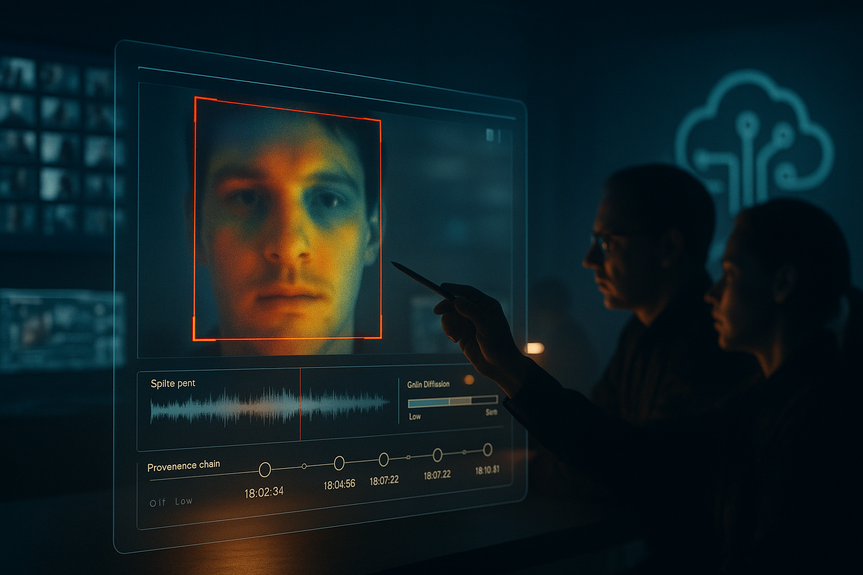
FBI OSINT AI image analysis helps investigators spot deepfakes and edited media in minutes. Start by verifying the source, then run authenticity scoring and forensic checks like face swaps, splice points, and metadata. Use content provenance (C2PA) and account behavior signals to confirm context and build evidence that stands up in court.
Digital falsehoods move fast. Law enforcement and analysts need faster tools. Recent federal contracting steps opened the door for advanced, cloud-based image and video checks that scale. This guide shows how to use modern AI features to test images and videos, cut through noise, and turn findings into clear, defensible reports.
Authenticity scoring for images and videos
Detection of GAN- and diffusion-generated content
Face-swap and splice-point identification
Noise, lighting, and shadow consistency checks
C2PA provenance validation and metadata review
Account authenticity and network-behavior scoring
These features support fast triage and deeper analysis so teams can filter hoaxes, spot risks, and focus on cases that matter.
Capture the original file when possible, not just a screenshot.
Record the URL, timestamp, and user ID.
Hash the file to lock integrity before analysis.
Note where it first appeared and who posted it.
Save the caption, comments, and linked posts.
Check if trusted outlets have shared or debunked it.
Upload the file to your AI analysis workspace.
Review the overall authenticity score and risk flags.
Compare the score to your unit’s action thresholds.
With FBI OSINT AI image analysis, you get a single dashboard view that blends visual checks with account and network context, helping you decide in minutes if deeper review is needed.
Scan for face swaps and splice points across frames.
Look for texture or lighting mismatches on skin, hair, and edges.
Check motion consistency (eyes, lips, reflections) in video.
Validate C2PA signatures if present.
Review EXIF data (device, software, timestamps) when available.
Watch for editing tool traces in the pipeline history.
Review account age, posting bursts, and bot-like patterns.
Map re-shares to see if a small cluster is amplifying the post.
Flag copy-paste captions and coordinated timing.
Compare frames to known originals or prior posts.
Use reverse image search and public databases.
Export a report with screenshots, scores, and steps taken.
If scores and signals show high risk, escalate to a specialist.
If results are mixed, add human review and a second tool check.
If results are clean, document and close with notes.
State the question: authentic, manipulated, or unknown.
List methods used: authenticity scoring, forensic checks, C2PA.
Show key visuals: heat maps, splice markers, frame grabs.
Explain limits and confidence, not just a final label.
Include dates, tool versions, and analyst name.
Keep original files hashed and read-only.
Log every transfer, tool run, and export.
Store reports and data in secure, auditable systems.
Clear, repeatable steps build trust. Judges, juries, and partners need to see what you did and why you reached your conclusion.
False positives and false negatives near the decision threshold
Compression and re-uploads that hide or add artifacts
Bias in training data that can skew results
Privacy concerns when collecting public posts at scale
Good practice:
Use more than one method before you conclude.
Set score thresholds and escalation rules in advance.
Red-team your process with fresh, hard test sets.
Update models and policies as threats change.
Faster access to cloud-native tools for large-scale checks
Evidence-based signals that support investigative needs
Built-in features like GAN/diffusion detection and C2PA
Account authenticity scoring to add context to the media
If your team is not on this vehicle, you can still apply the same workflow with your current tools: preserve, score, inspect, verify provenance, analyze network behavior, and report with clarity.
What FBI OSINT AI image analysis does
AI tools for open-source investigations help answer two questions fast: Is the media real, and is the account sharing it authentic? Today’s systems combine visual forensics with context signals so you can act with confidence. Core capabilities include:Step-by-step: Use AI tools to check an image or video
1) Collect and preserve
2) Verify the source and context
3) Run authenticity scoring
4) Inspect forensic signals
5) Check provenance and metadata
6) Analyze account and network behavior
7) Cross-validate and document
8) Decide and escalate
Evidence that stands up: reporting and chain of custody
Reporting tips
Chain-of-custody basics
Limits and smart safeguards
No tool is perfect. Deepfake tech keeps evolving. Plan for:Getting started with platforms like Cyabra
U.S. agencies now have contract paths to access visual AI analysis for open-source work. Under the FBI’s Specialized OSINT Tools multi-award IDIQ, divisions and field offices can compete task orders for image and video analysis through 2031. Selection on the vehicle lets vendors like Cyabra compete, but task orders are not guaranteed and depend on funding, security reviews, and performance. What this means for users:Why deepfakes demand a new workflow
Old methods miss today’s synthetic tricks. Generative models blend faces, alter voices, and create scenes that look real at first glance. Timely, layered checks are now part of basic due diligence. FBI OSINT AI image analysis brings those checks together so analysts can move from rumor to evidence with speed and care.Conclusion
Deepfakes will keep getting better, but your process can too. Use source verification, authenticity scoring, forensic review, provenance checks, and account analysis in one clear workflow. Document each step and keep your evidence secure. With FBI OSINT AI image analysis guiding this process, teams can cut through noise, protect the public, and defend the truth.For more news: Click Here
FAQ
Q: What is FBI OSINT AI image analysis?
A: FBI OSINT AI image analysis refers to AI tools used in open-source investigations to rapidly determine whether images and videos are authentic and whether the accounts sharing them are genuine. These systems combine visual forensics, authenticity scoring, provenance checks like C2PA, and account behavior signals to provide evidence-based analysis.
Q: How does the FBI’s Specialized OSINT Tools IDIQ affect access to these technologies?
A: The FBI’s Specialized OSINT Tools multi-award IDIQ creates contract paths that let agencies order FBI OSINT AI image analysis solutions from approved vendors during a five-year ordering period through September 2031. Being on the vehicle allows companies like Cyabra to compete for task orders, but task orders are not guaranteed and depend on funding, competition, and security reviews.
Q: What step-by-step workflow should investigators use to check an image or video?
A: When using FBI OSINT AI image analysis, investigators should follow a clear workflow: collect and preserve originals and metadata, verify source and context, run authenticity scoring, inspect forensic signals, validate provenance, analyze account behavior, cross-validate with other tools, and document every step. Following these stages enables fast triage and creates repeatable, auditable findings for escalation or case closure.
Q: What forensic signals do AI tools look for to detect manipulated media?
A: AI tools scan for signs like GAN- or diffusion-generated artifacts, face swaps and splice points, and inconsistencies in noise, lighting, shadows, or motion across frames. They also review metadata and provenance (C2PA and EXIF) and combine these visual signals with account and network context to inform authenticity scoring.
Q: How should evidence be preserved to maintain chain of custody when analyzing media?
A: Preserve the original file whenever possible, record the URL, timestamp, and user ID, and hash the file before analysis to lock integrity. Keep read-only copies, log every transfer and tool run, and store reports and data in secure, auditable systems to maintain an evidentiary chain of custody.
Q: What are the known limitations and safeguards for FBI OSINT AI image analysis?
A: FBI OSINT AI image analysis has limits such as false positives and negatives near decision thresholds, artifacts introduced by compression or re-uploads, bias in training data, and privacy concerns when collecting public posts at scale. To mitigate these risks, teams should use multiple methods, set score thresholds and escalation rules in advance, red-team processes with hard test sets, and regularly update models and policies.
Q: When should analysts escalate findings or seek specialist review?
A: Analysts should escalate to a specialist when scores and forensic signals indicate high risk or when the evidence requires deeper technical or legal review. For mixed or unclear results, add human review and validate with a second tool, while clearly documenting actions and rationale for any escalation.
Q: How should findings be documented to ensure reports stand up in court?
A: To ensure findings from FBI OSINT AI image analysis hold up in court, reports should state the question (authentic, manipulated, or unknown), list methods and tools used, include key visuals like heat maps and frame grabs, and explain confidence and limits. Reports should also record dates, tool versions, analyst names, and chain-of-custody details such as hashed originals and logged transfers to create an auditable record.
Contents