AI News
09 Apr 2026
Read 11 min
Nexon Mono Lake AI initiative: How it builds AAA cheaper
Nexon Mono Lake AI initiative cuts AAA production costs and speeds development with lean dev teams.
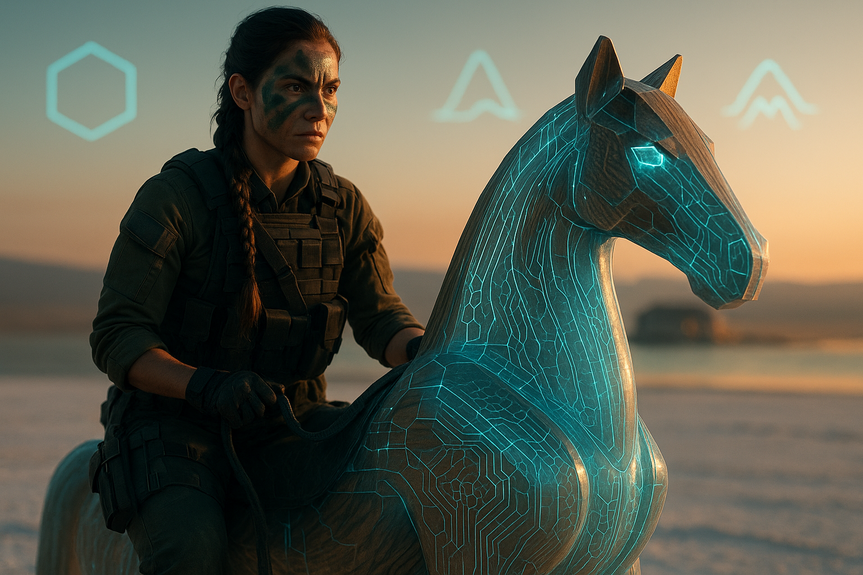
Nexon Mono Lake AI initiative is changing how a big publisher builds games. Embark’s Arc Raiders shows how AI-assisted tools can cut cost and speed up work while keeping human-led creativity. Nexon calls the game a “Trojan Horse” for a new process that lets teams spend more time on design and less time on repetitive tasks.
Arc Raiders did not just launch well; it set a new bar for Nexon. The game sold more than 14 million units in 15 weeks, and 85 percent of revenue came from North America and Europe. That result matters for a company long rooted in Asia. It also matters for how Nexon plans to make games next.
Faster prototyping for ideas and features
Assisted content creation that reduces repetitive manual tasks
Data-informed tuning based on how players actually play
Quicker pipelines for live updates and fixes
The company frames this as “more time thinking, less time typing.” It is a pitch for better flow, not for replacing jobs.
Players care about the end result more than the pipeline, when quality is there
Smaller teams can ship large, live games if the workflow is efficient
Data and context can guide better, faster creative decisions
Use AI and procedural tools for support work and speed
Keep final say and core art direction with the team
Listen when players and creators push back, as with VO
Nexon’s leaders stress that creative people remain central. They say the Nexon Mono Lake AI initiative is meant to “free them to create.” The message: people make the calls; machines help carry the load.
AI as assistant, not author: Use tools to speed tasks, but keep human taste in charge
Context is king: Data can guide, but it should not replace vision
Start small, ship, and learn: Short loops beat massive, slow bets
Respect talent and audiences: Voice actors and players will hold teams accountable
The model is not a silver bullet, but it is a real option. Arc Raiders gives publishers a fresh example to study, not just a theory slide.
Arc Raiders’ strong start, its vocal community, and its production approach make it one of 2026’s most watched case studies. Nexon and Embark will need to show that quality and speed can keep living side by side at scale. If they do, others will follow.
In the end, the Nexon Mono Lake AI initiative is a bet on better processes, not fewer people. It aims to cut waste, boost creativity, and build big games with leaner teams. Arc Raiders is the first proof point; the next Embark projects will tell us if this model truly holds.
Inside the Nexon Mono Lake AI initiative
From tools to context
Nexon says it is moving past basic AI tools to “context.” In simple terms, leaders claim teams now use data to guide decisions every day. They say billions of player actions help shape what to build next. The goal is not to replace people. The goal is to help artists, designers, and engineers choose faster and iterate more. Embark’s Patric Soderlund and Nexon’s Junghun Lee argue this shift is why smaller teams can ship more. They point to two games built with this approach: The Finals and Arc Raiders. Both, they say, were made with fewer people and at a fraction of normal AAA cost.What changes in the workflow
Under this model, developers keep control of the final creative output. AI and procedural systems assist with grunt work and speed. That means:Arc Raiders: proof and pushback
Arc Raiders is the case study Nexon champions. The launch was the most successful in company history, according to executives. It also proved Nexon can land a hit with a Western audience, which had been a challenge before. But the road was not smooth. Arc Raiders drew criticism for using AI-generated voice lines. Embark later re-recorded many lines with actors. The studio has been clear that it also used procedural and AI-based tools during development. It also says the final product reflects the team’s own creativity. This is the tension many studios face now. Players want quality and respect for human craft. Teams want speed and savings. Arc Raiders shows both the upside and the risk of pushing on AI.Why Nexon sees a “Trojan Horse”
Nexon’s CEO called Arc Raiders a “Trojan Horse” because it gets the market to accept a new way to build AAA. The game enters with fun, scale, and sales. Inside, it carries a new mindset: AI can reduce busywork and widen the creative field for small, nimble teams. From Nexon’s view, the game proves three things:What this means for AAA budgets
AAA development often balloons in headcount and cost. The Nexon Mono Lake AI initiative argues there is another path. If AI assists content creation, testing, and tuning, teams can focus on design, storytelling, and polish. Soderlund says their last two games were built at a fraction of the expected cost. If that holds, more studios may try this playbook. Still, savings are not a guarantee. Tooling takes time to build. Data needs care. Ethics and legal rules are evolving. The lesson is not “AI makes everything cheap.” The lesson is “AI can remove friction when humans stay in charge.”Creative control and the human line
Where AI helps—and where it should not
Studios must draw clear lines. Arc Raiders shows one attempt:Global traction changes Nexon’s strategy
Arc Raiders brought in a mostly Western audience. That result expands Nexon’s options. The company now talks about multiple Embark projects that follow the same playbook: smaller teams, new tech to cut low-value work, and a focus on console and global markets. Alternative pricing models are also on the table. If those projects land, Nexon could reset investor and player expectations for its portfolio. If they stumble, critics will question how far AI-first workflows can go without quality trade-offs.Key takeaways for the industry
(Source: https://www.eurogamer.net/nexon-embark-arc-raiders-ai-push)
For more news: Click Here
FAQ
Q: What is the Nexon Mono Lake AI initiative?
A: Nexon Mono Lake AI initiative is Nexon’s program to move beyond basic AI tools toward applying context and player data to development, with the stated aim of freeing developers from repetitive tasks. Executives say the initiative helps teams make faster, data-informed creative decisions without replacing human authorship.
Q: How did Arc Raiders act as a “Trojan Horse” for this approach?
A: Nexon executives called Arc Raiders a “Trojan Horse” for the Nexon Mono Lake AI initiative because its launch showcased how AI-assisted workflows can deliver a major game while keeping the development team’s creative control. The company pointed to Arc Raiders’ strong launch and the use of procedural and AI-based tools during development as evidence that smaller teams can ship ambitious live games.
Q: Did Arc Raiders use AI-generated voice lines, and what was the response?
A: Yes, Arc Raiders included AI-generated voice lines that drew criticism and Embark later re-recorded many of those lines with actors, according to the reporting. The studio also acknowledged using procedural- and AI-based tools to assist content creation while saying the final product reflects the team’s creativity.
Q: Does the Nexon Mono Lake AI initiative aim to replace game developers?
A: Nexon and Embark say the initiative is not intended to replace creative people but to remove low-value, repetitive work so teams can focus on design and innovation. Executives repeatedly stated that final creative decisions remain with human developers under the Nexon Mono Lake AI initiative.
Q: What workflow changes does Nexon promote under the initiative?
A: Nexon says the initiative enables faster prototyping, assisted content creation, data-informed tuning based on billions of player decisions, and quicker pipelines for live updates. Company messaging frames this as “more time thinking, less time typing” while keeping final artistic control with the development team.
Q: How successful was Arc Raiders commercially and why does that matter for Nexon?
A: Arc Raiders sold more than 14 million units in 15 weeks and, according to executives, 85 percent of its revenue came from North America and Europe, which Nexon presented as a significant Western success. That performance matters because Nexon says it validates applying the Nexon Mono Lake AI initiative and the Arc Raiders playbook to reach global audiences with smaller teams.
Q: What criticisms and risks have been raised about using AI in this way?
A: Critics highlighted the use of AI-generated voice lines and warned that speed and cost savings could risk quality or respect for human craft, prompting Embark to re-record lines after pushback. The article also notes that tooling takes time to build, data needs careful handling, and ethics and legal rules are still evolving, so savings are not guaranteed under the Nexon Mono Lake AI initiative.
Q: What could the initiative mean for AAA budgets and other studios?
A: Nexon presents the initiative as an alternative path for AAA development that can reduce headcount and cost by using AI to remove low-value work, citing The Finals and Arc Raiders as examples built with smaller teams. However, the article cautions the approach is not a silver bullet because tooling, data, ethics, and player expectations still pose limits on cost and quality for studios adopting the Nexon Mono Lake AI initiative.
Contents