Crypto
20 Oct 2026
Read 13 min
Riot Platforms AI data center financing How to spot risk *
Riot Platforms AI data center financing requires close review now so investors can flag funding risks.
Riot Platforms AI data center financing faces a simple test: can the company fund a massive 191 MW build before rent starts? A new 20-year, $9.1 billion lease could transform results, but cash flow from that deal arrives late next year at best. Here’s what to watch, and where risk may show up first.
Riot Platforms just put a new story in front of investors. The company, known for bitcoin mining in Texas and Kentucky, signed a long, rich lease with a frontier AI tenant. The plan is bold: convert power-heavy mining sites into high-density data centers and collect steady rent. But bold plans need money today, not next year. Funding comes first. Rent comes later. That timing gap is the core issue.
Construction loans: Bank debt funds site work, switchgear, cooling, and buildings. These loans often need firm contracts, cost contingencies, and milestone reporting.
Tenant improvement funding: Landlords sometimes spend on fit-out and recover it via rent. That still needs near-term cash out the door.
Equity raises: New shares or convertibles can plug gaps but dilute holders. Timing matters. Issuing when sentiment is weak is expensive.
Term loans or project finance: Debt replaced at completion can match the lease term. Rates, covenants, and leverage caps decide how much cash flow stays with shareholders.
Lease-backed financing: Some sponsors securitize predictable rent streams. This may lower rates if the tenant is strong and the lease is long.
The crux of Riot Platforms AI data center financing is whether debt terms match the rent ramp and construction risk. A backstop with clear covenants and enough headroom for delays would ease concerns. A weak or delayed backstop would raise them.
Operating cash: Mining and engineering contribute, but mining margins have been negative on a fully loaded basis. Engineering is growing, yet still small relative to build needs.
Interim debt: The $573 million facility helps early work. Draw pace, limits, and covenants will drive flexibility.
New capital: Equity or structured debt could extend runway, but pricing depends on the backstop and market mood.
Investors should track Riot Platforms AI data center financing milestones such as the signing of the investment-grade backstop, followed by disclosure of cost-to-complete and any revised delivery dates.
Backstop timing: A signed, investment-grade backstop on reasonable terms is a green light. Delays or vague updates are yellow lights.
Cost of capital: Rising rates on new debt, tighter covenants, or heavy collateral can choke flexibility.
Equity taps: Large or repeated share sales before rent starts may point to tighter liquidity.
MW delivery cadence: Watch whether 96 MW is still “late next year.” Any slip pushes rent out and interest in.
Capex per MW: Material increases suggest design changes, supplier issues, or site surprises.
Equipment lead times: Delays in transformers, switchgear, and cooling gear have real schedule impact.
Interconnection milestones: Grid upgrades and permits can be bottlenecks. Missed milestones often translate into start-date slips.
Rent mix: More recurring rent and less one-time fit-out revenue is healthier. Heavy nonrecurring revenue can mask weak run-rate cash flow.
Lease amendments: Scope changes, deferrals, or concessions can hint at schedule or cost pressure.
Liquidity: Cash balance, available revolvers, and undrawn commitments show runway length.
Leverage and coverage: Net debt/EBITDA and interest coverage matter once rent starts. Before then, look at cash burn against committed funding.
Backstop signs on favorable terms. Construction hits milestones. 96 MW delivers on time, and the rest follows the next summer.
NOI trend lands near the $365–$411 million range run-rate once stabilized.
Debt is refinanced into long-term paper at acceptable rates, freeing more cash to equity.
Backstop signs, but construction sees some slippage. Costs rise modestly. Rent starts a little later than first planned.
Interim debt stays in place longer than hoped, interest costs climb, and near-term dilution is possible.
Backstop is delayed or comes with restrictive terms. Delivery slips. Capex per MW drifts up.
Riot issues more equity at lower prices or adds expensive structured debt. The cash gap widens.
The pivot in plain numbers
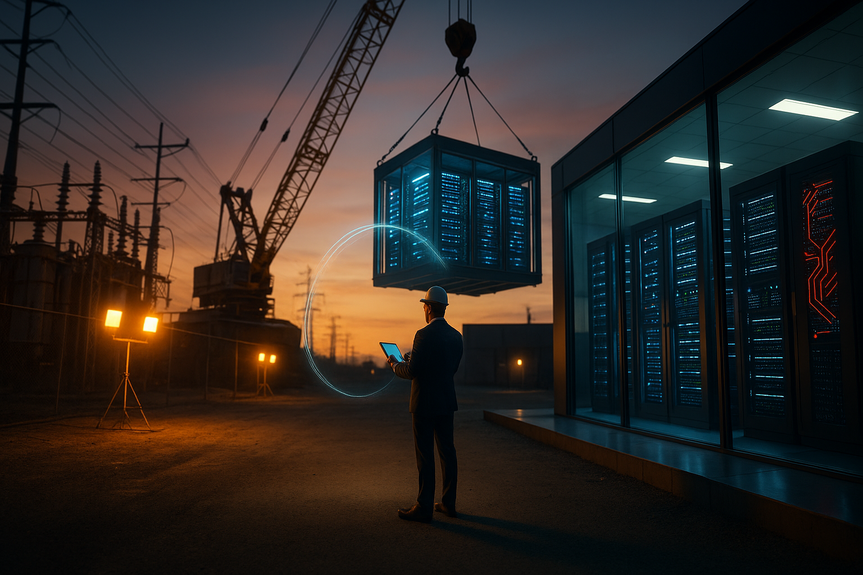
Riot’s 20-year contract covers 191 megawatts at its Rockdale campus in Texas. The company says the project could add $365 million to $411 million a year in net operating income once complete. The tenant holds two five-year options to extend, which could push the deal out to 30 years. The ramp is not fast. Riot expects the first 96 MW to go live late next year, with the balance following the next summer. Rent starts when power and space are delivered, not before. Until then, the existing AMD lease is the main data center income source. In the latest reported quarter, that line posted $23.2 million, but only $4.9 million was recurring rent. The rest was one-time build-out work that will not repeat. This means the largest contract in company history will not help cash flow for several quarters. Construction spend, equipment deposits, and power work will all hit first.Mining economics are the push behind the change
The older business explains why the shift matters. In the second quarter of 2026, each bitcoin Riot mined had an average value of $71,667 at the time of production. The cost to mine one, including machine depreciation, was $90,631. The spread was negative. Over the last 12 months, Riot lost $1.32 billion and posted a negative gross margin of 28.26%. That means revenue did not cover cost of goods. Mining revenue also fell year over year. Riot cited lower bitcoin prices and a tougher network. Power costs rose. One bright spot was the engineering unit that builds electrical equipment for outside customers. That unit’s revenue grew from $10.6 million to $37.3 million. Total company revenue has climbed fast over five years, up about 122% per year, but profit has not followed. Put simply, mining is volatile and capital-heavy. Turning power sites into data centers is an attempt to swap price swings for contracted rent. It is a logical pivot, but it raises a new question: funding.Riot Platforms AI data center financing: paths and pressure points
Right now, the bridge is a $573 million interim facility from Morgan Stanley. Riot says this will cover early development while an investment-grade credit backstop is finalized. That backstop is key. Until it is signed, the long-term capital stack is not locked. How do developers usually finance builds like this? There are common paths, each with trade-offs:Near-term cash needs
Long-term capital stack
Timelines and the cash flow gap
Construction happens now. Rent starts later. That creates a gap that must be bridged. Based on Riot’s schedule, the first 96 MW comes online late next year, with the rest following the next summer. If the plan slips, cash needs rise. If it holds, the NOI lift is meaningful. What can fill the gap?How to spot risk before it shows up
You do not need inside access to see stress building. The signals are usually public and simple to monitor:Financing signals
Construction and power signals
Tenant and revenue signals
Balance sheet signals
Upside, base case, and downside
There are three simple paths to think about:Upside
Base case
Downside
What this means for the stock
The lease reshapes the story. The numbers are large and long-dated. But the market will price the path, not the promise. Over the last year, results were weak under mining economics. The pivot aims to swap volatility for contracted income. Success now depends on execution and capital discipline. Watch three dates: the backstop signing, the first 96 MW delivery, and the final completion the following summer. Match those dates against cash on hand, draws on the interim facility, and any new capital moves. If those line up, confidence rises. If they don’t, the discount widens. The crux of Riot Platforms AI data center financing is not whether the lease is attractive on paper; it is whether the company can carry construction risk to the finish line without overpaying for capital or diluting too much on the way. In short, Riot’s strategy is clear, the lease is big, and the math can work. But the scorecard is simple: secure the backstop, control capex, hit delivery, start rent. Everything else is noise. For now, Riot Platforms AI data center financing is the key driver to watch, from headline risk to long-term value.(Source: https://finance.yahoo.com/markets/crypto/articles/riot-riot-signed-9-1b-154651399.html)
For more news: Click Here
FAQ
Q: What is the size and scope of the AI lease Riot Platforms signed?
A: Riot Platforms AI data center financing includes a 20-year lease worth about $9.1 billion covering 191 megawatts at the Rockdale campus, which Riot estimates could add $365 million to $411 million a year in net operating income once complete. The tenant also holds two five-year extension options that could extend the contract to 30 years.
Q: Why is securing financing urgent for Riot Platforms’ data center build?
A: Riot Platforms AI data center financing is urgent because rent begins only after Riot completes construction and the first rents are not expected until late next year at the earliest, creating a timing gap where construction costs hit now. That gap is amplified by weak mining economics and a $1.32 billion loss over the past 12 months, increasing Riot’s reliance on external capital.
Q: What interim financing has Riot secured to start development?
A: Riot Platforms AI data center financing currently relies on a $573 million interim facility from Morgan Stanley to cover early development while an investment-grade credit backstop is finalized. Until that backstop is in place, the long-term financing for the $9.1 billion contract is not locked in.
Q: What financing options can Riot pursue to fund the build and what trade-offs do they present?
A: Riot Platforms AI data center financing options include near-term construction loans, tenant-improvement funding, or equity raises, and long-term choices such as term loans/project finance or lease-backed financing. Trade-offs noted in the article are that equity can dilute shareholders, construction and project loans bring covenants and cost risk, and lease-backed financing depends on tenant strength and predictable rent.
Q: When are the key delivery milestones for the Rockdale build and when will rent start?
A: Riot expects the first 96 megawatts to be delivered late next year, with the remaining capacity following the next summer, and rent begins when power and space are delivered. Those delivery dates are the primary milestones to monitor for Riot Platforms AI data center financing because any slip directly delays cash flow from the lease.
Q: What public indicators should investors monitor to detect financing or execution problems?
A: For Riot Platforms AI data center financing, investors should watch the timing and terms of the investment-grade backstop, changes in the cost of capital like rising rates or tighter covenants, and any large or repeated equity issuances. Construction and operational signals to follow include MW delivery cadence, capex per MW, equipment lead times, interconnection milestones, and liquidity and leverage metrics.
Q: How will the new AI lease affect Riot’s short-term cash flow and existing mining business?
A: The $9.1 billion lease will not materially boost cash flow until the build is delivered because construction spend, equipment deposits, and power work hit first and rental income is delayed until delivery. Given Riot’s negative mining margins and the $1.32 billion loss over the past 12 months, Riot Platforms AI data center financing creates near-term funding pressure despite growth in its engineering unit.
Q: What are the potential upside, base-case, and downside outcomes for Riot’s financing plan?
A: Upside is a favorable investment-grade backstop, on‑time construction, and eventual NOI near the $365–$411 million estimate, while the base case involves backstop signing with modest slippage, higher interest costs, and possible dilution. The downside is a delayed or restrictive backstop, rising capex per MW, missed delivery dates, and the need for larger equity or expensive structured debt that widens the cash gap for Riot Platforms AI data center financing.
* The information provided on this website is based solely on my personal experience, research and technical knowledge. This content should not be construed as investment advice or a recommendation. Any investment decision must be made on the basis of your own independent judgement.
Contents