Crypto
23 May 2026
Read 12 min
Should investors buy Shiba Inu now for next bull run? *
Should investors buy Shiba Inu now to capture gains if Shibarium expansion and ETFs spark a rally?
Wondering should investors buy Shiba Inu before the next crypto bull run? Here’s a clear look at how SHIB jumped from meme to major token, why its huge supply and lack of a native blockchain still matter, what Shibarium and a possible ETF could change, and how the risk-reward stacks up today.
Shiba Inu began as a playful take on Dogecoin, which itself poked fun at Bitcoin. The joke turned serious in 2021, when SHIB rocketed from a tiny fraction of a cent to a brief all-time high. Early buyers saw life-changing returns. Late buyers felt the crash. Since then, the token has given back much of its peak gains and trades far below its record price. That history shapes the core question many ask now: should investors buy Shiba Inu as the next cycle forms, or is the smarter move to stick with blue-chip crypto like Bitcoin and Ethereum?
Shibarium, a Layer 2 (L2) network built on Ethereum, lowers costs and speeds up transactions, while enabling smart contracts and decentralized apps.
Broader market tailwinds can lift all boats during a bull market, including meme coins with strong communities.
A proposed active crypto ETF from a major asset manager that includes SHIB could draw fresh attention and new capital, if it wins approval and launches.
SHIB launched with a one-quadrillion-token supply. Even after large burns, its circulating supply remains in the hundreds of trillions, which limits scarcity value.
It is an ERC-20 token without its own Layer 1 blockchain, so its base utility depends on Ethereum and its L2 build-out rather than unique core tech.
Over the last year, SHIB fell far more than Bitcoin and Ethereum, showing higher downside in weak markets.
So, should investors buy Shiba Inu as a long-term bet? The answer depends on how you weigh community momentum and potential catalysts versus the token’s supply and utility limits.
Speculators who understand the high risk and want small-cap-style upside in a hot market.
Community-driven investors who believe Shibarium adoption will grow and bring lasting demand.
Portfolio builders seeking a tiny “moonshot” sleeve alongside larger Bitcoin and Ethereum positions.
Risk-averse investors who prefer scarce, established assets with deeper liquidity.
Builders and developers who need a base chain with mature tooling and direct control.
Anyone who needs stable value or near-term liquidity; SHIB can swing wildly.
Use a plan. Decide ahead of time where you will take profits and where you will cut losses.
Avoid chasing spikes. Dollar-cost averaging can reduce regret during big moves.
Keep cash or stablecoins on hand so you are not forced to sell at lows.
Shibarium usage: daily active wallets, transaction counts, and new apps.
Token burns: size, pace, and any changes to burn mechanics.
ETF decisions: actual approvals, listings, and early inflows, not just headlines.
Macro crypto trends: Bitcoin liquidity, rates, and risk sentiment drive smaller tokens.
Confusing community hype with durable utility. Both matter, but utility tends to last longer.
Going all-in after a big green candle. Momentum fades fast in meme coins.
Ignoring opportunity cost. Capital in SHIB is not in BTC, ETH, or cash when markets shift.
Forgetting taxes and fees. Short-term trading can generate costs that eat gains.
Should investors buy Shiba Inu? The case in one glance
The bull side
The bear side
What actually drives SHIB’s price?
Token design and supply
Shiba Inu cannot be mined. The supply was minted upfront. A large portion was sent to Ethereum co-founder Vitalik Buterin early on, and most of that was later burned. Still, SHIB’s circulating supply sits around the hundreds of trillions. This matters. Assets like Bitcoin lean on hard scarcity and a capped supply. SHIB does not. For SHIB to rise and sustain gains, demand must grow faster than new tokens enter circulation or faster than burns reduce supply. That is a tough bar.Utility and ecosystem growth
SHIB runs on Ethereum as an ERC-20 token. By itself, it is not a base chain. That limits what developers can build natively on SHIB alone. To fill that gap, the team launched Shibarium, an L2 that supports smart contracts and cheaper, faster transactions. This is a real step forward. It can help apps flourish and can reduce friction for users. However, L2 success hinges on developer adoption, user retention, and real-world use. If activity and unique apps ramp up on Shibarium, the token can gain stickier demand. If not, the “meme only” label will remain.ETF headlines and market flows
When a large asset manager proposes an ETF that includes SHIB, it can create buzz. If the fund wins approval and goes live, it could send some steady flows into the token. But the key word is if. Even with approval, the effect could be modest compared to spot Bitcoin ETFs, which serve a far broader base. Treat ETF news as a possible tailwind, not a guarantee.How SHIB has held up versus Bitcoin and Ethereum
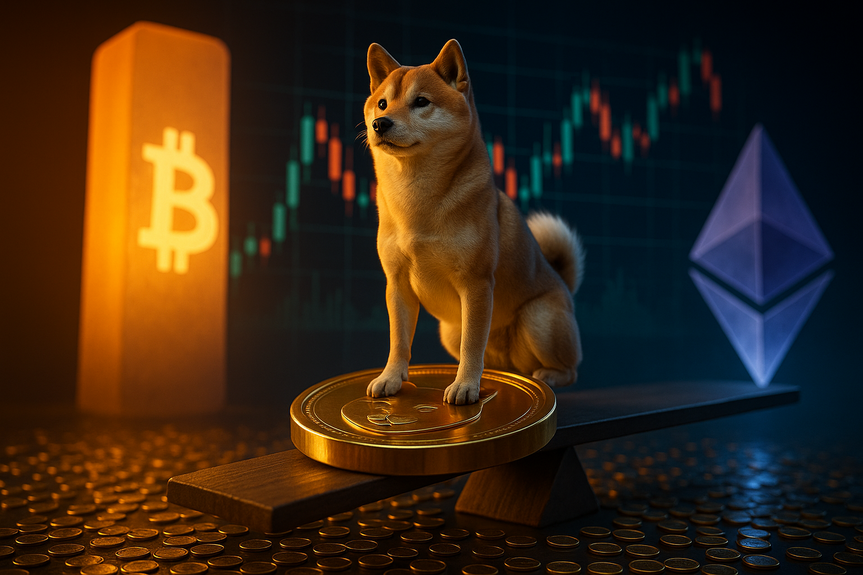
Bitcoin is seen as digital gold because of its capped supply and strong network effects. Ethereum is a development platform that powers smart contracts, decentralized finance, and NFTs. These clear roles help anchor long-term value. Over the past year, SHIB fell much more than both BTC and ETH. That shows higher volatility and weaker downside protection. In bull runs, SHIB can sprint. In slow or falling markets, it can tumble. If you are asking “should investors buy Shiba Inu” with the goal of beating Bitcoin or Ethereum over a full cycle, you need to accept that SHIB has to overcome both its supply headwind and its utility gap. That is possible, but not easy.Who might consider SHIB—and who should probably pass
Potential buyers
Likely non-buyers
Smart ways to size and manage the risk
Position sizing
Consider a small allocation if you proceed—often 0.5% to 2% of a diversified portfolio. This keeps the upside potential while limiting the damage if the story breaks.Entry and exit plan
What to watch
Common mistakes to avoid
A balanced read on return potential
In a strong bull market, SHIB can move faster than larger coins because it is smaller and more sentiment-driven. A fresh wave of interest, more Shibarium activity, and even a new ETF could fuel a sharp rally. That is the upside case. The downside is clear too: massive token supply, weaker fundamentals than Bitcoin or Ethereum, and a price history that shows deep drawdowns when the music stops. To answer “should investors buy Shiba Inu,” think in probabilities. If you believe crypto will heat up, and you think Shibarium plus new investor access can nudge demand higher, a small SHIB slice may make sense as a satellite position. If you want clearer fundamentals and steadier demand, focus on BTC and ETH and skip SHIB. In the end, the market rarely rewards wishful thinking. It rewards real adoption, clear mechanics, and disciplined risk control. If your plan hinges on the next bull run carrying everything higher, then your timing must be right, and your exits must be swift. If your plan rests on growing utility and lasting demand, then you need to track real usage on Shibarium, not just social buzz. So, should investors buy Shiba Inu now? Only if they accept high volatility, size the bet small, and watch the actual data—burns, on-chain activity, and any ETF inflows. For most long-term investors, Bitcoin and Ethereum remain the core. SHIB, if used at all, belongs in the speculative edge of a well-diversified portfolio. This is not financial advice; do your own research before you act. (p.S. If you read this far, remember: should investors buy Shiba Inu is not just a yes-or-no question—it is a risk-budget question. Let the numbers guide you, not the memes.)(Source: https://www.fool.com/investing/2026/05/21/should-you-buy-shib-before-the-next-crypto-bull/)
For more news: Click Here
FAQ
Q: Should investors buy Shiba Inu now for the next bull run?
A: When asking should investors buy Shiba Inu, the article says do so only if you accept high volatility, size the bet small, and monitor burns, Shibarium activity, and any ETF inflows. For most long-term investors, Bitcoin and Ethereum remain the core holdings rather than SHIB.
Q: What are the main bullish arguments for Shiba Inu?
A: Bulls point to Shibarium, an Ethereum Layer 2 that enables smart contracts, faster transactions, and lower costs, plus potential broader market tailwinds during a crypto bull market. A proposed active crypto ETF that includes SHIB could also draw new capital if it wins approval and launches.
Q: What are the main risks or bearish points against SHIB?
A: SHIB launched with a one-quadrillion-token supply and still has a circulating supply in the hundreds of trillions, which limits scarcity value, and it is an ERC-20 token without its own Layer 1 blockchain. Those design limits, along with a history of larger drawdowns versus Bitcoin and Ethereum, make SHIB riskier for many investors.
Q: How does Shibarium affect Shiba Inu’s utility?
A: Shibarium is a Layer 2 network on Ethereum that supports smart contracts and speeds up and lowers the cost of SHIB transactions, which can help apps and user adoption. Its ultimate impact depends on developer adoption, user retention, and real-world use rather than social buzz alone.
Q: Who might consider buying Shiba Inu and who should probably avoid it?
A: Speculators seeking a high-risk, high-reward satellite position, community-driven investors hopeful about Shibarium adoption, or those wanting a tiny “moonshot” sleeve may consider SHIB. Risk-averse investors, builders who need a base chain with mature tooling, and anyone who needs stable value or near-term liquidity should probably pass.
Q: How should investors size and manage risk if they decide to buy SHIB?
A: The article suggests a small allocation—often 0.5% to 2% of a diversified portfolio—and using an explicit entry and exit plan with preset profit and loss points. Dollar-cost averaging, avoiding chasing spikes, and keeping cash or stablecoins on hand to avoid forced selling are recommended risk controls.
Q: What indicators should investors watch to track SHIB’s prospects?
A: Monitor Shibarium usage metrics like daily active wallets, transaction counts, and new apps, watch token burns and any changes to burn mechanics, and follow ETF approval progress and inflows rather than headlines alone. Also pay attention to macro crypto trends such as Bitcoin liquidity and overall risk sentiment since they drive smaller tokens.
Q: How has SHIB performed relative to Bitcoin and Ethereum, and what does that imply?
A: SHIB has fallen much more than both Bitcoin and Ethereum over the past year, indicating higher volatility and weaker downside protection. That pattern means SHIB can rally quickly in bull markets but also suffer deeper drawdowns when sentiment turns.
* The information provided on this website is based solely on my personal experience, research and technical knowledge. This content should not be construed as investment advice or a recommendation. Any investment decision must be made on the basis of your own independent judgement.
Contents