Crypto
16 Jun 2026
Read 12 min
Tokenized SpaceX IPO failure: How to protect your crypto *
Tokenized SpaceX IPO failure exposed weak custody and allocation chains, learn how to protect crypto
The tokenized SpaceX IPO failure showed how fast crypto promises can break when real shares do not show up. Users on big platforms locked funds, then got refunds instead of stock. This guide explains what went wrong, why it happened, and the simple steps you can take now to protect your crypto on the next hot listing.
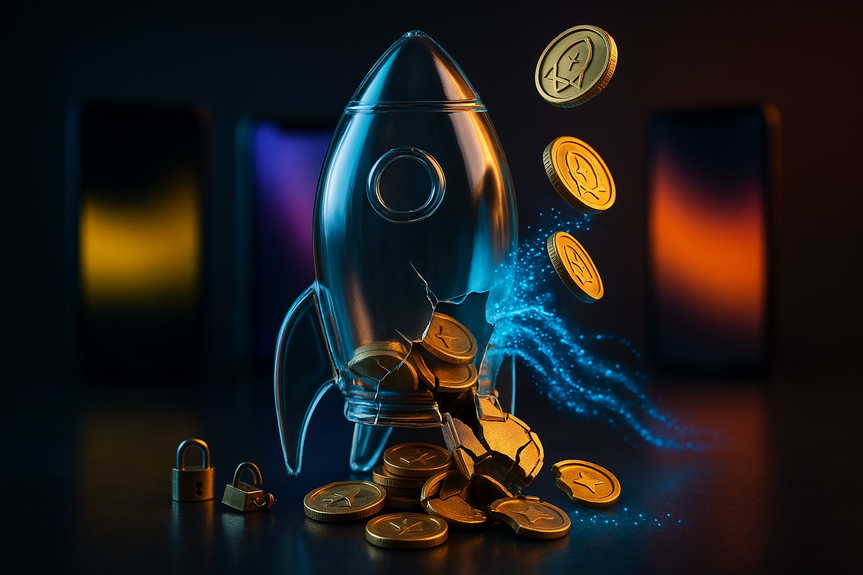
SpaceX’s blockbuster IPO drew huge demand. Several crypto platforms marketed “early access” to tokenized shares, routed through a provider called xStocks. Users on Binance Wallet, Bybit, and Bitget Wallet subscribed with stablecoins and waited. When trading began, the provider could not deliver the underlying stock. Those users got refunds and small rewards, but no shares. A few users on other venues received tiny allocations, but most did not. The lesson is clear: a blockchain wrapper cannot create shares that an underwriter, broker, and transfer agent do not confirm and deliver.
Buy or receive an allocation of shares from the IPO underwriter.
Custody those shares in a segregated account.
Issue tokens that are redeemable 1:1 for those shares.
Provide a way to redeem and settle on request.
Counterparty risk: You trust a provider to get and hold shares. If that fails, your token is just an IOU.
Allocation risk: “Non‑guaranteed subscription” means you may get nothing even if you lock funds early.
Regulatory risk: Rules for tokenized stocks are still unclear. The SEC recently delayed plans around tokenized equity trading.
Price decoupling: Pre-IPO tokens can trade at big discounts or premiums. Lockups and thin liquidity can widen gaps once the true stock trades.
Custody and settlement risk: Without clear redemption terms and a named custodian, you may not be able to convert tokens back to shares.
Marketing risk: Hype can mask weak documentation, vague rights, and missing proof of underlying assets.
Read the fine print. If it says “non‑guaranteed,” expect zero allocation as a real outcome.
Check issuer approval. Look for clear confirmation that the token is recognized by the issuer or transfer agent and is convertible into the same class of shares.
Demand proof of underlying. Ask for the custodian name, account segregation details, and an attestation or audit that matches token supply to shares held.
Trace the allocation source. Which underwriter or broker is providing shares? Is there a written allocation agreement?
Understand redemption. How do you swap tokens for the real shares? What are the fees, timelines, and limits?
Cap your exposure. Do not lock a large share of your portfolio in pre‑allocation campaigns. Use position limits.
Use platforms that keep funds in escrow until allocation confirms. Avoid open‑ended, multi‑day locks with vague timelines.
Monitor official updates. If the provider posts delays or hedges on “ability to deliver,” reduce exposure fast.
Avoid paying premiums. Do not buy secondary tokens at a markup before the provider proves the underlying is secured.
Check price linkage. Compare token price to the live stock price. Large gaps may reflect lockups, shortage, or no real backing.
Test redemption with a small amount. Confirm that conversion works as promised before scaling in.
Rebalance quickly. If the thesis breaks, exit rather than hoping for a future fix.
Issuer link: Is the token approved by the issuer or recognized by the transfer agent?
1:1 convertibility: Can you redeem tokens for registered shares of the same class?
Custody clarity: Who holds the shares? Are they segregated and bankruptcy‑remote?
Legal venue: Which regulator oversees the provider? What licenses cover tokenized equities?
Allocation proof: Which underwriter or broker delivers shares? Is there documentation?
Lockups and limits: Are there lockup periods, tranches, or trading caps that can affect price?
Audits and attestations: Is there a recent, independent report matching tokens to underlying shares?
“Guaranteed allocation” on a hot IPO without naming the underwriter and terms.
No clear custodian, no transfer agent link, and no redemption method.
Multiple wrapped versions across chains with no root asset evidence.
Countdown timers, airdrops, and APR “rewards” used in place of hard documentation.
Promised allocations that exceed public reports on retail share pools.
Ambiguous language like “exposure” or “synthetic” without rights equal to real shares.
Wait for the market open and buy the stock in the secondary market through a regulated broker.
Use brokers that publicly confirm retail IPO allocations and disclose their rules.
Consider indirect exposure through public suppliers, customers, or funds that legally hold the stock.
Avoid leverage or margin on day one. Volatility can be extreme.
Size positions small and add only after liquidity and settlement stabilize.
Direct issuer and transfer agent integration so tokens represent the actual share register entry.
On‑chain proof of reserves for shares, with third‑party audits that match supply to custodied stock.
Real‑time allocation attestations from underwriters and brokers before users lock funds.
Standardized disclosures on redemption, lockups, fees, and investor rights.
Clear regulatory frameworks that let tokenized shares carry the same rights as traditional shares.
Tokens do not create shares; allocation pipelines do. If a provider cannot source stock, you own nothing.
“Non‑guaranteed” means refunds are likely, not rare, when deals are oversubscribed.
Proof of underlying, custody, and redemption are more important than slick marketing.
Keep positions small until you test redemption and see price linkage to the real stock.
Use regulated brokers for IPO access and treat crypto wrappers as higher risk until standards mature.
The hype was strong, but the safeguards were weak. This event proved that demand and a token symbol are not enough. Real equity needs real allocation, custody, and redemption. If you follow the checks in this guide, you can lower risk, avoid frozen funds, and stay safe the next time buzz builds—especially when headlines echo another tokenized SpaceX IPO failure.
What actually happened in the tokenized SpaceX IPO failure
How tokenized stock products work
A tokenized stock is a digital claim that is supposed to match a real share held by a custodian. To be real exposure, someone in the chain must:Where the chain broke
Platforms promoted access but depended on xStocks to secure the stock. When the IPO opened, xStocks did not deliver any underlying shares to some partners. Bybit and Binance Wallet said all funds would be refunded. Bitget Wallet said the same. Some offered small reward payments to ease the blow.Why some people got tiny allocations
The IPO was massively oversubscribed. Traditional brokers also cut back orders. A few crypto users elsewhere reportedly received a very small token amount, far below their requests. The root cause was not the blockchain. It was the share allocation pipeline. If a provider cannot source shares, tokens cannot reflect real ownership.The core risks you faced (and still face)
A step-by-step plan to protect your funds next time
Before you subscribe
While funds are locked
After trading begins
Due diligence checklist before buying any tokenized stock
Red flags that suggest you should walk away
Safer ways to get exposure to big listings
What the industry must fix after the tokenized SpaceX IPO failure
Key takeaways from the tokenized SpaceX IPO failure
For more news: Click Here
FAQ
Q: What happened in the tokenized SpaceX IPO failure?
A: The tokenized SpaceX IPO failure occurred when crypto platforms marketed early access to tokenized SpaceX shares through a provider called xStocks, but xStocks could not deliver the underlying allocations when the IPO opened. Users on Binance Wallet, Bybit, and Bitget Wallet had funds locked and ultimately received refunds or small compensation instead of actual shares.
Q: How are tokenized stocks supposed to work and where did the process break in this case?
A: A tokenized stock is a digital claim meant to be backed 1:1 by real shares held by a custodian, which requires an underwriter allocation, segregated custody, issuance of redeemable tokens, and a clear redemption path. The process broke because xStocks failed to secure and deliver the underlying shares to some platform partners, so tokens could not represent actual ownership.
Q: Which crypto platforms were affected and how did they respond when the tokens did not materialize?
A: Binance Wallet, Bybit, and Bitget Wallet were among the platforms that promoted tokenized SpaceX access and then announced refunds when allocations did not arrive. Bybit said it would issue automatic refunds plus a short-term reward, Binance pledged refunds and an alternative token distribution for participants, and Bitget announced full refunds for affected users.
Q: Why did some users receive tiny allocations while most got refunds?
A: The IPO was massively oversubscribed and traditional brokers also cut orders, so the allocation pipeline was constrained and some venues only obtained a very small number of shares. The root cause for many crypto users was xStocks’ inability to source and deliver shares rather than any blockchain failure.
Q: What are the main risks when buying tokenized stock offerings?
A: Key risks include counterparty risk, allocation risk, regulatory uncertainty, price decoupling, custody and settlement risk, and marketing risk that can mask weak documentation. Those risks can leave you holding tokens that are effectively IOUs without a clear way to redeem them for registered shares.
Q: How can I protect my crypto before subscribing to a tokenized IPO offering?
A: Before subscribing, read the fine print for terms like “non‑guaranteed,” verify issuer or transfer agent approval, demand proof of the custodian and attestations tying tokens to segregated shares, trace the allocation source, and confirm redemption procedures. Also cap your exposure and avoid locking large portions of your portfolio into pre‑allocation campaigns until you see clear proof.
Q: What should I do while my funds are locked and after the token starts trading?
A: While funds are locked, prefer platforms that escrow subscriptions, monitor official updates closely, and avoid paying premiums on secondary tokens before the provider secures the underlying shares. After trading begins, compare token prices to the live stock, test redemption with a small amount, and rebalance or exit quickly if the token does not track the actual share price.
Q: What industry changes does the article recommend to prevent another tokenized SpaceX IPO failure?
A: The article recommends direct issuer and transfer agent integration so tokens map to the share register, on‑chain proof of reserves with third‑party audits, real‑time allocation attestations from underwriters, standardized disclosures on redemption and lockups, and clearer regulatory frameworks. Adopting those measures would reduce middleman risk and help ensure tokenized offerings represent actual shares.
* The information provided on this website is based solely on my personal experience, research and technical knowledge. This content should not be construed as investment advice or a recommendation. Any investment decision must be made on the basis of your own independent judgement.
Contents